
U.S. Sanctions Disrupt Russian Oil Flows to China and Reshape Global Energy Markets
The Russian Oil Conundrum and China's Pivot
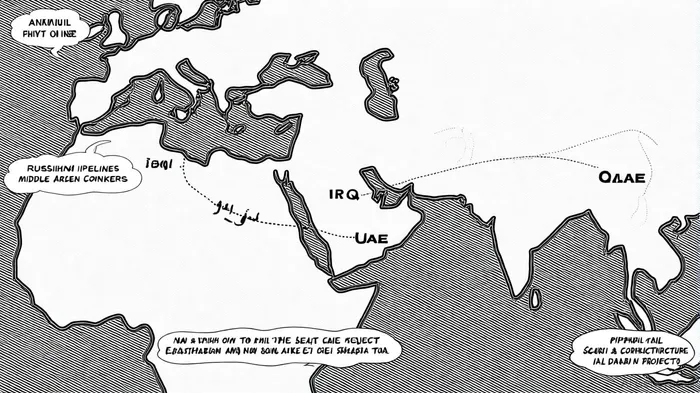
According to an Espreso report, Chinese state-owned oil firms such as PetroChina and Sinopec halted direct Russian crude imports in October 2025 amid U.S. sanctions. Prior to the sanctions, China imported approximately 1.4 million barrels per day of Russian oil by sea and an additional 900,000 barrels via pipelines, the report also found. While Russia has pivoted to intermediaries to maintain some level of exports to China, the shift has exposed vulnerabilities in its reliance on a single buyer. This has accelerated China's diversification strategy, with Gulf producers like Saudi Arabia, Iraq, and the UAE stepping in to capitalize on the gap.
Data from EIA data reveals that China's total crude oil imports in 2023 reached 11.3 million barrels per day, with Russia supplying 19% of this volume (2.1 million b/d). However, as Russian exports face logistical and political hurdles, China's imports from Iraq have surged. In 2024 alone, China imported 64 million tons of Iraqi crude, according to a Shafaq report. Meanwhile, Saudi Arabia's exports to China, though slightly declining, remain robust, with the kingdom accounting for 1.6 million b/d of China's imports in 2024, per an EIA analysis.
Strategic Investment Opportunities in Alternative Suppliers
The geopolitical realignment has created fertile ground for investment in Middle Eastern oil producers and their infrastructure. Saudi Arabia, for instance, is leveraging its Vision 2030 initiative to transform its logistics sector into a global hub. A LinkedIn analysis outlines plans to invest over $500 billion in ports, bonded zones, and digital trade systems by 2030, creating 100 investment-ready opportunities in logistics and supply chain technologies. These efforts are already bearing fruit: Riyadh's logistics stock occupancy rates hit 97% in mid-2024, driven by demand for Grade A warehouses, according to a Zawya report.
Iraq, too, is emerging as a strategic asset. With bilateral trade reaching $54.2 billion in 2024, Iraq now supplies nearly 10% of China's crude oil imports, the Shafaq report also notes. Investors eyeing long-term stability may find value in Iraq's oil development projects, which are attracting Chinese capital for refining and petrochemical ventures, as the EIA data indicates. Similarly, the UAE's expanded production capacity and strategic location position it as a key player in the Gulf's oil export boom, according to World's Top Exports.
Logistics Infrastructure: The Unsung Catalyst
Beyond supplier equities, logistics infrastructure is a critical investment frontier. Saudi Arabia's privatization of airports and ports, coupled with public-private partnerships in road networks, is enhancing its connectivity to Asian markets, per a PwC analysis. The Integrated Logistics Bonded Zone in Riyadh and Dammam Free Zone offer tax incentives and streamlined customs processes, making them attractive for foreign investors; the PwC analysis highlights these incentives.
Air China Cargo Co., Ltd., a key player in oil transportation, reported a 9% year-over-year increase in sales and net income for the nine months ending September 2025, reflecting growing demand for cargo services, according to its Air China Cargo results. This trend underscores the importance of logistics equities in capitalizing on the shifting oil trade.
Conclusion: Navigating the New Energy Order
The U.S. sanctions on Russian oil exports have not only disrupted a major trade relationship but also catalyzed a rebalancing of global energy markets. For investors, the opportunities lie in the dual pillars of alternative oil suppliers and the infrastructure enabling their growth. Saudi Arabia's Vision 2030, Iraq's strategic partnerships, and the UAE's production expansion are reshaping the landscape, while logistics firms like Air China Cargo are poised to benefit from increased demand for efficient supply chains.
As China continues to diversify its energy sources, the interplay between geopolitical shifts and market dynamics will define the next phase of global oil trade. Investors who align with these trends-whether through equities in Gulf producers or infrastructure projects-stand to gain from a market in flux.







Comentarios
Aún no hay comentarios