
Samsung Electronics: Is the Memory Boom Just Getting Started?
The semiconductor industry is at a pivotal inflection point, driven by the relentless demand for AI infrastructure, data center expansion, and next-generation computing. For Samsung Electronics, the memory boom appears to be accelerating, with its Device Solutions (DS) Division reporting record-breaking performance in Q3 2025. But is this a fleeting surge, or the beginning of a sustained era of value creation? Let's dissect the numbers, catalysts, and competitive dynamics shaping Samsung's memory business-and why investors should pay close attention.
A Record Quarter, But Can It Last?
Samsung's DS Division delivered KRW 33.1 trillion in revenue and KRW 7.0 trillion in operating profit for Q3 2025, fueled by surging demand for HBM3E, DDR5, and server SSDs. The memory business's operating margin of 21.1% reflects strong pricing power, though it lags behind SK hynix and MicronMU--. This performance is no accident: Samsung's strategic focus on high-margin products like HBM3E-used in AI accelerators and high-performance computing-has allowed it to capitalize on the AI-driven memory shortage.
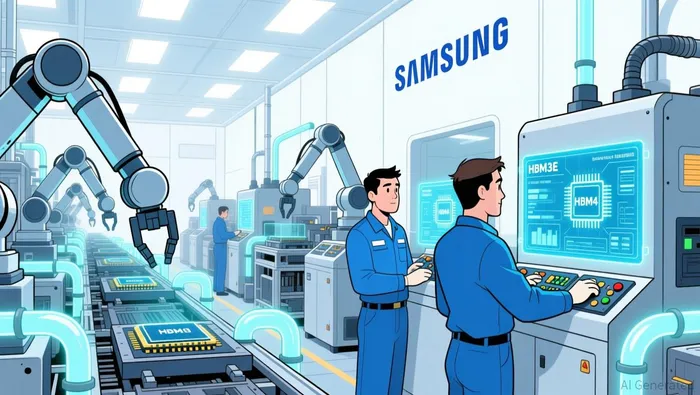
Moreover, Samsung is already preparing for the next phase of growth. The company has secured client commitments for HBM4 mass production in 2026 and allocated 47.4 trillion won (US$33 billion) in 2025 capital spending to expand capacity. This forward-looking investment underscores its intent to stay ahead of the curve in a market where HBM4 is expected to debut around 2027 with capacities up to 64 GB according to semiconductor analysts.
Catalysts: AI and HBM4 as the Twin Engines
The semiconductor industry's long-term growth is inextricably tied to AI adoption. According to SK hynix, the AI memory market is projected to expand at a 30% annual rate until 2030, with custom HBM alone potentially reaching tens of billions of dollars by that year. Samsung's HBM3E, already a critical component in NVIDIA's AI GPUs, is a direct beneficiary of this trend. The recent approval of HBM4 samples for NVIDIA applications has further stoked optimism, with analysts predicting a 166% profit surge in Q4 2025 according to financial reports.
HBM4's introduction will not only boost performance but also redefine memory architecture for AI workloads. As AI models grow in complexity, the need for high-bandwidth, low-latency memory becomes non-negotiable. Samsung's early investments in HBM3E and its roadmap for HBM4 position it to capture a significant share of this structural shift.
Competitive Dynamics: A Tug-of-War with SK hynix
Samsung's dominance in the memory sector has faced challenges in recent years. By Q2 2025, SK hynix had overtaken Samsung in DRAM market share (36.3% vs. 32.7%) and held a commanding 62–64% share of the HBM market. However, Samsung's Q3 2026 resurgence-rising to 22% HBM market share and reclaiming second place behind SK hynix's 57%-demonstrates the company's resilience according to market analysis.
This rivalry is not just about market share; it's a battle for technological leadership. SK hynix's early bets on HBM4 and partnerships with AI leaders like NVIDIA have given it a head start according to industry reports. But Samsung's ability to recover from production bottlenecks and its aggressive R&D spending (accounting for ~7% of revenue) suggest it remains a formidable competitor. The key for Samsung will be maintaining its innovation edge while managing the capital intensity of memory manufacturing.
The Road Ahead: Sustaining Momentum
Samsung's memory business is uniquely positioned to benefit from the AI-driven semiconductor cycle. However, sustaining this momentum will require navigating several risks:
1. Capital Intensity: The 47.4 trillion won investment in 2025 is massive, and returns will depend on demand staying ahead of supply. Overcapacity could erode margins.
2. Competitive Pressure: SK hynix's HBM4 lead and Micron's aggressive R&D spending could narrow Samsung's margins.
3. Geopolitical Risks: Export restrictions and trade tensions remain a wildcard, particularly in the U.S.-China tech rivalry.
That said, the structural tailwinds are undeniable. AI's insatiable appetite for memory, coupled with the transition to HBM4, creates a multi-year growth runway. Samsung's ability to execute on its HBM roadmap and maintain pricing discipline will determine whether this boom is a temporary spike or the start of a new era.
Conclusion: A High-Stakes Bet on the Future
Samsung's memory division is a masterclass in value creation: leveraging AI-driven demand, strategic R&D, and pricing power to generate outsized profits. While the company faces stiff competition and capital-intensive challenges, its position as a leader in HBM and server SSDs gives it a critical edge. For investors, the question is not whether the memory boom is real-but whether Samsung can outpace its rivals in a market where the stakes have never been higher.





Comentarios
Aún no hay comentarios