
Samsung's 2025 Pivotal Moment: Nvidia's Role in Recovery
Generado por agente de IATheodore Quinn
martes, 14 de enero de 2025, 12:28 am ET1 min de lectura
BOOM--
After a $162-billion stock wipeout in 2024, Samsung Electronics finds itself at a critical juncture in 2025, with its recovery hinging on its partnership with Nvidia. The South Korean tech giant, once the dominant player in memory, has faced challenges in the AI boom, which has benefited other tech companies. Samsung's reliance on Nvidia for AI technology has been a strategic concern, but recent developments suggest that this partnership could be the key to Samsung's resurgence.
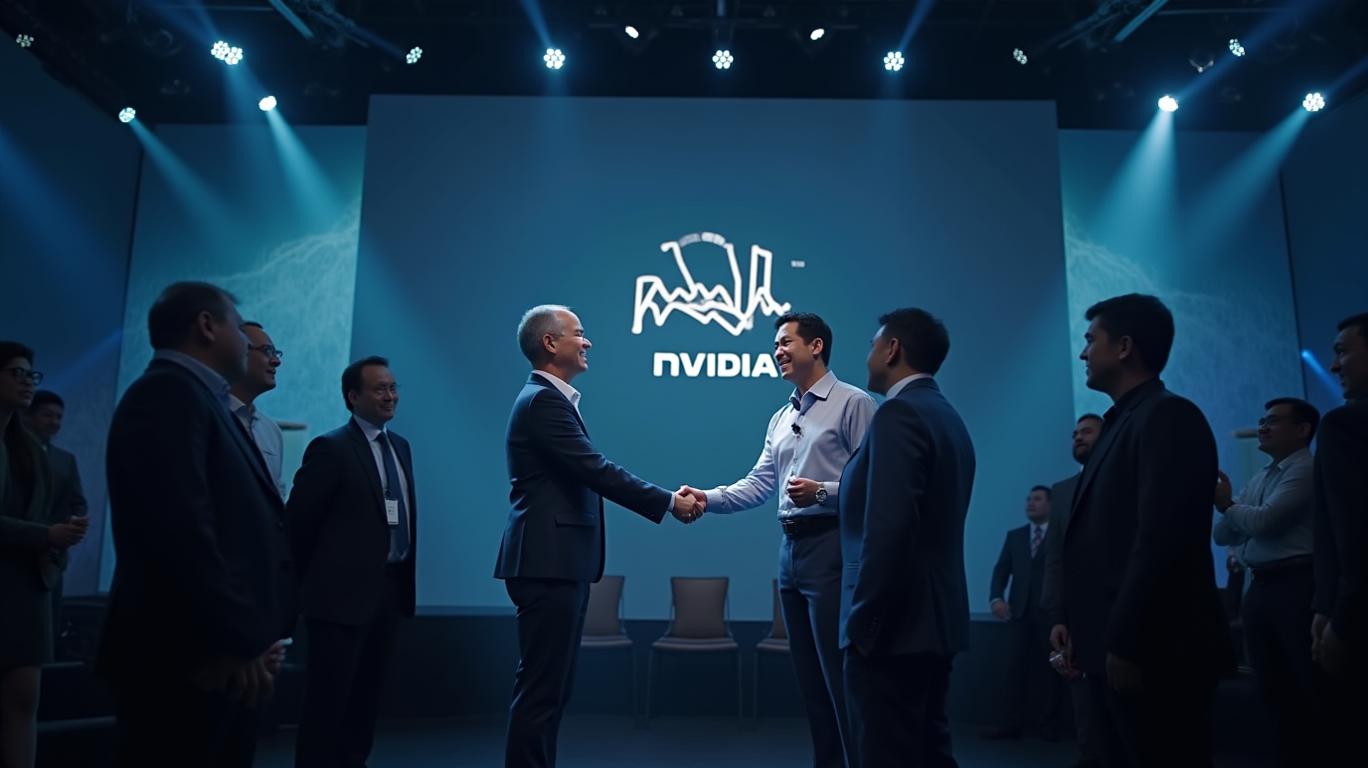
Nvidia's advanced GPU technology has been crucial for Samsung's AI endeavors, powering applications across various sectors, notably in smartphones, data centers, and potentially autonomous vehicles. This reliance has solidified Nvidia's leading position in the AI hardware market, potentially narrowing opportunities for rivals like AMD and Intel. However, Samsung's dependence on a single supplier poses inherent risks, such as supply chain disruptions and pricing pressures.
Samsung's success in securing approvals from Nvidia for its latest HBM3E chips is crucial for its competitiveness in the high-stakes memory market, which is pivotal for AI applications. Clearing these hurdles is essential for Samsung to bolster its market competitiveness and resilience against other memory chip makers like SK Hynix. Nvidia CEO Jensen Huang's confidence in Samsung's ability to redesign its HBM to meet Nvidia's requirements sent Samsung's shares higher in January 2025, underscoring the importance of this partnership for Samsung's recovery.
Samsung's entry into the AI chip market, announced at its 55th annual shareholders' meeting, is another strategic move to reduce its dependency on Nvidia. The Mach-1 AI accelerator chips, set to launch in early 2025, are a step in this direction. Samsung's investment of $752 million in Naver, a former Nvidia client, suggests a deepening collaboration and a commitment to developing energy-efficient AI accelerators that could rival Nvidia's offerings.
In conclusion, Samsung's 2025 is a pivotal moment for the tech giant, with its recovery hinging on its partnership with Nvidia. While this partnership presents both opportunities and risks, Samsung's strategic moves, such as securing HBM3E chip approvals and investing in in-house AI chip development, could help it navigate these challenges and emerge stronger in the competitive AI hardware market. As Samsung seeks to recover from recent setbacks, its alliance with Nvidia not only fuels technological advancement but also poses significant strategic implications in the global tech industry. This relationship will likely serve as a benchmark for future collaborative efforts between tech giants aiming to capitalize on the burgeoning AI market.
NVDA--
After a $162-billion stock wipeout in 2024, Samsung Electronics finds itself at a critical juncture in 2025, with its recovery hinging on its partnership with Nvidia. The South Korean tech giant, once the dominant player in memory, has faced challenges in the AI boom, which has benefited other tech companies. Samsung's reliance on Nvidia for AI technology has been a strategic concern, but recent developments suggest that this partnership could be the key to Samsung's resurgence.
Nvidia's advanced GPU technology has been crucial for Samsung's AI endeavors, powering applications across various sectors, notably in smartphones, data centers, and potentially autonomous vehicles. This reliance has solidified Nvidia's leading position in the AI hardware market, potentially narrowing opportunities for rivals like AMD and Intel. However, Samsung's dependence on a single supplier poses inherent risks, such as supply chain disruptions and pricing pressures.
Samsung's success in securing approvals from Nvidia for its latest HBM3E chips is crucial for its competitiveness in the high-stakes memory market, which is pivotal for AI applications. Clearing these hurdles is essential for Samsung to bolster its market competitiveness and resilience against other memory chip makers like SK Hynix. Nvidia CEO Jensen Huang's confidence in Samsung's ability to redesign its HBM to meet Nvidia's requirements sent Samsung's shares higher in January 2025, underscoring the importance of this partnership for Samsung's recovery.
Samsung's entry into the AI chip market, announced at its 55th annual shareholders' meeting, is another strategic move to reduce its dependency on Nvidia. The Mach-1 AI accelerator chips, set to launch in early 2025, are a step in this direction. Samsung's investment of $752 million in Naver, a former Nvidia client, suggests a deepening collaboration and a commitment to developing energy-efficient AI accelerators that could rival Nvidia's offerings.
In conclusion, Samsung's 2025 is a pivotal moment for the tech giant, with its recovery hinging on its partnership with Nvidia. While this partnership presents both opportunities and risks, Samsung's strategic moves, such as securing HBM3E chip approvals and investing in in-house AI chip development, could help it navigate these challenges and emerge stronger in the competitive AI hardware market. As Samsung seeks to recover from recent setbacks, its alliance with Nvidia not only fuels technological advancement but also poses significant strategic implications in the global tech industry. This relationship will likely serve as a benchmark for future collaborative efforts between tech giants aiming to capitalize on the burgeoning AI market.

Divulgación editorial y transparencia de la IA: Ainvest News utiliza tecnología avanzada de Modelos de Lenguaje Largo (LLM) para sintetizar y analizar datos de mercado en tiempo real. Para garantizar los más altos estándares de integridad, cada artículo se somete a un riguroso proceso de verificación con participación humana.
Mientras la IA asiste en el procesamiento de datos y la redacción inicial, un miembro editorial profesional de Ainvest revisa, verifica y aprueba de forma independiente todo el contenido para garantizar su precisión y cumplimiento con los estándares editoriales de Ainvest Fintech Inc. Esta supervisión humana está diseñada para mitigar las alucinaciones de la IA y garantizar el contexto financiero.
Advertencia sobre inversiones: Este contenido se proporciona únicamente con fines informativos y no constituye asesoramiento profesional de inversión, legal o financiero. Los mercados conllevan riesgos inherentes. Se recomienda a los usuarios que realicen una investigación independiente o consulten a un asesor financiero certificado antes de tomar cualquier decisión. Ainvest Fintech Inc. se exime de toda responsabilidad por las acciones tomadas con base en esta información. ¿Encontró un error? Reportar un problema


SOBRE NOSOTROS
Nuestra historiaAutores de noticiasBase de conocimientosPolítica de privacidadTérmino de usoDescargo de responsabilidad de corretaje de tercerosTérminos de uso de AIMEDivulgaciones de riesgos de AInvest AICarrerasCONTÁCTENOS
Email: support@ainvest.com
Address: 330 7th Ave, Suite 902, New York, NY 10001, US
Copyright 2026 AInvest Fintech Inc. All rights reserved.


Comentarios
Aún no hay comentarios