
Samsara's Valuation Vulnerability in the Face of ITC Patent Rulings: Assessing Long-Term Risks in IoT Software Firms
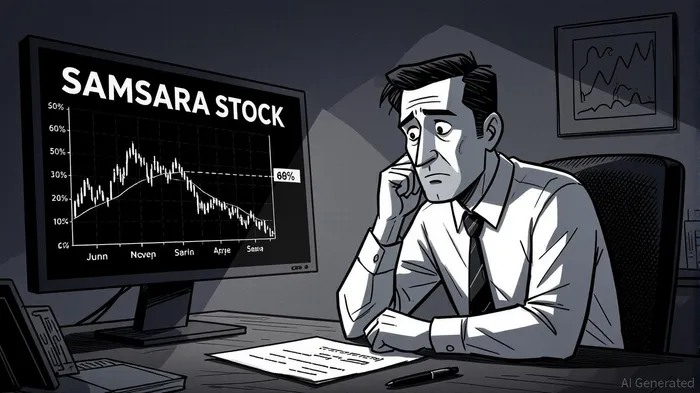
The recent U.S. International Trade Commission (ITC) ruling against SamsaraIOT-- in its patent infringement case against Motive Technologies has exposed critical vulnerabilities in the company's valuation and competitive positioning. The ITC's decision, which invalidated eight of Samsara's nine asserted patent claims and dismissed allegations of domestic industry investment, marks a significant legal setback for the IoT software firm. This ruling not only undermines Samsara's intellectual property (IP) strategy but also raises broader questions about the long-term risks faced by IoT software companies in an increasingly litigious and fragmented patent landscape.
The ITC Ruling: A Direct Blow to Samsara's IP Strategy
The ITC's September 2025 ruling, led by Judge Doris Johnson Hines, concluded that Motive did not infringe on any valid Samsara patents and rejected the company's claims of a Section 337 violation [1]. The decision cast doubt on the validity of Samsara's patents, which are central to its vehicle telematics technology, and highlighted the company's failure to demonstrate sufficient domestic industry investment—a key requirement for ITC enforcement actions [2]. This outcome has immediate financial implications: Samsara's stock fell nearly 6% following the ruling, reflecting investor concerns about the company's ability to defend its IP and maintain market leadership [3].
While Samsara has stated that its ongoing federal court case in Delaware remains unaffected, the ITC's findings signal a weakening of its IP portfolio. For an IoT firm that relies heavily on proprietary technology to differentiate itself in a crowded market, repeated legal setbacks could erode investor confidence and reduce the perceived value of its innovations.
Patent Challenges in the IoT Sector: A Systemic Risk
The Samsara-Motive dispute is emblematic of broader challenges in the IoT software industry. IoT solutions inherently involve overlapping technologies, from hardware and software to communication protocols, creating a fragmented IP landscape. According to a report by PatentPC, the complexity of IoT inventions often leads to disputes over patent eligibility, particularly for software-related claims, which are frequently deemed abstract under U.S. patent law [4]. This ambiguity increases the likelihood of patent invalidation, as seen in Samsara's case, and creates uncertainty for companies seeking to monetize their IP.
Moreover, the rise of standard-essential patents (SEPs) in IoT has introduced additional risks. SEPs, which are critical for interoperability in technologies like 5G and connected vehicles, are often subject to FRAND (fair, reasonable, and non-discriminatory) licensing disputes. A study by dIPlex notes that less than half of declared SEPs are actually essential, complicating royalty negotiations and profitability for IoT firms [5]. Samsara's reliance on patents for vehicle telematics places it in a sector where such disputes are increasingly common, amplifying its exposure to legal and financial volatility.
Broader Implications for IoT Software Firms
The Samsara case underscores a systemic vulnerability for IoT software companies: the high cost of patent litigation and the potential for IP invalidation to disrupt business models. For instance, a 2024 analysis by Quandary Peak Research found that 80% of Inter Partes Review (IPR) challenges in the U.S. result in patent invalidation, disproportionately affecting non-practicing entities (NPEs) and smaller firms with limited legal resources [6]. While Samsara is not an NPE, its recent legal battles with Motive and Omnitracs highlight how protracted litigation can divert resources from innovation to legal defense, slowing time-to-market for new products.
Historical trends also suggest that IoT firms with weakened IP portfolios face long-term valuation declines. For example, the automotive industry's struggles with SEP licensing disputes—where telecommunications companies have refused to license older 2G-4G SEPs directly to car manufacturers—have led to anti-competitive practices and increased costs for implementers [7]. Samsara's inability to prove its patents' validity in the ITC case could mirror these dynamics, limiting its ability to enforce licensing terms or deter competitors.
Strategic Risks and Investor Considerations
For investors, the Samsara-Motive ruling serves as a cautionary tale about the fragility of IP-driven valuations in the IoT sector. While Samsara's stock has historically been rated “Outperform” with a $47.64 price target, the ITC decision introduces a layer of uncertainty. Analysts must now weigh the company's ongoing legal efforts against the broader risk of IP erosion. A 2025 report by the E-Commerce and Software sector noted that 33% of defendants in NPE-driven lawsuits face significant valuation declines due to patent invalidation, a trend that could extend to IoT firms with contested IP [8].
Additionally, the ruling highlights the importance of diversifying IP strategies. Companies that rely on defensive patent portfolios—such as Motive, which has successfully navigated multiple legal challenges—may gain a competitive edge. Samsara's aggressive litigation approach, while understandable in a cutthroat market, risks alienating partners and customers if perceived as an anti-competitive tactic.
Conclusion: Navigating the Patent Maze
Samsara's recent ITC setback is a microcosm of the challenges facing IoT software firms in an era of overlapping patents, evolving legal standards, and global regulatory fragmentation. While the company's Delaware case and broader market optimism provide some buffer, the ruling underscores the need for a more resilient IP strategy. For investors, the key takeaway is clear: in the IoT sector, valuation is not just about innovation but also about the ability to protect and enforce it. As the industry moves forward, firms that can navigate the patent maze with agility and foresight will be best positioned to thrive.





Comentarios
Aún no hay comentarios