
The Samourai Wallet Case: A Pivotal Moment for Crypto Privacy and Developer Liability
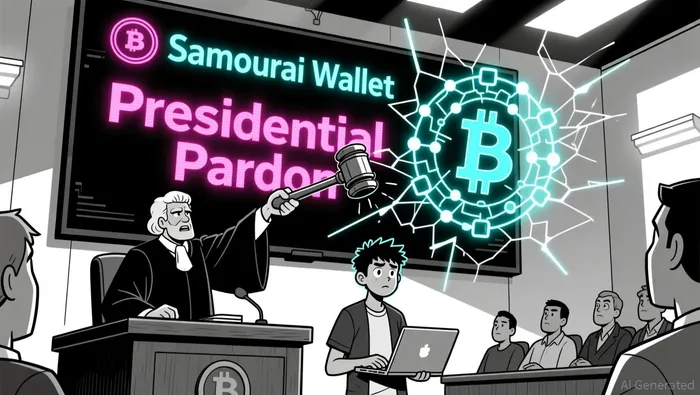
The Samourai Wallet case has emerged as a flashpoint in the broader debate over crypto privacy, developer liability, and the role of U.S. presidential pardons in shaping the regulatory landscape. Co-founders Keonne Rodriguez and William Lonergan Hill were sentenced to prison in 2025 for operating an unlicensed money transmitting business tied to laundering over $237 million in illicit cryptocurrency transactions. Their prosecution, under both the Biden and Trump administrations, has sparked fierce arguments about whether developers of privacy-enhancing tools should bear legal responsibility for how users employ their software according to recent analysis. Now, with President Donald Trump signaling a potential pardon for Rodriguez according to financial reports, the case has taken on new significance-not just for privacy advocates but for investors navigating the evolving crypto ecosystem.
The Pardon Precedent: From CZ to Ulbricht
Trump's pardons of high-profile crypto figures, including Binance founder Changpeng Zhao and Silk Road creator Ross Ulbricht, have already reshaped market dynamics. Zhao's full pardon in October 2025, for instance, triggered a 3.6% surge in Binance Coin (BNB) and a 2.5% rise in BitcoinBTC--, signaling investor optimism about regulatory relief. Similarly, Ulbricht's 2025 pardon marked a symbolic shift toward leniency for crypto innovators, even those entangled in controversial projects. These actions have been framed by the administration as part of a broader effort to position the U.S. as the "crypto capital" of the world according to market analysts, but they have also drawn sharp criticism for perceived conflicts of interest. For example, Binance's ties to Trump's World Liberty Financial venture raised ethical concerns about whether pardons were influenced by business interests according to watchdog reports.
Market Sentiment and Regulatory Uncertainty
The pardons have had a measurable impact on investor sentiment. A 2025 survey of 2,000 American adults revealed that 60% of crypto-aware respondents believed the value of cryptocurrencies would rise under Trump's second term, with 46% citing his pro-crypto stance as a driver of mainstream adoption according to consumer data. However, the market's response has been mixed. While BNBBNB-- and Bitcoin saw short-term gains post-pardon, the broader crypto market faced a 20% decline in late 2025, erasing much of the year's gains according to market analysis. Analysts attribute this volatility to lingering regulatory uncertainty and the sector's inherent sensitivity to enforcement actions.
The Samourai case adds another layer of complexity. Privacy advocates argue that prosecuting developers for user misuse of their tools stifles innovation and creates a chilling effect on non-custodial software development. A pardon for Rodriguez could reinforce the legal principle that open-source developers are not financial intermediaries, potentially setting a precedent for future cases involving privacy tools like Tornado CashTORN-- according to industry experts. Conversely, critics warn that such pardons risk undermining regulatory enforcement, creating a "pay-to-play" environment where legal accountability is selectively applied according to legal analysts.
Regulatory Shifts and Long-Term Investment Risks
The Trump administration's approach to crypto regulation has diverged sharply from its predecessor. The SEC's recent stance-that "most crypto tokens are not securities"- reflects a pivot toward accommodating innovation, while the "Strengthening American Leadership in Digital Financial Technology" executive order emphasizes fostering digital asset growth according to policy documents. These moves have been welcomed by institutional investors, who view them as steps toward regulatory clarity. However, the SEC's 33% dismissal rate for crypto-related cases under Trump-compared to 4% under Biden- has raised concerns about investor protection.
For investors, the long-term risks lie in the tension between regulatory leniency and enforcement consistency. While a lighter regulatory touch may spur innovation and attract capital, it also increases exposure to fraud and volatility. The EU's Markets in Crypto-Assets Regulation (MiCAR), by contrast, offers a more structured framework for investor protection and compliance according to legal analysis, highlighting the global divergence in regulatory approaches. Investors must weigh these dynamics carefully, as shifting enforcement priorities could lead to abrupt market corrections.
Conclusion: A Tipping Point for Crypto Privacy
The Samourai Wallet case represents more than a legal dispute-it is a litmus test for how the U.S. will balance privacy, innovation, and regulatory oversight in the crypto space. Trump's potential pardon of Rodriguez could signal a broader acceptance of privacy tools, but it also risks normalizing a regulatory environment where enforcement is perceived as arbitrary. For investors, the key takeaway is clear: the crypto sector's future will be shaped not just by technological advancements but by the political and legal frameworks that govern them. As the debate over developer liability intensifies, the market will continue to react to both symbolic gestures and concrete policy shifts, making due diligence more critical than ever.






Comentarios
Aún no hay comentarios