
Saks Fifth Avenue's Imminent Chapter 11 Filing and Retail Sector Implications: Assessing the Strategic Opportunities in Distressed Retail Assets
The retail sector is on the brink of another seismic shift as Saks Fifth Avenue, a storied luxury brand, prepares to file for Chapter 11 bankruptcy as early as Sunday, January 9, 2026. This move, driven by a confluence of financial strain, a debt-laden balance sheet, and a sluggish luxury market, underscores the fragility of even the most iconic retail names in an era of shifting consumer behavior and macroeconomic headwinds. For investors, Saks' filing is not merely a cautionary tale but a potential gateway to strategic opportunities in distressed retail assets.
The Retail Sector's Perfect Storm
Saks' troubles are emblematic of broader challenges facing the retail industry. Elevated interest rates, which have persisted since 2023, have exacerbated liquidity constraints for capital-intensive retailers. Compounding this, the sector's reliance on discretionary spending has been tested by inflationary pressures and a cooling luxury market. According to a Bloomberg report, Saks' 2024 acquisition of Neiman Marcus-a $2.4 billion deal-significantly amplified its debt burden, leaving it vulnerable to market volatility.
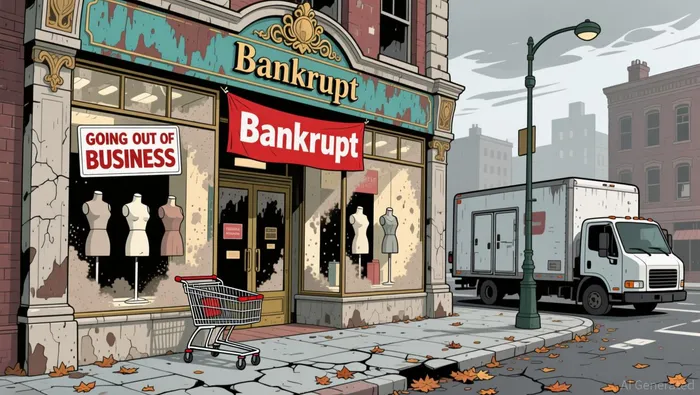
The Federal Reserve's rate cuts in late 2024, while offering some relief, have not fully reversed the damage. As PwC notes in its 2025 restructuring outlook, the retail sector remains in a "rolling restructuring cycle," with over 150 companies filing for bankruptcy in the past year alone. Saks' case is further complicated by its recent asset sales, such as the disposal of Neiman Marcus locations in Beverly Hills and San Francisco, which, while generating short-term liquidity, have not stemmed the tide of mounting obligations.
Strategic Opportunities in Distressed Retail Assets
For investors, the collapse of a brand like Saks presents a unique opportunity to capitalize on distressed assets through a combination of debt restructuring, asset redeployment, and operational repositioning. Key strategies include:
Debtor-in-Possession (DIP) Financing and Fulcrum Security:
Saks' pursuit of a $1.25 billion DIP financing package highlights the critical role of fulcrum security-the senior-most debt class that often bears the brunt of restructuring costs but may also gain reorganized equity in return. HK Law explains that investors with expertise in liability management and private credit arrangements can leverage these dynamics to secure favorable terms.Asset Redeployment and Monetization:
The liquidation of physical assets, such as store fixtures, inventory, and real estate, remains a cornerstone of value preservation. For instance, Saks' high-value Neiman Marcus locations could attract private equity buyers seeking to rebrand or repurpose the spaces. As Hilco Global notes, FF&E monetization and strategic lease renegotiations are particularly lucrative in markets like California and New York.Operational Streamlining and Rebranding:
The success of Neiman Marcus' pre-bankruptcy spin-off of its European e-commerce platform, MyTheresa, offers a blueprint for preserving high-growth digital assets. High Yield Harry reports that Saks could benefit from a strategic split of its core operations, focusing on high-margin segments while divesting underperforming divisions.
Case Studies: Lessons from the Front Lines
The retail bankruptcy landscape is littered with both cautionary tales and success stories. Sears Holdings, for example, became a symbol of administrative insolvency, incurring $250 million in professional fees during its 2020 bankruptcy. In contrast, Claire's and iRobot have demonstrated the power of operational agility. Claire's emerged leaner after a private equity buyout, while iRobot's strategic take-private by Picea Robotics enabled a focused pivot toward robotics innovation. Costar reports that more retailers seek Chapter 11 redos but few survive.
These examples underscore the importance of due diligence and risk management. As HK Law warns, off-court restructurings-while faster-carry heightened litigation risks, particularly in fraudulent transfer cases. Investors must also navigate the complexities of "Chapter 22" filings, where second-time bankruptcies often yield mixed outcomes. Costar reports that more retailers seek Chapter 11 redos but few survive.
Conclusion: A New Era of Retail Restructuring
Saks' Chapter 11 filing is a harbinger of deeper structural shifts in the retail sector. For investors, the path forward lies in balancing opportunistic asset acquisition with rigorous risk assessment. The 2025 environment, marked by a rolling wave of restructurings, demands a nuanced understanding of capital structures, operational realignment, and market dynamics.
As Saks navigates its bankruptcy process, the broader retail sector will watch closely. Will its assets be liquidated, rebranded, or restructured into a leaner entity? The answer may hinge on the same strategic principles that have defined successful distressed investments: agility, foresight, and a willingness to reimagine value in a post-pandemic world.







Comentarios
Aún no hay comentarios