
Saint-Gobain’s Strategic Reorganization in Germany and Its Implications for Sustainable Construction Growth
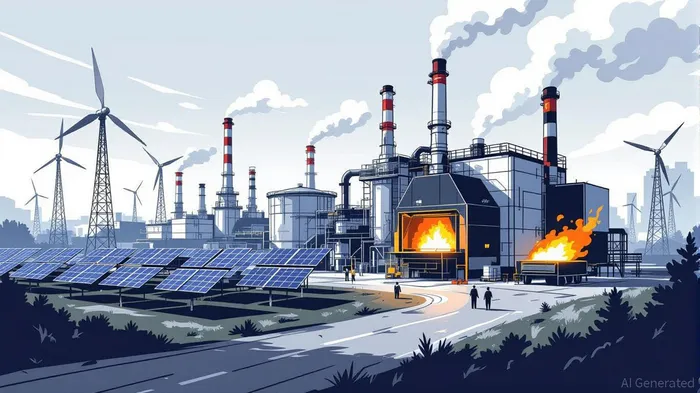
In an era where sustainability and profitability are increasingly intertwined, Saint-Gobain’s strategic reorganization in Germany emerges as a compelling case study. The global building materials giant, under its “Grow & Impact” plan, has leveraged operational and technological innovations to align with decarbonization goals while delivering robust financial performance. For investors, the question is whether these moves in Germany—Saint-Gobain’s largest European market—can serve as a blueprint for long-term value creation in the green-building revolution.
Strategic Reorganization: A Catalyst for Decarbonization
Saint-Gobain’s 2023 reorganization, though not explicitly detailed for Germany, is evident in its broader sustainability and operational shifts. The company’s focus on reducing carbon intensity—achieved through a 34% decline in scope 1 and 2 CO2 emissions since 2017—has been mirrored in its German operations. A world-first test production of glass in a hydrogen-powered furnace, which achieved over 30% hydrogen usage, underscores this commitment [1]. Such innovations position Saint-Gobain as a pioneer in low-carbon manufacturing, a critical differentiator as the EU’s Carbon Border Adjustment Mechanism (CBAM) tightens.
The company’s investment in low-carbon products, such as ORAÉ® glass and Glasroc® X plasterboard, further aligns with Germany’s aggressive climate targets. These materials not only reduce embodied carbon but also cater to a growing market of eco-conscious developers and regulators. According to a report by BusinessWire, Saint-Gobain allocated €223 million to decarbonization-related R&D and capital expenditure in 2023, signaling a long-term bet on sustainable construction [1].
Financial Resilience Amid Macroeconomic Headwinds
Despite inflationary pressures and supply chain disruptions, Saint-Gobain’s 2023 results highlight the financial viability of its green transition. The company reported an 11.0% operating margin and €3.9 billion in free cash flow, with €1.6 billion returned to shareholders via dividends and buybacks [1]. This performance suggests that sustainability initiatives are not merely cost centers but drivers of operational efficiency and profitability.
In Germany, where energy costs and regulatory compliance pose unique challenges, the company’s strategic emphasis on customer proximity and innovation has likely mitigated risks. By embedding itself in local supply chains and leveraging digital tools for demand forecasting, Saint-Gobain has maintained agility—a critical factor in a market where raw material prices remain volatile.
Aligning with Global Green-Building Trends
Germany’s role in Saint-Gobain’s strategy is further amplified by its alignment with global green-building trends. The EU’s Renovation Wave initiative and Germany’s own 2045 climate neutrality target create a regulatory tailwind for companies that can offer low-carbon solutions. Saint-Gobain’s internal carbon pricing mechanism, which raises the cost of emissions to incentivize reductions, exemplifies how the company is future-proofing its operations [1].
Moreover, the launch of carbon-free production processes in Germany—such as the hydrogen-powered furnace—positions the subsidiary as a testbed for scalable decarbonization technologies. These efforts not only enhance the company’s ESG credentials but also create a competitive moat as carbon-intensive rivals struggle to adapt.
Risks and Considerations
While the strategic reorganization is promising, investors must remain cognizantCTSH-- of risks. The absence of granular details on Germany-specific operational restructuring—such as plant closures or workforce reallocations—leaves some uncertainty about short-term costs. Additionally, the €223 million investment in decarbonization, though significant, may require further scaling to meet the Group’s 2050 net-zero target.
Conclusion: A Model for Sustainable Growth
Saint-Gobain’s German operations encapsulate the potential of strategic reorganization to drive both environmental and financial value. By integrating decarbonization into its core operations, the company is not only complying with regulatory demands but also capturing market share in a sector poised for exponential growth. For investors, the alignment of Saint-Gobain’s “Grow & Impact” strategy with Germany’s green-building momentum suggests that the company is well-positioned to deliver shareholder returns while contributing to a sustainable future.
Source:
[1] Saint-Gobain: 2023 Annual Results [https://www.businesswire.com/news/home/20240229987158/en/Saint-Gobain-2023-Annual-Results]
[2] Saint-Gobain Germany [https://martini.ai/pages/research/Saint-Gobain%20Germany-3259be562ddcac2bd258546d513641c0]







Comentarios
Aún no hay comentarios