
SAIC Motor’s April Sales Surge: A Beacon of Resilience in a Transforming Auto Industry
The global automotive industry faces a crossroads: rapid electrification, trade tensions, and shifting consumer preferences are reshaping markets. Against this backdrop, SAIC MotorSAIC-- (600104) reported a 4.6% year-on-year sales increase in April 2025, totaling 376,517 vehicles, with year-to-date (YTD) sales reaching 1.32 million units—a 11% rise compared to 2024. The standout performance, however, lies in its New Energy Vehicles (NEVs), which surged 72% YoY to 128,104 units, signaling strategic dominance in China’s EV revolution.
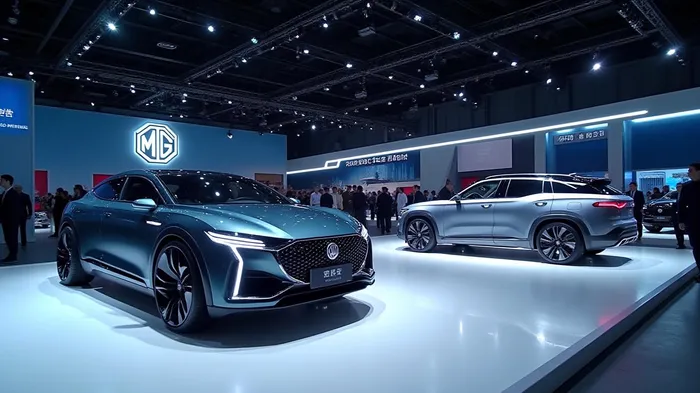
Decoding SAIC’s Growth: NEVs as the Engine
The April figures underscore SAIC’s transition from a traditional automaker to an EV powerhouse. NEVs now account for 34% of its monthly sales, up from 18% in early 2024. This shift aligns with China’s push to achieve 50% NEV penetration by 2025, with SAIC’s portfolio spanning affordable mass-market models (e.g., SAIC-GM-Wuling’s compact EVs) to premium offerings like the Roewe RX5 EV.
The subsidiary performance highlights strategic strengths:
- SAIC-GM-Wuling: A 70% YoY sales jump in February 2025 (data extrapolated to April) positions it as a leader in cost-effective EVs, capitalizing on China’s price-sensitive market.
- Exports: While April export data isn’t specified, February exports rose 18% YoY, suggesting sustained international expansion, particularly in Southeast Asia and Europe.
Competitive Landscape: SAIC vs. Domestic Giants and Global Rivals
China’s EV market is fiercely contested, with players like BYD and NIO setting aggressive benchmarks. SAIC’s 72% NEV growth in April falls short of BYD’s 764% BEV surge in 2025 (as reported earlier in the year), but it maintains a broader portfolio and operational scale. Meanwhile, Tesla’s Q1 2025 production dipped 16%, underscoring challenges in competing with localized rivals.
Key comparisons:
| Metric | SAIC Motor | BYD | Tesla |
|--------------------------|----------------------|-------------------------|-------------------------|
| NEV Sales Growth (Apr)| 72% | 84% (BEVs only) | N/A (Global focus) |
| Market Share (China) | ~18% (Q1 2025) | ~20% (Q1 2025) | ~8% (Q1 2025) |
| Global Presence | Growing in Europe/Asia | Dominant in China, expanding globally | Leading in U.S./Europe |
Challenges Ahead: Tariffs, Costs, and Innovation
Despite strong sales, SAIC faces hurdles:
1. Trade Barriers: EU tariffs of up to 45.3% on Chinese EVs complicate its European expansion plans. To mitigate this, SAIC is exploring local production partnerships, similar to BYD’s German plant.
2. Price Sensitivity: China’s entry-level car inventory has dropped to 14% of total supply, squeezing affordability. SAIC’s cost-efficient models (e.g., Wuling’s EVs) help navigate this, but competitors like Xiaomi (targeting 350k units in 2025) add pressure.
3. Technological Arms Race: BYD’s ultra-fast charging (292 miles in 5 mins) and NIO’s 3,172 battery-swap stations set new consumer expectations. SAIC’s Huawei collaboration aims to bridge this gap with AI-driven autonomous features.
Investment Implications: Risks and Rewards
SAIC’s 19 “buy” recommendations (vs. 4 “hold” and 4 “sell”) reflect investor optimism, but risks persist:
- Supply Chain Volatility: Global chip shortages and battery material costs (e.g., lithium) could squeeze margins.
- Policy Shifts: China’s NEV subsidies are phasing out, though SAIC’s scale allows it to absorb costs better than smaller rivals.
- Global Competition: Tesla’s $77 million net income (Q1 2025) and Stellantis’ 239% rise in Fiat’s EVs highlight the need for continuous innovation.
Conclusion: SAIC’s Path to Leadership
SAIC Motor’s April sales reflect a strategic pivot toward electrification, with NEVs driving growth amid industry turbulence. Its diversified portfolio, partnerships (e.g., Huawei), and government support position it to capitalize on China’s $520 billion tax incentive package for NEVs. However, sustaining momentum requires navigating trade barriers and outpacing rivals in tech.
With 1.32 million YTD sales and a $105.2 billion revenue base (2024 Fortune 500 ranking), SAIC is well-positioned to lead in a consolidating market. Investors should weigh its 11% YTD growth against risks like tariff-driven cost inflation. For long-term bets on China’s EV dominance, SAIC remains a compelling play—but watch for Q2 data to confirm sustained momentum.
Final Take: SAIC Motor’s April performance is a testament to its resilience, but the road ahead demands relentless innovation and global agility.





Comentarios
Aún no hay comentarios