
Sagimet Biosciences: Strategic Positioning in Addiction Therapeutics via MASH Innovation
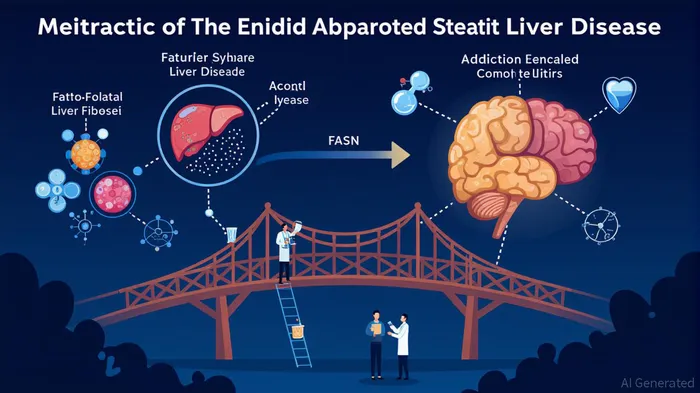
The 9th Annual MASH Drug Development Summit, scheduled for late September 2025 in Boston, will serve as a pivotal moment for Sagimet BiosciencesSGMT-- to showcase its scientific rigor and therapeutic innovation. While the company's core focus remains on metabolic-associated fatty liver disease (MASH), its upcoming presentations and clinical data may indirectly resonate with investors tracking addiction therapeutics. By examining Sagimet's pipeline and the mechanistic overlap between MASH and alcohol-related liver disease (ALD), a compelling case emerges for its strategic positioning in a broader therapeutic landscape.
A Dual-Pronged Approach: FASN Inhibition and Liver Disease
Sagimet's lead candidate, denifanstat, a fatty acid synthase (FASN) inhibitor, has demonstrated robust efficacy in Phase 3 trials for moderate to severe acne and is advancing in Phase 2b studies for MASH[3]. FASN inhibition targets lipid metabolism, a pathway implicated not only in non-alcoholic steatohepatitis (NASH) but also in ALD, where excessive alcohol consumption disrupts hepatic lipid homeostasis[2]. According to a report by Nature Reviews Gastroenterology & Hepatology, ALD accounts for 3.02 million cases globally, with a 38.68% increase since 2000[1]. This growing burden positions Sagimet's FASN inhibitors as potential candidates for addressing comorbid metabolic and alcohol-induced liver damage.
At the MASH summit, SagimetSGMT-- will present data on denifanstat's anti-fibrotic effects in patients with advanced fibrosis (F3 stage), leveraging AI-based digital pathology to quantify histological improvements[1]. Such technological integration underscores the company's commitment to precision medicine—a trait increasingly valued in both metabolic and addiction-related therapeutics.
From Acne to Cancer: A Proven FASN Platform
Sagimet's pipeline extends beyond MASH. Its FASN inhibitor TVB-2640 is in Phase 1/2 trials for solid tumors, showing manageable tolerability and preliminary anti-tumor activity when combined with immune checkpoint inhibitors[5]. This versatility in targeting FASN—a key enzyme in lipid synthesis—highlights the molecule's adaptability across disease states. For investors, the success of denifanstat in acne (a Phase 3-approved indication in China[3]) serves as a de-risking milestone, validating the FASN inhibition platform for future applications.
Indirect Synergies with Addiction Therapeutics
While Sagimet has not explicitly pursued addiction-related indications, its work in MASH intersects with ALD, a condition often linked to substance use disorders. A 2025 study in Gastroenterology notes that phosphatidylethanol (PEth), a biomarker for recent alcohol consumption, could aid in subclassifying steatotic liver disease and monitoring treatment adherence[2]. Sagimet's focus on objective biomarkers and metabolic reprogramming aligns with emerging strategies to address ALD, where traditional therapies remain limited.
Moreover, the company's panel discussion at the MASH summit—titled “Designing Therapies with Novel Mechanisms & Predictive Biomarkers”—will explore how predictive models can optimize treatment outcomes[1]. For addiction investors, this signals Sagimet's engagement with methodologies critical to personalized medicine, a growing priority in managing complex comorbidities like substance use disorders.
Market Validation and Investor Implications
Sagimet's recent stock performance, buoyed by positive Phase 3 acne results[2], illustrates market confidence in its ability to execute clinical trials. The upcoming MASH summit presentations offer further validation, particularly as regulatory scrutiny intensifies for MASH therapies. With the global MASH treatment market projected to exceed $50 billion by 2030, Sagimet's dual focus on metabolic and oncological applications could attract cross-sector investors.
Conclusion: A Catalyst for Cross-Disciplinary Investment
Sagimet Biosciences' participation in the MASH summit is more than a scientific milestone—it is a strategic opportunity to reframe its pipeline for a broader audience. By demonstrating the versatility of FASN inhibition in addressing both metabolic and alcohol-induced liver disease, the company positions itself at the intersection of two high-unmet-need therapeutic areas. For investors, the combination of clinical progress, technological innovation, and indirect relevance to addiction-related comorbidities makes Sagimet a compelling candidate for long-term growth.





Comentarios
Aún no hay comentarios