
Safety Risk Management in Entertainment & Theme Parks: Brand Equity and Investor Confidence in the Wake of Operational Incidents
The entertainment and theme park industry, a cornerstone of global leisure and tourism, operates at the intersection of innovation, nostalgia, and safety. Yet, as recent operational incidents have demonstrated, even the most meticulously engineered attractions are not immune to risks that can erode brand equity and destabilize investor confidence. From roller coaster malfunctions to tragic fatalities, safety lapses in this sector have far-reaching consequences, influencing not only public perception but also stock valuations and long-term financial resilience. This analysis examines the interplay between safety risk management and market dynamics, drawing on case studies and financial data from 2020 to 2025.
The Cost of Safety Incidents: Legal, Reputational, and Financial Fallout
Between 2020 and 2025, the U.S. theme park industry witnessed a series of high-profile safety incidents that underscored the fragility of trust in this sector. At Universal's Epic Universe, the Stardust Racers roller coaster became the focal point of multiple injuries and a fatal accident in 2025, including a 32-year-old man who died from blunt force trauma after a ride malfunction according to reports. Such incidents trigger immediate legal repercussions. For instance, a 2025 case involving neurological injuries from a roller coaster accident resulted in a $1.8 million settlement, while a 2022 drop tower incident in Florida led to a $310 million jury award to the victim's family. These figures highlight the escalating financial stakes for operators, where negligence claims can dwarf operational costs.
The reputational damage is equally profound. Social media amplifies public anxiety, with visitors expressing concerns over safety protocols and park reopenings. A 2025 drowning incident at a water park, for example, sparked calls for stricter lifeguard staffing and regulatory oversight, reflecting broader skepticism about industry standards according to the report. According to the International Association of Amusement Parks and Attractions (IAAPA), while the U.S. industry maintains a statistically low injury rate (1 in 15.5 million rides), even isolated incidents can disproportionately harm brand perception according to data.
Investor Sentiment and Stock Price Volatility
The financial markets react swiftly to safety crises. Six Flags EntertainmentFUN-- (FUN), for instance, saw its stock price plummet by 68% year-to-date in 2025, despite revenue growth, as investors questioned the company's operational resilience and debt management. This decline was exacerbated by integration challenges following its 2024 merger with Cedar Fair and a string of park closures, including Six Flags AmericaFUN-- in Maryland according to financial analysis. In contrast, Disney's theme park segment reported a record $10 billion operating income in fiscal 2025, boon to the segment, illustrating how proactive safety and innovation strategies can insulate brands from market volatility.
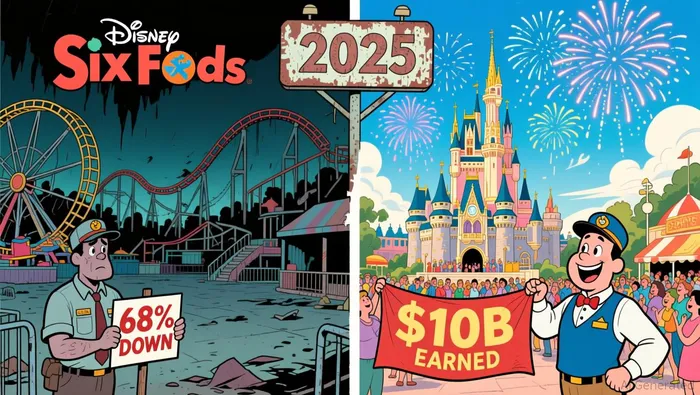
The disparity in stock performance underscores the importance of crisis management. Parks that respond transparently-such as implementing the Swiss Cheese Model of multi-layered safety systems-can mitigate long-term brand erosion according to research. However, delayed or opaque responses often deepen investor skepticism. For example, Universal's delayed disclosure of the Stardust Racers incidents in 2025 likely contributed to prolonged public distrust, even as the company emphasized its commitment to safety according to media reports.
Brand Equity: A Double-Edged Sword
Brand equity in the theme park industry is inextricably linked to perceived safety and guest experiences. Parks leveraging intellectual properties (IPs), such as Universal's Super Nintendo World, rely on immersive, trust-driven environments to justify premium pricing according to industry analysis. Safety incidents threaten this value proposition, as visitors associate risks with diminished enjoyment or danger. Conversely, effective post-incident communication and safety upgrades can reinforce brand loyalty. For instance, parks that reopened with enhanced protocols after the 2020–2021 pandemic closures reported improved visitor trust, demonstrating that transparency can rebuild equity according to case studies.
Quantifying brand value shifts, however, remains challenging. While direct metrics are scarce, market projections indicate that the global theme park industry's valuation-$75.1 billion in 2025-is expected to grow at a 5.2% CAGR to $124.7 billion by 2035, contingent on sustained visitor confidence according to market research. Parks that prioritize digital innovation, such as AI-driven crowd management and virtual reality enhancements, are better positioned to retain market share, as these technologies address safety concerns while enhancing guest engagement according to industry trends.
Strategic Implications for Investors
For investors, the key takeaway is that safety risk management is not merely a compliance issue but a critical determinant of long-term value. Parks with robust safety protocols, transparent governance, and diversified revenue models (e.g., merchandise, digital services) are more likely to weather crises. Conversely, those reliant on cost-cutting measures-such as reduced staffing or deferred maintenance-face heightened exposure to operational risks.
Regulatory harmonization also plays a role. The current patchwork of state-level safety standards in the U.S. complicates oversight, according to industry experts, increasing the likelihood of incidents. Advocacy for federal safety mandates, as proposed by engineering associations like NSPE, could reduce variability and enhance industry-wide accountability according to engineering reports. Investors should monitor legislative developments and company disclosures on safety investments, as these factors will shape the sector's resilience.
Conclusion
The theme park industry's ability to balance innovation with safety will define its future. While operational incidents inevitably test brand equity and investor confidence, the response to these challenges-whether through legal settlements, technological upgrades, or transparent communication-determines long-term success. For stakeholders, the lesson is clear: safety is not a cost center but a strategic asset. As the market evolves, parks that treat safety as a core component of their brand will emerge as the most compelling investments.





Comentarios
Aún no hay comentarios