
Mine Safety and Operational Risk in the Mining Sector: Immediate Implications for Equity Valuations and ESG Performance
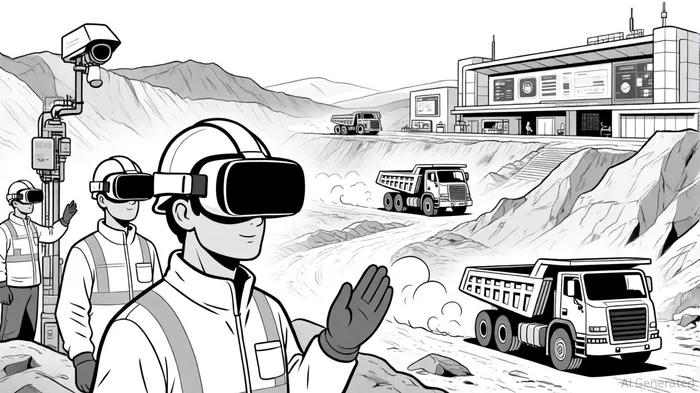
The mining sector in 2025 is at a critical juncture, where operational safety and ESG (Environmental, Social, and Governance) performance are no longer peripheral concerns but central determinants of equity valuations. Recent regulatory shifts, technological advancements, and a surge in investor scrutiny have created a landscape where companies must balance profitability with risk mitigation and sustainability. This analysis explores how mine safety incidents, regulatory compliance, and ESG metrics are reshaping the sector's financial dynamics.
Regulatory Evolution and Technological Adoption
The 2025 regulatory updates for mining safety emphasize automation and robotics to reduce workplace hazards. Over 80% of mining companies have adopted stricter sustainability regulations, including enhanced occupational health and safety programs, aiming to cut workplace incidents by 30% [1]. Autonomous haul trucks and remotely controlled dozers are minimizing human exposure to high-risk environments like rockfalls and blast zones [2]. Meanwhile, AI and IoT are enabling real-time monitoring of equipment health and ground stability, while immersive VR training is improving preparedness for emergencies [1]. These technologies are not just safety tools but strategic assets for aligning with ESG standards and regulatory compliance [2].
However, the regulatory landscape is not without challenges. While new sustainability frameworks have slowed, regulators are focusing on clarifying existing rules rather than introducing sweeping changes [3]. This shift implies that companies must now optimize compliance with established standards rather than adapting to rapid policy pivots. For equity valuations, this creates a more stable but competitive environment, where firms with robust ESG practices gain a structural advantage.
Safety Incidents and Financial Repercussions
Despite technological progress, 2025 has seen 14 mining fatalities by early July, with powered haulage and machinery-related accidents remaining leading causes [4]. Fall hazards have also spiked, with MSHA reporting seven deaths and 767 violations from 2022 to 2024 [5]. These incidents underscore the persistent risks in the sector and their financial implications.
Research indicates that companies with poor ESG performance, including frequent safety lapses, underperform the market by 3.5% annually in the U.S. and 2.5% in Europe [6]. For example, firms with high ESG incident rates face reputational damage, inaccurate analyst forecasts, and long-term value erosion [6]. The market's underreaction to ESG risks—particularly among short-term investors—creates opportunities for those who prioritize safety and transparency.
ESG Performance and Equity Valuations
ESG metrics are increasingly tied to equity valuations, though the relationship is nuanced. Larger mining firms tend to achieve higher ESG ratings than smaller peers, even if profitability and debt costs are not directly correlated [7]. This suggests that ESG performance is more about investor perception and regulatory alignment than immediate financial gains.
The European Union's Corporate Sustainability Reporting Directive (CSRD) and the International Financial Reporting Standards (IFRS) are becoming pivotal for capital access. Companies failing to meet these standards risk exclusion from ESG-aligned portfolios, which now dominate 70% of mining investments [8]. For instance, 2025 projections indicate that sustainable mining projects will secure 40% more funding than non-ESG-compliant operations [9]. This trend is amplified by the politicization of ESG in certain regions, where anti-ESG rhetoric complicates compliance but also highlights the importance of proactive strategies [10].
Case Studies and Sector-Wide Shifts
Historical case studies illustrate the long-term impact of safety and ESG initiatives. Brazil's Samarco tailings dam disaster in 2015 spurred global reforms, including drone inspections and seismic sensors, reducing tailings failures by 40% by 2025 [11]. Similarly, Australia's coal sector cut fatal accidents by 65% through IoT monitoring and Zero Harm programs [11]. These examples demonstrate that technological and cultural shifts in risk management yield measurable financial and operational benefits.
In 2025, the sector is also grappling with rising labor costs and shortages, which exacerbate safety risks as less experienced workers fill critical roles [12]. This dynamic pressures companies to invest in automation and training, further aligning with ESG goals.
Investor Implications and Strategic Recommendations
For investors, the key takeaway is clear: mine safety and ESG performance are no longer optional considerations but core risk factors. Companies that integrate AI, automation, and immersive training into their operations are better positioned to navigate regulatory scrutiny and investor demands. Additionally, firms demonstrating transparency in ESG reporting—particularly on climate resilience and supply chain accountability—are likely to attract capital amid tightening global standards [13].
Conclusion
The 2025 mining sector is defined by a delicate balance between operational risk and ESG-driven value creation. While safety incidents and regulatory challenges persist, technological innovation and investor priorities are reshaping the industry's trajectory. For equity valuations, the message is unequivocal: companies that prioritize safety, transparency, and sustainability will outperform peers in an increasingly ESG-conscious market.







Comentarios
Aún no hay comentarios