
Safehold's Boston Play: A Blueprint for Real Estate's Future
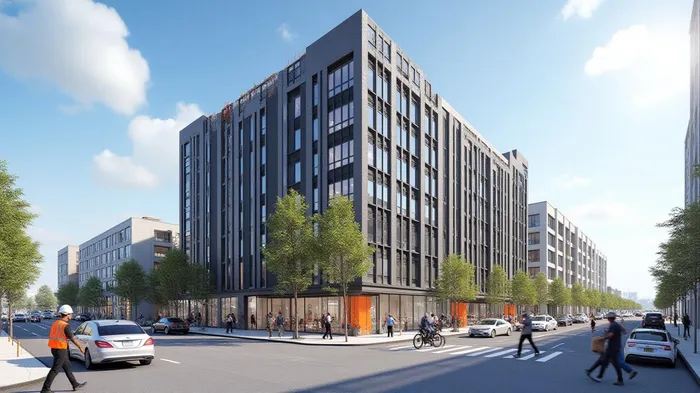
The real estate landscape is undergoing a quiet revolution, one where traditional financing models are being upended by innovative structures that promise lower costs, higher returns, and long-term stability. Nowhere is this more evident than in Safehold Inc.'s (NYSE: SAFE) recent ground lease deal for The Benjamin, a 364-unit multifamily development in Boston. This transaction is not merely a real estate milestone—it is a signal of structural shifts in how capital flows to prime markets, and it positions Safehold as the prime beneficiary. For investors, this is a call to recognize the company's unique value proposition: a scalable, validated model that thrives in high-cost urban environments.
Market Validation: Safehold's Boston Entry as a Seal of Approval
Safehold's collaboration with The Michaels Organization marks its first foray into Boston's competitive multifamily market, a sector where developers face soaring land costs and construction expenses. By structuring the deal as a 99-year ground lease with fixed ground rent (no fair market value resets), Safehold has demonstrated the viability of its model in one of the nation's most scrutinized markets. This is no accident: Boston's status as a top-tier MSA underscores Safehold's strategy of concentrating in high-demand areas where its land ownership model can extract maximum value.
The deal also signals broader industry adoption of ground leases. With over 85 multifamily assets under management nationwide and a pipeline fueled by partnerships like this one, Safehold is proving that its model—where it retains land rights while developers own the building—is not niche but strategic. This transaction should dispel any lingering doubts about the scalability of ground leases in premier markets.
Capital Efficiency: A Lifeline in a High-Cost Environment
The Michaels Organization's decision to partner with Safehold reflects the urgency of developers seeking alternatives to traditional financing. In an era of elevated interest rates and construction costs, Safehold's ground lease structure offers a lifeline: it reduces upfront equity requirements by transferring land ownership risk to Safehold, allowing developers to focus on operational excellence. The terms of the Boston deal—fixed ground rent, no FMV resets, and a 99-year term—create a “win-win” by enabling developers to lock in predictable costs while maximizing cash-on-cash yields.
This model is particularly compelling in multifamily, where demand for affordable housing is surging. Safehold's solution complements traditional financing (e.g., bank loans, CMBS) by reducing friction costs and improving returns. For investors, this means Safehold's revenue streams are shielded from interest rate volatility, a critical advantage as the Federal Reserve's policies remain uncertain.
Scalable Growth: A Pipeline Fueled by Institutional Partnerships
The Michaels deal is just the start. By partnering with a national leader like The Michaels Organization—a firm with a 50-year track record—Safehold gains access to institutional-quality developments, accelerating its portfolio growth. This transaction also highlights the company's financial flexibility: its $2.0 billion unsecured credit facility and commercial paper program provide ample dry powder to pursue similar opportunities.
Looking ahead, Safehold's “Ground Lease Plus” initiative, which integrates its model into pre-development stages, and its “SAFE x SELL” exit strategy, which maximizes proceeds at maturity, create a full-cycle value proposition. With cap rates on the Boston deal ranging from 4.25% to 5.0%—in line with its portfolio averages—and coverage ratios of 3.0x–4.5x, the financial discipline is clear.
Why Investors Should Act Now: The Structural Case for Safehold
Safehold's Boston entry is more than a single deal—it is a testament to its role as the architect of a new real estate paradigm. Here's why investors should take note:
- Market Validation: Success in Boston, a notoriously competitive market, validates Safehold's model in the most demanding environments.
- Resilient Income Streams: Ground leases provide decades-long, inflation-protected cash flows, ideal for a REIT in a volatile economy.
- Scalability: Partnerships with firms like Michaels and its $2 billion credit facility ensure Safehold can capitalize on the $500M+ deal opportunities in its pipeline.
- Structural Shift: Ground leases are no longer a novelty but a proven alternative to traditional financing. Safehold's leadership positions it to capture this growing demand.
The data speaks plainly: Safehold's stock has outperformed the broader real estate sector in volatile markets, and its NAV growth is underappreciated by current valuations. With a ground lease pipeline that could surpass $3 billion by 2026, the company is primed for accelerated growth.
Final Call: Safehold—A Play on the Future of Real Estate Finance
Safehold's Boston deal is a masterclass in strategic execution. It leverages the company's unique model to address developers' pain points while generating predictable returns for investors. In an era where real estate capital is scarce and expensive, Safehold's ground leases offer a rare combination of low cost, long duration, and scalability.
For investors seeking exposure to structural real estate trends, Safehold is no longer a niche play—it is a necessity. With prime U.S. markets like Boston proving the viability of its model, now is the time to position for the next wave of growth.
The future of real estate financing is here—and Safehold is writing the blueprint.







Comentarios
Aún no hay comentarios