
Safe Bulkers: A Strategic Fleet Overhaul Drives ESG Alignment and Long-Term Profitability
In an industry where environmental regulations and operational efficiency are reshaping competitive dynamics, Safe BulkersSB--, Inc. (NYSE: SB) has emerged as a standout player through its aggressive fleet modernization strategy. By systematically retiring aging, carbon-intensive vessels and replacing them with next-generation, energy-efficient ships, the company is not only reducing its environmental footprint but also positioning itself to capitalize on the growing demand for sustainable shipping solutions. For investors, this dual focus on profitability and ESG alignment presents a compelling case for long-term growth in the dry-bulk sector.
The Logic of Fleet Renewal: Cutting Costs and Carbon Emissions
Since 2018, Safe Bulkers has sold or committed to sell 14 older vessels with an average age of 14.5 years, generating $237.9 million in proceeds. These sales have allowed the company to accelerate the replacement of its fleet with newer ships that are 50% more fuel-efficient on average. By acquiring seven second-hand vessels for $187 million and ordering 18 newbuilds by 2027, Safe Bulkers has reduced its average fleet age to 10.1 years as of May 2025. This strategic shift is critical: older vessels are not only more costly to maintain but also face increasing regulatory penalties under the International Maritime Organization's (IMO) EEDI-Phase 3 and NOx Tier III standards.
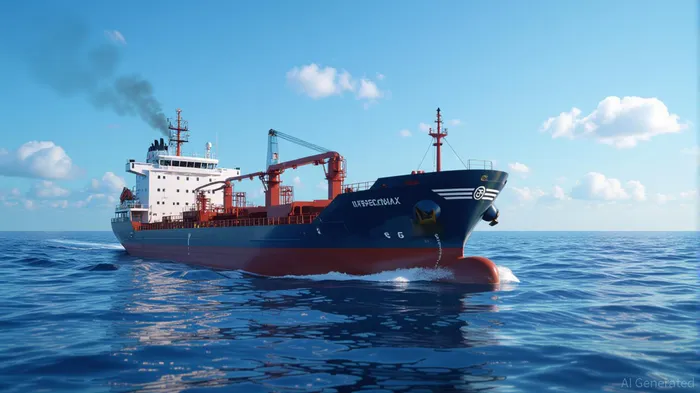
The financial benefits of this approach are clear. The company's newly delivered Kamsarmax and Post-Panamax vessels, such as the Efrossini (delivered April 2025), are designed to meet the most stringent emissions standards while carrying larger cargo volumes. These ships incorporate advanced technologies like selective catalytic reduction (SCR) systems, ballast water treatment, and low-friction hull coatings, which collectively reduce fuel consumption by up to 20% compared to vessels built just a decade ago. For a dry-bulk carrier, where fuel costs can account for 25–30% of operating expenses, these savings are transformative.
ESG as a Competitive Edge
The shipping industry is under intense pressure to decarbonize, and Safe Bulkers is ahead of the curve. As of 2025, 12 of its 47 vessels are fully compliant with IMO GHG Phase 3 and NOx Tier III regulations, while 21 are equipped with scrubbers that generate additional earnings through charterCHTR-- agreements tied to fuel efficiency. The company has also invested $546.6 million in environmental upgrades since 2024, with $201.6 million more allocated through 2027. These efforts are paying off: Safe Bulkers' Annual Efficiency Ratio (AER) and Energy Efficiency Operational Indicator (EEOI) metrics have improved by 15% and 18%, respectively, compared to 2020 levels.
Investors should note that ESG alignment is no longer just a reputational asset—it's a financial one. The EU Emissions Trading System (ETS) now includes maritime emissions, and ships with lower carbon footprints will face smaller compliance costs. Safe Bulkers' proactive approach ensures it is well-positioned to outperform peers as carbon pricing mechanisms expand globally.
The Newbuilding Orderbook: A Blueprint for Future Growth
Safe Bulkers' orderbook is a masterclass in forward-looking strategy. By 2027, the company will have delivered 18 newbuilds, including methanol-dual-fueled Kamsarmax vessels, which can transition to alternative fuels as the market evolves. These ships are designed to comply with the IMO's Net-Zero Framework, which will require a 70–100% reduction in shipping emissions by 2050. The orderbook also reflects a shift toward larger, more efficient vessel types: Post-Panamax and Kamsarmax ships can carry up to 80,000 dwt, enabling economies of scale that smaller vessels cannot match.
Risks and Rewards: Is Now the Time to Invest?
While Safe Bulkers' strategy is sound, the company has taken on significant debt to fund its newbuilding program. As of May 2025, $486.2 million of its $662.1 million capital expenditure program has been spent, with the remaining $175.9 million to be paid in 2026–2027. Rising interest rates could pressure cash flow, particularly if dry-bulk demand weakens. However, the company's focus on ESG-driven efficiency gains—such as fuel savings from scrubbers and low-friction paints—provides a buffer.
For long-term investors, the risks are manageable. Safe Bulkers' fleet renewal has already improved its ESG ratings and operational margins, and its newbuilds will begin generating returns as early as 2026. The company's alignment with global decarbonization trends also offers a moat against regulatory surprises.
Conclusion: A Model for Sustainable Shipping
Safe Bulkers' fleet modernization strategy is a textbook example of how traditional industries can adapt to a low-carbon future. By retiring high-emission assets and investing in energy-efficient newbuilds, the company is not only reducing costs but also future-proofing its business against regulatory and market shifts. For investors seeking exposure to a sector poised for ESG-driven growth, Safe Bulkers offers a compelling mix of operational discipline, technological innovation, and regulatory foresight. As the dry-bulk industry evolves, those who recognize the value of a modern, sustainable fleet will be well-positioned to reap the rewards.





Comentarios
Aún no hay comentarios