
Sable Offshore's (SOC) Recent Turnaround and 14.9% Stock Surge: A Momentum Investor's Playbook
Sable Offshore (NYSE: SOC) has captured the attention of momentum investors with a 14.9% stock surge in July 2025, driven by a confluence of operational milestones and market optimism. This rally, however, raises critical questions about whether the valuation re-rating reflects sustainable momentum or speculative overreach.
Catalysts Fueling the Surge
The primary catalyst was the resumption of production at the Santa Ynez Unit (SYU) on May 15, 2025, after a prolonged hiatus due to pipeline repairs, according to a Sable Offshore report. That same report noted the successful completion of hydrotests on the Las Flores Pipeline System, which enabled the company to begin flowing oil to onshore storage-a critical step toward monetizing its output. Analysts at Forbes noted that the production restart, combined with an aggressive upward revision of output guidance to 40,000–50,000 BOE/d for H2 2025, signaled a "renewed operational confidence" among investors, according to a Forbes analysis.
A secondary catalyst emerged from a tentative court ruling in June 2025, which, while not immediately resolving legal disputes, was interpreted as a step toward clarifying regulatory hurdles in the company report. This legal development, paired with analyst upgrades-several firms raising price targets to $30–$35 per share-fueled further buying pressure, per the StockAnalysis forecast.
Momentum Investing Dynamics
Momentum investors, who prioritize rapid price trends and positive sentiment, have capitalized on SOC's narrative of recovery. The stock's surge from $22 to $28 in a matter of weeks reflects a classic "catalyst-driven re-rating," where market participants anticipate future cash flows rather than current fundamentals, as the Forbes analysis argued. According to Investing.com, the rally was amplified by short-covering and speculative positioning, as traders bet on the company's ability to stabilize its balance sheet; StockAnalysis also documented related shifts in positioning.
However, the momentum is precarious. Sable's $873 million debt load and unprofitable status remain red flags, as previously noted by Forbes. While the company raised $282.6 million via an upsized public offering in May 2025 (per the company report), its cash reserves of $247.1 million as of June 30, 2025, still fall short of its $875.6 million short-term debt obligation maturing in January 2026, according to a StockInvest digest. This creates a high-stakes scenario where refinancing success could validate the re-rating, while failure could trigger a sharp reversal.
Valuation Re-Rating: Optimism vs. Realities
The valuation re-rating hinges on two key assumptions:
1. Sustained Production: Sable's ability to maintain the 40,000–50,000 BOE/d guidance is contingent on regulatory approvals and pipeline throughput. As of Q2 2025, the company had yet to generate material revenue from its operations, per the StockInvest digest.
2. Legal and Regulatory Resolution: A class-action lawsuit alleging misleading production claims adds uncertainty, a risk flagged in the Forbes analysis. If resolved unfavorably, it could erode investor trust and force additional capital expenditures.
Despite these risks, the market has priced in a near-term resolution of these issues. The stock's price-to-EBITDA multiple, though elevated at 15x, aligns with peers in the distressed energy sector, suggesting investors are betting on a "recovery premium" rather than current profitability, as noted in a Nasdaq article.
Risks to Momentum
The momentum trade is inherently vulnerable to catalyst fatigue. If production lags guidance or refinancing proves elusive, the stock could face a sharp correction. Additionally, Sable's debt-to-equity ratio of 46.4%-well above the S&P 500 average, as the Nasdaq article highlighted-limits its flexibility in navigating operational setbacks.
Conclusion: A High-Volatility Bet
For momentum investors, Sable OffshoreSOC-- represents a high-risk, high-reward opportunity. The recent 14.9% surge is justified by tangible operational progress and analyst optimism, but the valuation re-rating remains fragile. Success will depend on the company's ability to convert its production restart into consistent revenue, secure refinancing, and navigate legal challenges. While the short-term outlook is cautiously optimistic, long-term investors should monitor debt metrics and production consistency closely.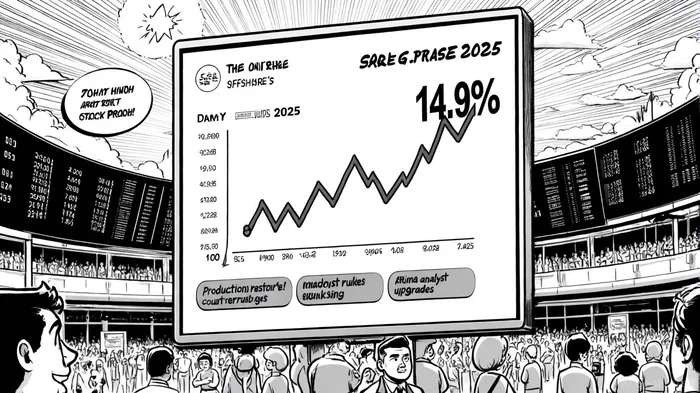





Comentarios
Aún no hay comentarios