
Saab's Subscription Model: A Strategic Leap for Defense Sector Resilience
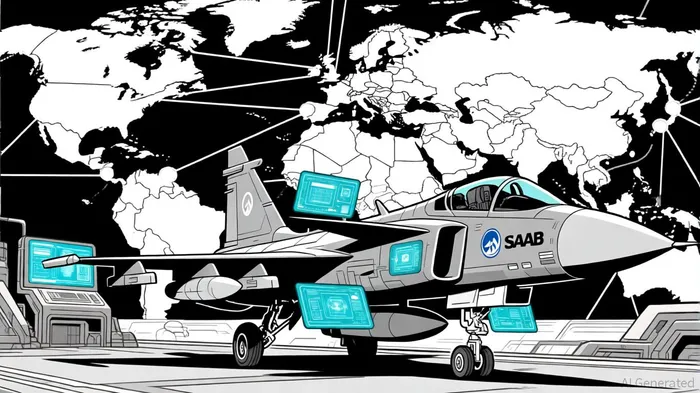
Saab's recent proposal to adopt a subscription model for defense systems marks a pivotal shift in how military technology is procured and sustained. This strategy, articulated by CEO Micael Johansson, aligns with broader industry trends toward recurring revenue models and operational flexibility, positioning the Swedish defense giant to capitalize on Europe's urgent need for modernized, scalable solutions, as shown in Saab's Q2 2025 results.
Leadership Vision: From One-Time Sales to Ongoing Partnerships
Johansson has framed the subscription model as a response to two critical challenges: fragmented European defense requirements and the accelerating pace of technological obsolescence in warfare. By shifting from one-time weapon system sales to ongoing payments, Saab aims to ensure continuous funding for R&D and production capacity, even as demand fluctuates, according to Reuters. This approach mirrors the software-as-a-service (SaaS) model, where customers pay for access rather than ownership, allowing Saab to maintain revenue streams while adapting to clients' evolving needs.
The CEO emphasized that Europe's lack of unified defense standards has hindered economies of scale, a problem the subscription model could mitigate by encouraging long-term collaboration, Reuters noted. For instance, nations could pool resources to fund shared systems like autonomous drones or cyber-defense platforms, reducing individual costs while enhancing collective security. Johansson also cited the Ukraine conflict as a catalyst, noting that modern warfare now demands rapid technological iteration-a challenge for traditional procurement cycles, as highlighted in Deloitte's 2025 outlook.
Financial Performance: Capacity Investments Pay Off
Saab's Q2 2025 results underscore the company's readiness to support this strategic pivot. Organic sales grew 32% year-over-year to SEK 19,786 million, driven by strong order intake (SEK 28,403 million) and a 14.3% EBITDA margin, according to the company release. While the company reported a negative operational cash flow of SEK -1,136 million-primarily due to capacity expansion investments-it raised full-year sales growth guidance to 16–20%, reflecting confidence in sustained demand, per the earnings call highlights. These figures suggest Saab is prioritizing long-term operational readiness over short-term liquidity, a critical enabler for subscription-based models that rely on steady, multi-year contracts.
Industry Trends: Recurring Revenue in a High-Stakes Sector
Saab's strategy aligns with a sector-wide shift toward recurring revenue models. The global subscription economy, valued at $3 trillion in 2025, is reshaping industries, including defense, through digital tools and flexible service offerings. Aerospace and defense firms are increasingly monetizing aftermarket services-such as AI-driven maintenance, repair, and overhaul (MRO)-to generate stable income streams, a trend the Deloitte outlook also emphasizes. For example, predictive maintenance algorithms reduce downtime and extend asset lifespans, creating value that aligns with subscription economics.
The U.S. defense market, projected to grow at a 3.58% CAGR through 2030, is also seeing a rise in mixed revenue models that blend subscriptions with usage-based pricing. This trend is driven by the need for operational agility amid geopolitical tensions and workforce shortages. Deloitte's 2025 outlook highlights how AI and extended reality (XR) technologies are not only optimizing MRO but also addressing talent gaps-key challenges for defense firms aiming to sustain long-term contracts.
Challenges and Considerations
While the subscription model offers stability, its success hinges on geopolitical alignment. Europe's fragmented defense landscape remains a hurdle; Saab's vision for collaborative procurement requires political will to overcome nationalistic preferences. Additionally, the model's reliance on continuous innovation means Saab must balance R&D investments with profitability-a challenge given the high costs of developing autonomous systems and next-gen drones, as discussed in the Deloitte outlook.
Investment Implications: A Model for the Future?
For investors, Saab's subscription strategy represents a calculated bet on long-term revenue stability and operational efficiency. By locking in recurring payments, the company reduces exposure to volatile defense budgets and procurement delays. Moreover, its focus on digital integration-such as AI for predictive maintenance-positions it to lead in the sector's transition to smart, service-oriented models, a shift Deloitte highlights.
However, risks persist. Geopolitical shifts could disrupt European collaboration, and the subscription model's profitability depends on Saab's ability to scale its offerings without inflating costs. Yet, with Q2 2025 results demonstrating robust growth and a clear leadership vision, the company appears well-equipped to navigate these challenges.
Conclusion
Saab's subscription model is more than a business innovation-it's a response to the structural demands of 21st-century warfare. By aligning with industry trends toward digitalization and recurring revenue, the company is positioning itself as a key player in a defense sector increasingly defined by flexibility and collaboration. For investors, this strategy offers a compelling case for long-term value creation, provided Saab can navigate the complex geopolitical and technological landscape ahead.







Comentarios
Aún no hay comentarios