
Saab's Defense Contracts: Capitalizing on Geopolitical Tailwinds and Scalable Demand
The global defense sector is in the midst of a historic transformation, driven by escalating geopolitical tensions, modernization needs, and the imperative to counter evolving threats like CBRN (chemical, biological, radiological, and nuclear) attacks. Swedish defense giant Saab AB stands at the forefront of this shift, leveraging its technological prowess and strategic contracts to position itself as a leader in naval and air defense systems. Recent orders—such as the SEK 900 million combat boat deal and the SEK 1.5 billion air defense contract—highlight not only Sweden's defense spending surge but also Saab's ability to capitalize on secular trends in defense modernization.
Recurring Orders: The Foundation of Sustainable Growth
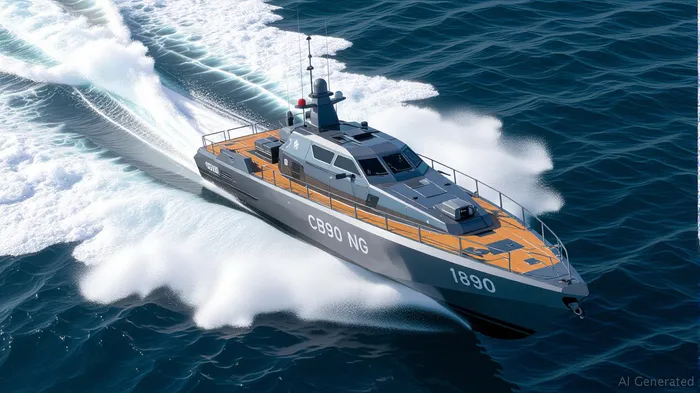
Saab's recent SEK 900 million contract for 22 CB90 Next Generation combat boats (booked in Q2 2025) exemplifies the company's recurring revenue model. These high-speed, modular vessels, manufactured at Saab's Docksta shipyard, are equipped with advanced CBRN protection, remote weapon systems, and anti-submarine capabilities. Crucially, this order follows a prior 2024 deal for ten boats, reinforcing Sweden's commitment to littoral warfare modernization. Deliveries will span multiple years, ensuring steady cash flow and visibility for Saab's order backlog, which already stood at SEK 187 billion as of 2024.
The SEK 1.5 billion RBS 70 NG air defense contract, part of Sweden's Mobile Short-Range Air Defense (MSHORAD) program, further underscores this recurring theme. Scheduled for delivery starting in 2027, this system addresses the urgent need for portable, high-performance air defense in hybrid warfare scenarios—a demand amplified by post-2022 conflict realities. These contracts are not isolated wins but components of long-term framework agreements, enabling Saab to scale production and maintain market share.
Technological Edge and Global Market Reach
Saab's success hinges on its ability to blend cutting-edge technology with geopolitical strategy. The CB90 NG's all-aluminum hull and 40+ knot speed make it ideal for Baltic Sea operations, while its modular design allows rapid adaptation to missions ranging from anti-submarine warfare to coastal patrols. Similarly, the RBS 70 NG's advanced radar and target acquisition systems position it as a critical asset for countering drones and low-flying aircraft—a priority for NATO allies.
Beyond Sweden, Saab's global partnerships (e.g., in Poland, India, and the Philippines) amplify its reach. The company's Torped 47 anti-submarine system and GlobalEye airborne early warning aircraft further diversify its portfolio, aligning with international demand for integrated defense solutions. This geographic and product diversification mitigates reliance on any single market, a key strength in volatile geopolitical climates.
Note: A rising trend would reflect sustained investor confidence in Saab's strategic positioning.
Analyst Perspectives: Valuation Debate Amid Growth Opportunities
Despite its robust order book, Saab faces skepticism from some analysts, notably Bank of America's 2025 downgrade to “Underperform,” which cited stretched valuations and concerns over earnings visibility beyond 2027. Critics argue that Saab's 43% premium over defense peers may require unsustainable high-teens growth through 2030—a challenge in an era of uncertain geopolitical spending.
However, proponents counter that the company's recurring contracts, technological differentiation, and secular tailwinds justify its premium. Sweden's NATO membership (2024) and its pledge to meet the 2% GDP defense spending target ensure steady domestic demand. Meanwhile, global defense budgets are projected to hit $2.3 trillion by 2027, driven by modernization needs and MSHORAD systems' rising importance.
Investment Thesis: Saab as a Play on European Defense Modernization
Saab's equity (STO: SAAB) presents a compelling opportunity for investors seeking exposure to European defense spending. With a backlog of SEK 187 billion and a pipeline fueled by recurring orders, the company is well-positioned to deliver stable growth. Key catalysts include:
1. Framework Agreements: The CB90 NG and RBS 70 NG contracts exemplify scalable, long-term revenue streams.
2. CBRN and MSHORAD Demand: Post-2022 conflicts have prioritized these capabilities, with Saab's tech addressing both.
3. Geopolitical Tailwinds: Sweden's NATO membership and Baltic Sea security concerns drive sustained investment.
For broader exposure, defense ETFs like the iShares Global Aerospace & Defense ETF (IAF.D) or the SPDR S&P Aerospace & Defense ETF (XAR) offer diversification while benefiting from Saab's success.
Final Recommendation
Saab's valuation debate overlooks its structural advantages: a recurring revenue model, technological leadership, and alignment with global defense priorities. While risks exist—such as delays in international orders or overvaluation concerns—the secular trends favoring defense modernization and geopolitical spending are too strong to ignore. Investors seeking exposure to European defense should consider Saab AB (SAAB) or defense ETFs as core holdings.
In an era of escalating security threats, Saab's ability to deliver cutting-edge systems at scale positions it as a critical player. The question isn't whether defense spending will grow—it's how much of that growth Saab will capture.
Stay vigilant, stay invested.







Comentarios
Aún no hay comentarios