
Ryanair's Strategic Vulnerability in Spain: Navigating Regulatory and Pricing Pressures in a Competitive Landscape
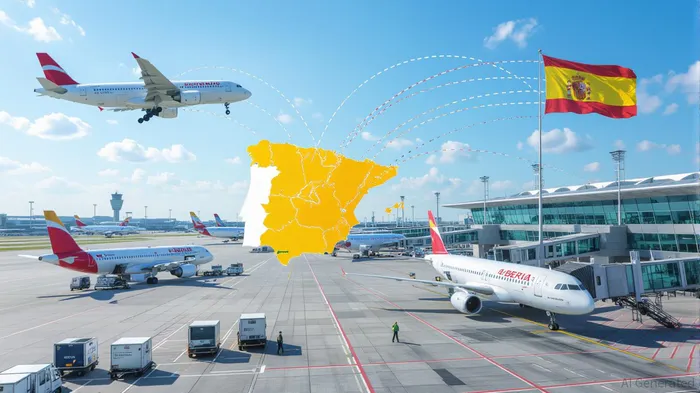
In the dynamic aviation sector, Ryanair's low-cost business model has long thrived on operational efficiency and route optimization. However, as the airline expands its footprint in Spain—a critical market for its European operations—emerging regulatory and pricing pressures could test the resilience of its cost-driven strategy. While no recent, specific regulatory changes in Spain's aviation sector have been identified as of September 2025, broader EU-level policies and competitive dynamics with local carriers like Vueling and Iberia warrant closer scrutiny.
EU Environmental Policies: A Looming Cost Driver
The European Union's push for carbon neutrality by 2050 has intensified regulatory scrutiny on aviation emissions. Although no 2025-specific environmental policies targeting RyanairRYAAY-- in Spain were found in available sources [1], the airline remains exposed to the EU Emissions Trading System (ETS) and the Carbon Offsetting and Reduction Scheme for International Aviation (CORSIA). These frameworks impose escalating compliance costs, which could erode Ryanair's thin profit margins. For instance, the EU's proposed 2025 “Fit for 55” package aims to reduce emissions by 55% by 2030, potentially requiring airlines to invest in sustainable aviation fuels (SAFs) or retrofit fleets with newer, more efficient aircraft. Such measures could strain Ryanair's capital allocation, particularly in markets like Spain, where high-frequency, short-haul routes are central to its revenue model.
Slot Allocation and Airport Congestion
Spain's major airports—Madrid-Barajas, Barcelona-El Prat, and Málaga—are among the busiest in Europe, with slot allocation rules governed by the EU's A4O (Airlines for Europe) guidelines. While no recent changes to these rules were identified [2], the growing dominance of local carriers like Iberia (owned by Spain's Amadeus-backed IAG) and Vueling could intensify competition for prime slots. Iberia, in particular, benefits from its integration with the Lufthansa Group and a more flexible route network, enabling it to offer premium services that contrast with Ryanair's no-frills approach. This could pressure Ryanair to either absorb higher slot costs or cede market share in key Spanish hubs.
Pricing Pressures and Competitive Dynamics
Spain's aviation market is highly competitive, with Vueling and Iberia adopting hybrid business models that blend low-cost and full-service elements. Vueling, for example, has invested in ancillary revenue streams and customer loyalty programs, challenging Ryanair's reliance on base fares. While no direct data on pricing pressures in 2025 were found [3], Spain's economic recovery post-pandemic has led to increased consumer demand for value-added services, a trend that could undermine Ryanair's cost-leadership strategy. Additionally, Iberia's access to EU subsidies for regional connectivity may allow it to undercut Ryanair on secondary routes, further fragmenting the market.
Strategic Implications for Investors
Ryanair's vulnerability in Spain hinges on its ability to adapt to regulatory headwinds and competitive shifts. The airline's historical strength—route density and unit cost efficiency—may be offset by rising compliance costs and the need to differentiate in a saturated market. Investors should monitor two key metrics: (1) Ryanair's capital expenditure on sustainability initiatives and (2) its market share in Spain's top five airports. A decline in either could signal a broader erosion of its low-cost advantage.
In the absence of immediate regulatory shocks, the long-term risks remain structural. As the EU tightens environmental standards and local carriers innovate, Ryanair's playbook in Spain may require a recalibration—from bare-bones cost-cutting to value-added differentiation. For now, the airline's agility will be its greatest asset, but the window for maintaining its dominance is narrowing.





Comentarios
Aún no hay comentarios