
Ryanair's Fleet Modernization: A Strategic Edge in Post-737 Max Era
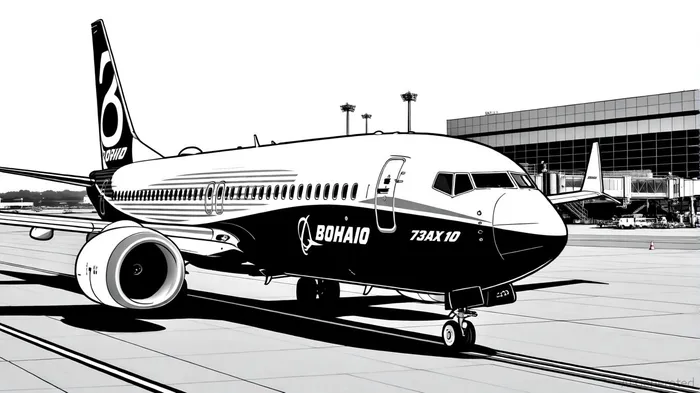
Ryanair's recent fleet modernization strategy has positioned it as a formidable player in Europe's low-cost aviation sector, leveraging Boeing's 737 MAX 10 to secure long-term cost advantages and operational scalability. With a $40 billion order for 300 737 MAX 10 aircraft—150 firm and 150 options—the airline is betting heavily on Boeing's ability to deliver a next-generation aircraft that aligns with its high-capacity, low-cost model[1]. The MAX 10, which offers 21% more seats than Ryanair's current 737NG fleet, is expected to reduce unit costs by 12–15% through improved fuel efficiency and lower maintenance expenses[3]. This strategic pivot is critical for RyanairRYAAY-- as it aims to increase annual passenger numbers to 300 million by 2034, a target that hinges on its ability to operate larger aircraft on high-demand routes[1].
Certainty Amid Uncertainty: Boeing's Timeline and Ryanair's Confidence
Despite Boeing's history of certification delays, Ryanair CEO Michael O'Leary has expressed cautious optimism. The MAX 10's certification, originally slated for 2023, is now expected by late 2025[2], with first deliveries to Ryanair penciled in for spring 2027[3]. O'Leary has cited written assurances from Boeing's CEO, Stephanie Pope, as a key factor in maintaining the order[2]. However, he has also warned that further delays could “flatline” Ryanair's growth in summer 2027[2], underscoring the airline's reliance on timely delivery. This risk is compounded by ongoing technical challenges, including unresolved issues with the Engine Anti-Ice (EAI) and Stall Management Yaw Damper (SMYD) systems[3], which have drawn heightened regulatory scrutiny following the 737 MAX's troubled history.
Immediate Modernization: 2025 Deliveries and Environmental Gains
While the MAX 10 remains a long-term cornerstone, Ryanair is accelerating near-term modernization with the delivery of 29 new 737 MAX aircraft in 2025, representing a $3 billion investment[4]. These aircraft will replace older models and are projected to cut CO2 emissions by 16% and noise levels by 40%[4]. The move aligns with European governments' push for sustainable aviation, with Ryanair planning to deploy these planes at eco-friendly airports in Sweden, Italy, Spain, and Poland[4]. This dual approach—combining immediate efficiency gains with future high-capacity growth—positions Ryanair to navigate both regulatory and market pressures.
Strategic Positioning: Cost Advantages and Competitive Edge
Ryanair's focus on the MAX 10, rather than the smaller MAX 7, reflects a calculated operational strategy. The MAX 7, expected to certify by late 2025[5], does not align with Ryanair's need for high-density seating on transcontinental routes[1]. By prioritizing the MAX 10, the airline is consolidating its fleet around a single, scalable platform, reducing training and maintenance costs. This strategy mirrors its historical success in leveraging economies of scale, such as its shift to the 737NG in the 2000s[3]. Analysts note that the MAX 10's 18% lower fuel burn per seat compared to the 737NG[1] could further widen Ryanair's unit cost advantage, currently estimated at 10–15% over peers[3].
Risks and Mitigants
The primary risk lies in Boeing's ability to meet certification and delivery timelines. Delays could force Ryanair to rely on older, less efficient aircraft, eroding its cost edge. However, the airline has contingency plans, including the use of 737-8s as short-term replacements[6], and has secured options to adjust order quantities if needed[1]. Additionally, O'Leary's public skepticism about Boeing's reliability—while tempered by recent assurances—suggests the airline is prepared to pivot if necessary[2].
Conclusion: A High-Stakes Bet with Long-Term Payoffs
Ryanair's fleet modernization represents a high-stakes bet on Boeing's turnaround and its own operational discipline. The MAX 10's potential to drive growth, reduce costs, and enhance sustainability aligns with investor priorities in an industry grappling with decarbonization and regulatory scrutiny. While certification risks remain, Ryanair's proactive approach—balancing immediate efficiency with future scalability—positions it to outperform peers in a competitive market. For investors, the key will be monitoring Boeing's progress and Ryanair's ability to execute its integration plan without operational hiccups.





Comentarios
Aún no hay comentarios