
RYAM's Strategic Position in the Sustainable Cellulose and BioFuel Markets
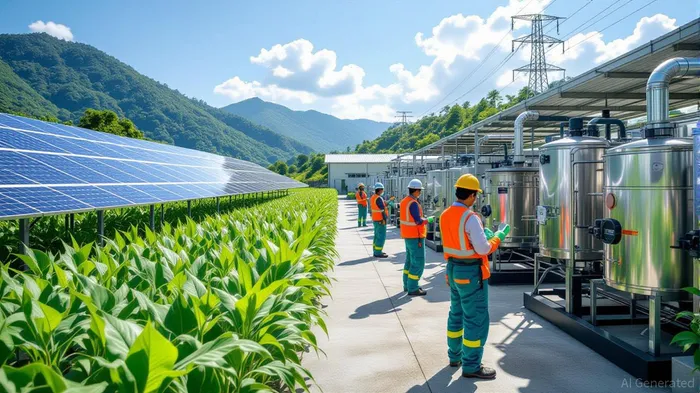
In an era where sustainability is no longer a niche concern but a global imperative, companies that align innovation with environmental stewardship are poised to lead the next industrial revolution. RYAM, a pioneer in sustainable cellulose and biofuel markets, exemplifies this paradigm. By leveraging cutting-edge technology, strategic partnerships, and a carbon-neutral vision, RYAM is not only transforming renewable resources into high-value products but also redefining what it means to be a responsible industrial innovator.
Strategic Partnerships and Technological Leadership
RYAM's strategic collaborations with industry leaders like 3MMMM-- underscore its commitment to advancing low-carbon solutions. Together, they are developing specialty cellulose products that reduce reliance on fossil fuels while enhancing supply chain sustainability [1]. These partnerships are critical to RYAM's ability to scale its high-purity cellulose (HPC) offerings, which are now integral to industries ranging from pharmaceuticals to automotive filters and textiles [3].
The company's innovation extends to second-generation (2G) biofuels, a cornerstone of its environmental strategy. By refining sugars from tree residuals—a byproduct of its HPC production—RYAM creates bioethanol that serves as a renewable alternative to conventional fuels. This dual-purpose approach not only maximizes resource efficiency but also positions RYAM at the intersection of material science and energy transition [2].
Market Growth and Investment Potential
The global biofuel market is projected to grow by 56% between 2022 and 2027, driven by regulatory mandates and corporate decarbonization goals [1]. RYAM's focus on 2G biofuels aligns perfectly with this trajectory, particularly in Europe and North America, where demand for low-carbon energy is surging. Meanwhile, the sustainable cellulose market is expanding as industries seek biodegradable alternatives to plastics. RYAM's HPC solutions, used in everything from food packaging to personal care products, are well-positioned to capture this demand [3].
RYAM's financial credibility is further bolstered by its operational efficiency. For instance, its Fernandina Beach plant in Florida operates on a combined heat and power system that emits 50% less greenhouse gas than coal-fired plants [4]. Such innovations reduce costs while enhancing margins, a critical factor for investors seeking long-term value.
Carbon-Neutral Ambitions and Third-Party Validations
RYAM has set a bold target: a 40% reduction in Scope 1 and Scope 2 emissions by 2030, using 2020 as the baseline [2]. This goal is underpinned by its reliance on renewable energy sources, including hydroelectricity and sustainable biomass, which power its global operations in the U.S., Canada, and France [4]. While the company's website does not explicitly list ISO or Carbon Trust certifications for 2025, its practices—such as sourcing raw materials from sustainably managed forests and achieving carbon-neutral production in key facilities—align with the criteria of these standards [1].
Investment Outlook
RYAM's strategic positioning in two high-growth sectors—sustainable cellulose and biofuels—makes it an attractive candidate for investors prioritizing environmental impact alongside financial returns. Its ability to monetize waste streams (e.g., converting tree residuals into bioethanol) and its partnerships with industry leaders like 3M demonstrate operational agility and market relevance.
Moreover, RYAM's commitment to transparency—through public sustainability reports and renewable energy disclosures—builds trust in an era where ESG (Environmental, Social, and Governance) criteria are non-negotiable for institutional investors. While third-party certifications remain a work in progress, the company's alignment with global sustainability frameworks suggests it is on a path to achieving them.
Conclusion
RYAM is more than a supplier of sustainable materials; it is a catalyst for systemic change in industrial production. By marrying innovation with environmental responsibility, the company is not only reducing its carbon footprint but also creating value for stakeholders in a world increasingly defined by climate action. For investors, RYAM represents a rare confluence of high-growth potential and ethical leadership—a compelling case for long-term investment.





Comentarios
Aún no hay comentarios