
RxSight's Financial Turmoil: Investor Risks and Legal Repercussions in the Wake of Securities Fraud Allegations
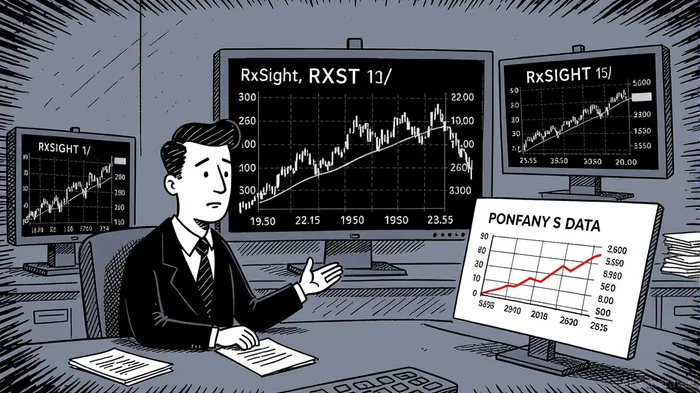
In the volatile world of healthcare innovation, RxSightRXST--, Inc. (NASDAQ: RXST) has become a cautionary tale of financial mismanagement and securities law entanglements. The company, which markets light-adjustable intraocular lenses (LALs) and Light Delivery Devices (LDDs), now faces a class-action lawsuit and SEC scrutiny over alleged misrepresentations of product demand and financial performance. For investors, the case underscores the risks of overreliance on optimistic corporate narratives and the cascading consequences of regulatory and legal fallout.
The Allegations: Misleading Statements and Structural Failures
The lawsuit Makaveev v. RxSight, Inc. (25-cv-01596) accuses the company and its executives of inflating demand for its products while concealing structural challenges in its business model. According to the complaint, RxSight failed to disclose declining LAL utilization rates and LDD sales, which culminated in a July 8, 2025, announcement revising 2025 full-year guidance downward by $42.5 million at the midpoint. This revelation triggered a 38% plunge in RXST's stock price, erasing billions in market value.
The core issue lies in RxSight's alleged failure to align public disclosures with operational realities. While the company reported a 28% year-over-year revenue growth in Q1 2025, this figure fell short of prior projections and masked broader adoption challenges in the premium intraocular lens (IOL) market. The lawsuit argues that these disclosures were not merely optimistic but intentionally misleading, violating Section 10(b) of the Securities Exchange Act of 1934 and Rule 10b-5.
SEC Scrutiny and Broader Enforcement Trends
RxSight's troubles have drawn the attention of the Securities and Exchange Commission (SEC), which has intensified its focus on companies leveraging AI or advanced technology to justify aggressive financial forecasts. In 2024-2025, AI-related securities class actions surged, with 15 cases filed in 2024 alone compared to seven in 2023. The SEC's heightened enforcement activity reflects a broader effort to curb “AI hype” and ensure transparency in corporate disclosures.
For RxSight, this means the company's claims about its LAL technology's market potential are under a microscope. If the SEC finds evidence of material misstatements, the company could face penalties, delisting, or even criminal charges against executives. Such outcomes would further erode investor confidence and exacerbate financial instability.
Investor Risks and Legal Implications
The Makaveev lawsuit seeks to represent investors who purchased RXSTRXST-- securities between November 7, 2024, and July 8, 2025. The case hinges on proving that the stock price drop was directly tied to the company's failure to disclose critical information about its business. If successful, the lawsuit could result in a multi-million-dollar payout for shareholders, though the timeline for resolution remains uncertain.
For current and prospective investors, the case highlights several risks:
1. Reputational Damage: Even if RxSight avoids criminal charges, the lawsuit and SEC investigation will likely deter partnerships and slow product adoption.
2. Liquidity Constraints: A prolonged legal battle could drain the company's cash reserves, forcing cost-cutting measures or asset sales.
3. Market Volatility: The stock's 38% drop in July 2025 demonstrates how quickly sentiment can shift when corporate credibility is compromised.
Conclusion: A Lesson in Due Diligence
RxSight's saga serves as a stark reminder of the importance of rigorous due diligence in high-growth sectors. While innovative technologies like LALs hold promise, investors must scrutinize the alignment between corporate claims and operational performance. The Makaveev lawsuit and SEC scrutiny underscore the legal and financial perils of overpromising and underdelivering—a lesson that extends far beyond RxSight to the broader healthcare and tech industries.
As the legal process unfolds, investors should monitor key developments: the SEC's findings, the court's treatment of lead plaintiff motions (due September 22, 2025), and RxSight's ability to stabilize its business. For now, the stock remains a high-risk proposition, with its future hinging on the resolution of these legal and regulatory challenges.





Comentarios
Aún no hay comentarios