
RWAs as the Next Frontier in Institutional Investment and Risk Diversification
The Rise of Tokenized RWAs: From Experiment to Mainstream
Tokenization has transformed traditional asset classes by enabling fractional ownership and real-time settlement. For example, BlackRock's USD Institutional Digital Liquidity Fund (BUIDL), launched in 2024, attracted over $500 million in just months, demonstrating strong institutional appetite for tokenized U.S. Treasuries. Similarly, real estate-historically an illiquid asset-has seen a paradigm shift. A luxury hotel in New York was tokenized in 2025, allowing investors to purchase fractional shares starting at $1,000. This democratization of access is not limited to real estate; commodities like gold and carbon credits are also being tokenized, offering investors new tools to hedge against macroeconomic volatility and align with ESG goals.
The UAE has emerged as a global leader in tokenized real estate, though regulatory specifics remain underdeveloped in current analyses. Meanwhile, private credit and debt instruments are gaining traction through blockchain-issued bonds, such as Santander's $20 million bond, which reduced issuance timelines and counterparty risk. These innovations underscore how tokenization is streamlining capital formation and reducing operational friction for institutions.
Technological and Regulatory Catalysts for Growth
The 2026 RWA market is being propelled by two critical factors: technological advancements and regulatory progress. Enhanced privacy solutions, like Zero-Knowledge Proofs (ZKPs), AI-driven valuation systems, and interoperable blockchain networks are addressing scalability and security concerns. For instance, AI-driven oracles now provide real-time data for smart contracts, ensuring accurate asset valuation and compliance. Platforms like AaveAAVE-- Horizon are integrating tokenized RWAs into DeFi ecosystems, enabling yield generation and lending while maintaining institutional-grade transparency.
 Regulatory clarity is equally pivotal. The EU's Markets in Crypto-Assets (MiCA) framework and the U.S. passage of the GENIUS Act in 2025 have laid the groundwork for stablecoin integration and cross-border compliance. In 2026, bipartisan crypto market structure legislation in the U.S. is expected to further institutionalize RWA tokenization by harmonizing rules across states and asset classes according to research. These developments are reducing legal fragmentation and fostering a unified global market, as seen in the UAE's regulatory experiments and the EU's push for standardized tokenization protocols.
Risk Diversification: A New Paradigm for Institutional Portfolios
RWAs are redefining risk diversification by offering access to a broader range of assets with varying risk profiles. For example, tokenized government-backed securities provide low-risk, high-liquidity options, while tokenized infrastructure projects and ESG-focused assets cater to long-term, impact-driven strategies according to market analysis. The ability to fractionalize high-value assets-such as commercial real estate or art-enables institutions to allocate capital more efficiently without overexposure to single-asset risks.
Case studies highlight measurable outcomes. In 2026, BlackRock and Fidelity launched tokenized funds that combined real estate, commodities, and carbon credits, achieving a 15% reduction in portfolio volatility compared to traditional alternatives. Similarly, Hamilton Lane's tokenized middle-market corporate loans demonstrated a 20% improvement in liquidity metrics, as investors could exit positions within days rather than years. These examples illustrate how RWAs are not only diversifying risk but also enhancing returns through operational efficiency.
Challenges and the Road Ahead
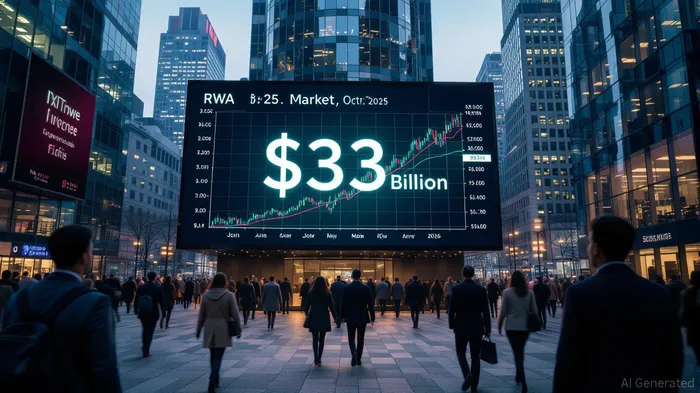
Despite the momentum, challenges persist. Cross-chain inefficiencies and custody management remain hurdles for global adoption according to industry analysis. Additionally, regulatory harmonization is still a work in progress, with jurisdictions like the U.S. and EU adopting divergent approaches. However, the 35% annual growth rate of tokenized RWAs (reaching $20 billion on public blockchains by 2025) suggests that these challenges will be addressed as the market matures.
Conclusion
By 2026, RWAs have cemented their role as a transformative force in institutional investment. The combination of technological innovation, regulatory clarity, and strategic diversification benefits positions tokenized assets as a critical component of modern portfolios. As institutions move beyond pilot projects to launch scalable, market-ready solutions, the next decade will likely see RWAs rival traditional asset classes in size and influence. For investors, the message is clear: the future of finance is digital, tangible, and accessible.





Comentarios
Aún no hay comentarios