
RWAs as the Next Frontier in Institutional-Grade Tokenization: Bridging Traditional Finance and Blockchain
Real Estate: Fractional Ownership and Global Liquidity
Tokenization is democratizing access to real estate, a historically illiquid asset class. Platforms like BlackRockBLK-- and Franklin Templeton have pioneered tokenized funds, BlackRock's BUIDL fund amassing $2.3 billion in assets under management. A landmark case study involves a luxury hotel in New York, tokenized to allow fractional ownership starting at $1,000, enabling global participation. This model not only reduces entry barriers but also creates 24/7 trading markets, enhancing liquidity for investors.
Institutional players are leveraging smart contracts to automate processes such as rent distribution and compliance checks, reducing operational costs by up to 40%. However, challenges persist in secondary trading, where fragmented exchanges and low volumes hinder full liquidity.
Commodities: From Gold to Carbon Credits
 Tokenized commodities are redefining how institutions trade physical assets. U.S. Treasuries, for instance, now represent $9.1 billion in the RWA market, offering instant settlement and on-chain yield. BlackRock's BUIDL fund, which tokenizes Treasuries, exemplifies this shift, attracting $1.87 billion in a year.
Gold and carbon credits are also gaining traction. Tokenized gold allows fractional ownership and 24/7 trading, while platforms like Toucan Protocol convert carbon credits into tradable tokens, aligning with ESG goals. These innovations address storage costs and regulatory compliance, with Singapore, the EU, and the UAE establishing frameworks to operationalize tokenized commodities.
Infrastructure: Energy and Transportation
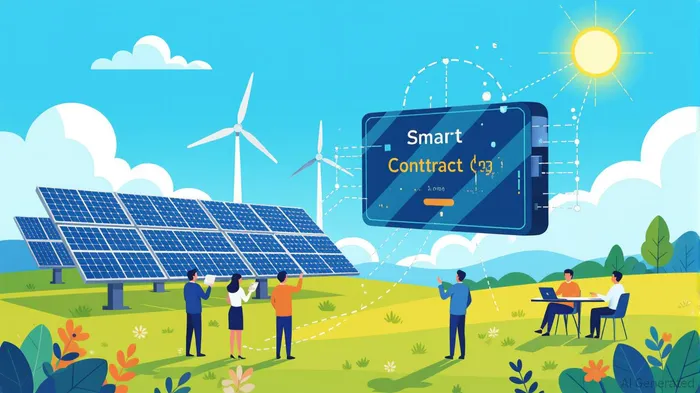
Energy infrastructure is a burgeoning sector for RWA tokenization. Zoniqx and PowerledgerPOWR-- are tokenizing renewable projects, such as solar and wind farms, enabling fractional ownership and automated dividend payouts. For example, a $1 billion AI-powered data center fund, tokenized by Zoniqx, demonstrates how institutions can scale green energy investments.
Transportation infrastructure is also evolving. Blockchain platforms are streamlining supply chains and enabling tokenized ship ownership, reducing capital requirements for maritime finance. Meanwhile, Mobility-as-a-Service integrates blockchain to automate ticketing and payments, enhancing transparency in multi-modal transit systems.
Challenges and Future Outlook
Despite rapid growth, hurdles remain. Regulatory clarity is critical, as fragmented frameworks across jurisdictions complicate cross-border transactions. Secure custody solutions and interoperable blockchain infrastructure are also needed to scale adoption, as noted by industry experts.
Experts project a 21% compound annual growth rate (CAGR) from 2024 to 2033, driven by advancements like the EU's MiCA framework and U.S. regulatory harmonization. By 2033, the market could reach $13–18 trillion, with energy, real estate, and commodities leading the charge.
Strategic Entry Points for Investors
For institutions, strategic entry points include:
1. Real Estate: Invest in tokenized funds or fractional ownership platforms with proven liquidity models.
2. Commodities: Prioritize tokenized gold and carbon credits, which align with ESG mandates and offer diversification.
3. Infrastructure: Target renewable energy projects and transportation assets, where tokenization reduces entry barriers and enhances transparency.
As RWAs redefine capital markets, investors must balance innovation with risk management, ensuring alignment with evolving regulatory landscapes. The next decade promises a seismic shift in how assets are owned, traded, and valued-positioning RWAs as a cornerstone of institutional-grade finance.







Comentarios
Aún no hay comentarios