
Russian Wheat Exports Climb to 40.7 MMT: A Closer Look at Sovecon’s Revised Forecast
The Russian agricultural consultancy Sovecon has revised its 2024/25 wheat export forecast upward to 40.7 million metric tons (MMT), marking a critical adjustment from earlier projections. This update reflects a nuanced interplay of domestic supply dynamics, policy constraints, and global market pressures. For investors tracking agricultural commodities or Russian agribusiness, understanding the drivers behind this revision—and its implications for the coming year—offers valuable insights into market risks and opportunities.
The Factors Driving the Revision
Sovecon’s revised forecast for the 2024/25 season (July 2024–June 2025) hinges on three primary factors:
- Sluggish Shipment Paces and Reduced Carry-In Stocks:
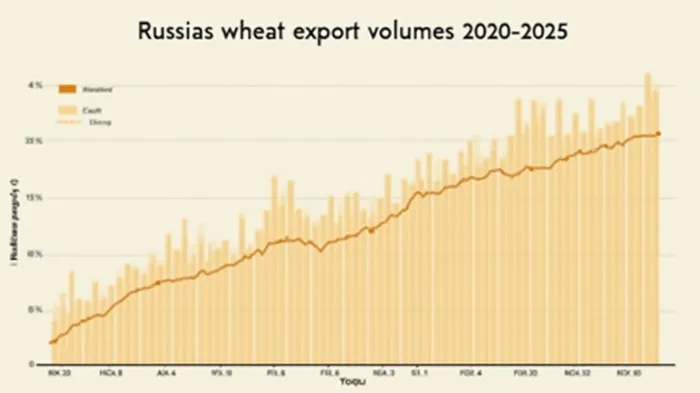
Wheat exports from July to February 2024/25 totaled 32.6 MMT, down from 33.8 MMT in the same period a year earlier. February 2025 shipments fell to 1.9 MMT, a stark drop from the five-year average of 4.1 MMT. Lower carry-in stocks—domestic wheat inventories dropped to 11.6 MMT by March 2025, a 34% decline from the prior year—have constrained export volumes, as traders face tighter domestic supply.
Margin Pressures and Currency Headwinds:
Exporter margins turned negative by late 2024, a stark contrast to the $5–$10/ton profits seen earlier in the season. The ruble’s appreciation compounded this issue: while Russia’s export tax system adjusts for currency fluctuations, a time lag in recalculations leaves traders exposed to ruble gains, squeezing profit margins further.Policy Constraints and Quota Adjustments:
A 10.6 MMT wheat export quota for February–June 2025 (reduced from an initial 11.0 MMT) and bans on barley and corn exports during this period have limited flexibility. Major traders, prioritizing margins over rapid shipments, may underutilize the quota, leaving potential volumes unmet.
The Ripple Effect on the 2025/26 Season
While the 40.7 MMT revision applies to the current 2024/25 season, it also shapes expectations for the coming year. Sovecon’s initial forecast for 2025/26 had been 36.4 MMT, but this was later adjusted upward to 39.1 MMT due to higher carryover stocks from the current season’s slower exports. Key considerations include:
- Production Outlook: Russia’s 2025 wheat harvest is projected at 79.7 MMT, a slight upward revision but still below the 2024 record of 82.6 MMT. Soil moisture deficits and dry weather forecasts could further limit yields.
- Domestic Demand: Reduced feed wheat consumption (as better barley and corn crops limit wheat substitution) will free up supply, but this must offset production constraints and lingering logistical challenges.
Investment Implications
- Commodity Markets: A weaker ruble or further export quota cuts could tighten global wheat supplies, pushing prices higher. Sovecon’s forecast suggests Russia’s export capacity remains fragile, potentially supporting CBOT wheat futures in 2025/26.
- Russian Agribusiness Stocks: Companies like SovEcon’s clients (e.g., grain traders and exporters) may see margin pressures ease if carryover stocks bolster 2025/26 exports. However, ruble volatility and policy risks remain critical variables.
- Geopolitical Risks: Sanctions or trade disputes could disrupt export flows, making Russian wheat an unpredictable factor in global supply chains.
Conclusion: Navigating the Wheat Landscape
Sovecon’s upward revision to 40.7 MMT for 2024/25 underscores a cautious optimism tempered by structural challenges. While carryover stocks may support a modest rebound in 2025/26 exports, investors should remain wary of supply-side risks:
- Production Risks: Soil moisture deficits and climate uncertainty could further shrink yields.
- Policy Uncertainty: Export quotas and ruble dynamics remain unpredictable.
- Global Competition: Increased shipments from Argentina and the U.S. may offset Russian volumes, limiting upside for prices.
For now, the 39.1 MMT forecast for 2025/26 reflects a tentative stabilization, but investors should monitor ruble movements and weather patterns closely. In a market where a single weather event or policy shift can sway outcomes, Russian wheat’s role in global supply remains both vital and volatile.
In sum, the 40.7 MMT revision is a pivot point—one that hints at Russia’s enduring influence on wheat markets but also underscores the fragility of its export machine. For investors, this is a story of cautious bets, hedged positions, and an eye on the horizon for the next storm.







Comentarios
Aún no hay comentarios