
Russian-Iranian Nuclear Cooperation: A Strategic Investment Frontier in Energy and Defense
The strategic partnership between Russia and Iran, formalized in January 2025 and ratified by Iran's parliament in May, has created a new axis of geopolitical and economic collaboration. At its core lies a $15 billion nuclear energy initiative, defense technology sharing, and infrastructure projects that could redefine regional power dynamics. For investors, this allianceAENT-- presents compelling opportunities in energy, defense, and infrastructure sectors—provided they navigate geopolitical risks with precision.
Nuclear Energy: A Multi-Decade Growth Engine
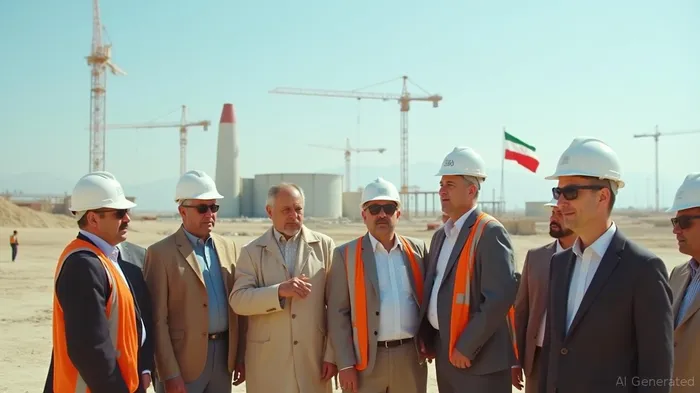
The cornerstone of the Russia-Iran deal is the construction of eight new nuclear reactors, four at Bushehr and four in the Hormozgan province (the Iran-Hormoz project). This expansion aims to boost Iran's nuclear capacity to 20,000 MW by 2041. Key to this effort is Rosatom, Russia's state-owned nuclear giant, which will provide technical expertise and financing through a credit line.
Investment Opportunity:
Rosatom's role in this project positions it as a critical player in the global nuclear energy supply chain. While direct investment in Rosatom is challenging for foreign investors, exposure to Russia's energy sector can be gained through companies like Gazprom (GAZP.ME) or Rosneft (ROSN.ME), which benefit from the geopolitical stability this partnership fosters. Additionally, firms involved in nuclear infrastructure—such as Siemens Energy (EURONEXT:SIE) for turbines or Bechtel for engineering—could see demand rise as projects advance.
Defense Collaboration: Drones, Missiles, and Market Shifts
The defense component of the partnership includes Iran supplying Shahed drones to Russia for use in Ukraine, while Russia shares advanced missile technology. Iran's Defense Industries Organization (DIO) and Russia's Rostec are key players, with potential synergies in drone production and missile systems.
The Geran-2 drone, a Russian variant of the Shahed, highlights the growing tech transfer. Meanwhile, Iran's resistance to IAEA monitoring underscores its ambition to become a regional military power.
Investment Opportunity:
While defense tech investments are sensitive, aerospace and defense subcontractors in stable markets (e.g., Northrop Grumman (NOC) or BAE Systems (BAESY)) may benefit from increased global demand for counter-drone systems. Additionally, cybersecurity firms could see opportunities as states seek to protect critical infrastructure from hybrid threats.
Energy Infrastructure: Pipelines, Gas, and Geopolitical Leverage
A critical agreement involves Russia supplying 55 billion cubic meters of natural gas annually to Iran via a pipeline through Azerbaijan. This project addresses Iran's energy deficit while enabling it to re-export gas to markets like Pakistan and Turkey.
Investment Opportunity:
The gas pipeline and associated infrastructure projects create demand for engineering firms like TechnipFMC (FTI) or Aecom (ACM), which specialize in cross-border energy infrastructure. Investors should also monitor Iranian oilfield development—a $4 billion deal with Russian firms—through ETFs like Market Vectors Russia ETF (RSX), which tracks Russian equities benefiting from energy sector growth.
Geopolitical Risks and Mitigation Strategies
- Sanctions and Diplomacy: U.S.-Iran nuclear talks could reshape the landscape. A deal might reduce Iran's reliance on Russia, while stalled talks could deepen their alliance.
- Regional Instability: Israel's opposition to Iran's nuclear program poses military risks, as highlighted by IAEA warnings.
- Technical Delays: Bushehr 2's slow progress (17% completion as of Q1 2025) underscores execution risks.
Risk Mitigation:
- Diversify: Pair exposure to Russian energy stocks with investments in cybersecurity or defense tech.
- Monitor Sanctions: Track U.S. and EU policies via Treasury sanctions reports or Reuters sanctions tracker.
- Long-Term View: Nuclear and infrastructure projects have decades-long timelines; prioritize stable, cash-rich firms.
Conclusion: A High-Reward, High-Risk Frontier
The Russia-Iran partnership is a geopolitical pivot with profound economic implications. Investors can capitalize on nuclear energy growth, defense tech advancements, and energy infrastructure through strategic allocations to energy indices, defense subcontractors, and emerging market ETFs. However, success requires constant engagement with geopolitical developments and a tolerance for volatility. For those willing to navigate the risks, this alliance represents a rare opportunity to profit from a transformative shift in global power dynamics.







Comentarios
Aún no hay comentarios