
Russian Crypto Miners' Urban Migration and Infrastructure Challenges: Emerging Market Opportunities in Energy-Efficient Mining
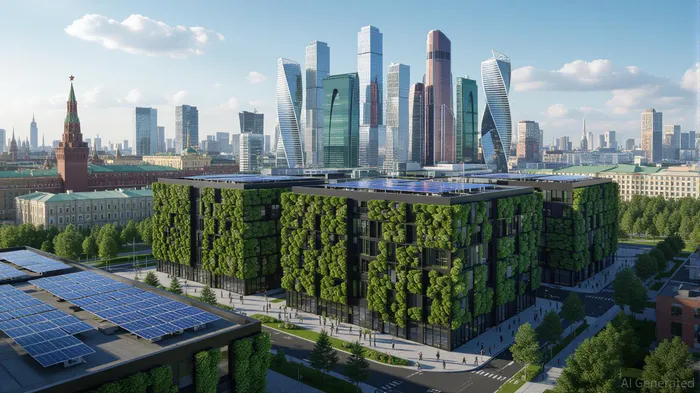
The migration of Russian crypto miners to urban areas in 2025 reflects a global shift toward energy-efficient and climate-resilient infrastructure. As these operations seek proximity to renewable energy grids and advanced digital networks, they are reshaping urban landscapes and creating demand for tailored infrastructure solutions. While specific data on Russian regional policies remains sparse, global trends in sustainable urbanization and energy transition offer critical insights into the opportunities and challenges ahead.
The Urbanization Imperative
Urban centers are increasingly becoming hubs for energy-intensive industries like crypto mining, driven by the need for reliable power and connectivity. By 2050, 70% of the global population is projected to reside in cities, intensifying the demand for climate-resilient infrastructure such as smart grids and green buildings[6]. For Russian miners, this transition is not merely logistical but strategic. Urban areas offer access to decentralized renewable energy sources, such as solar and wind, which are essential for reducing operational costs and carbon footprints[4]. However, the integration of these technologies requires modernized power grids and innovative financing models, such as the Independent Transmission Project (ITP), to bridge infrastructure gaps[4].
Energy Efficiency and the Green Transition
Crypto mining's energy intensity necessitates a shift toward sustainable practices. According to a report by the World Economic Forum, sustainable infrastructure outperforms conventional systems by over 20% under net-zero scenarios[6]. This is particularly relevant for Russian urban centers, where outdated energy systems struggle to meet the demands of modern industries. The development of industrial clusters—where companies collaborate on clean energy initiatives—could accelerate this transition. For instance, co-located data centers sharing renewable energy resources could reduce costs and enhance grid stability[5]. Such models align with global efforts to decarbonize energy systems, as seen in the US Infrastructure Investment and Jobs Act, which prioritizes electrification and grid modernization[2].
Infrastructure Challenges and Regional Policy Gaps
Despite the potential, Russian urban areas face significant hurdles. Many cities lack the stormwater management and heat island mitigation strategies needed to sustain high-energy operations[3]. Without investment in green and blue infrastructure—such as urban wetlands and water plazas—miners risk operational disruptions from climate-related risks[4]. Additionally, localized data center developments require robust digital connectivity and energy-efficient designs, which are often absent in regions with underdeveloped infrastructure[6].
While the World Bank's Sustainable Urban and Regional Development Program (SURGE) emphasizes green, resilient urban growth[1], Russia's regional policies have yet to fully integrate these principles. This gap presents an opportunity for private and public stakeholders to invest in climate-proof infrastructure, leveraging models like public-private partnerships to fund modernization projects[4].
Investment Opportunities in a Shifting Landscape
The migration of Russian crypto miners to urban areas underscores a growing demand for localized, energy-efficient solutions. Investors should prioritize projects that align with global sustainability goals, such as:
1. Renewable Energy Integration: Developing solar and wind farms co-located with data centers to reduce reliance on fossil fuels[4].
2. Smart Grids and Storage: Modernizing power grids with AI-driven energy management systems to enhance reliability[6].
3. Green Infrastructure Financing: Supporting initiatives that blend public and private capital to fund climate-resilient urban projects[5].
Conclusion
The urban migration of Russian crypto miners is a microcosm of the broader energy transition. While challenges persist, the alignment of global sustainability trends and emerging market needs creates a fertile ground for innovation. By addressing infrastructure gaps through energy-efficient designs and collaborative financing, stakeholders can unlock long-term value in a rapidly evolving sector.







Comentarios
Aún no hay comentarios