
Russia and Ukraine End Five Decades of Gas Transit to Europe
Generado por agente de IATheodore Quinn
miércoles, 1 de enero de 2025, 4:19 am ET2 min de lectura
AL--
After 50 years of transporting Russian gas through Ukraine to Europe, the transit agreement between the two countries will expire at the end of 2024. This significant shift in the global energy landscape will have far-reaching implications for both Russia and Ukraine, as well as the European Union (EU). The end of the transit contract will mark an important turning point in the geopolitical dynamics of energy supply and demand, as well as the financial health of key players in the market.
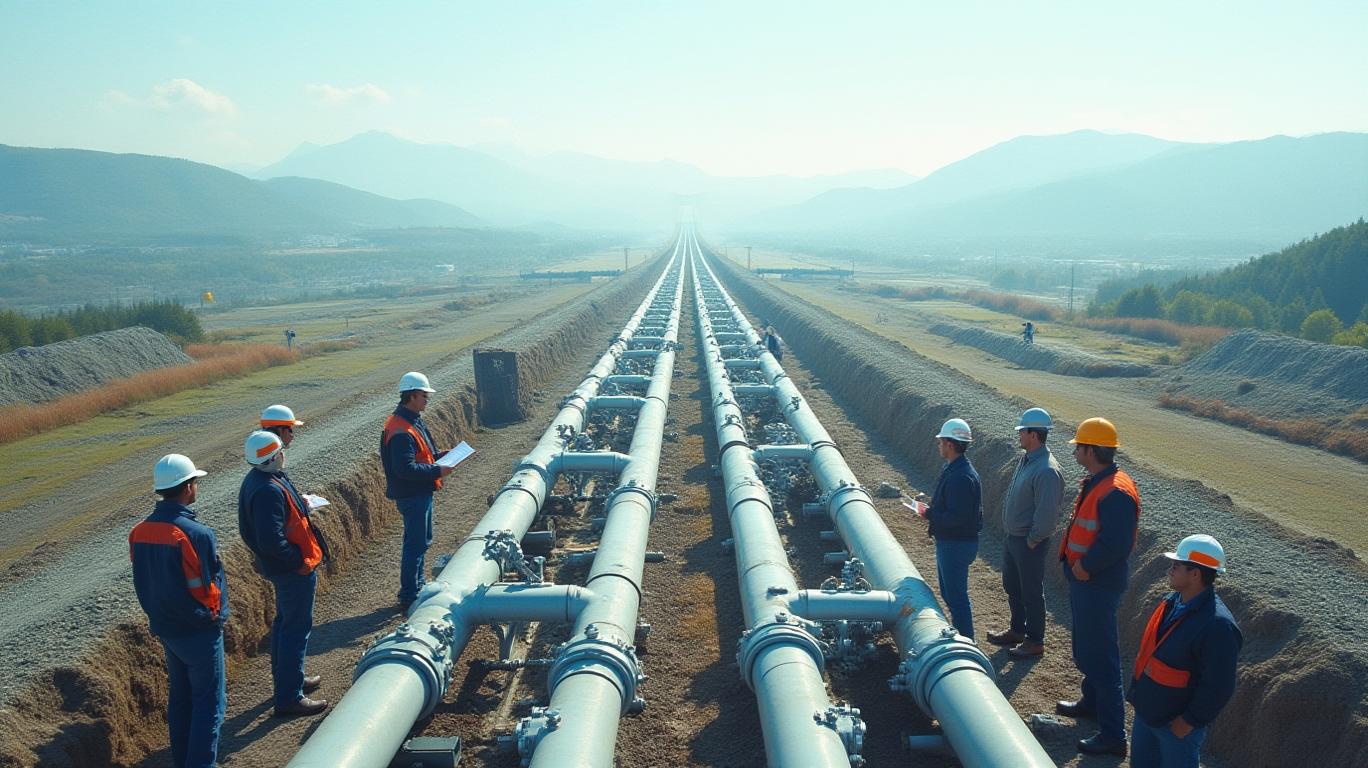
The Ukrainian transit route accounted for half of Russia's remaining pipeline gas exports to the EU and a third of total Russian gas exports, including LNG, in 2023 (Table 1). The loss of this route will require the EU to find alternative sources to meet its gas demand, particularly for countries like Austria, Hungary, and Slovakia, which relied on this route for 65% of their gas demand in 2023 (IEA, 2024a). These countries may face higher prices and supply disruptions in 2025 if they cannot secure alternative sources.
The end of Ukrainian transit will also have significant financial implications for both Ukraine and Russia. Ukraine will lose approximately $800 million (€768 million) annually in transit fees, which accounts for about 0.5% of its GDP (Łoskot-Strachota et al, 2024). Gazprom, Russia's state-controlled gas giant, will face a $5 billion (€4.8 billion) loss in gas sales to Europe via Ukraine, adding to its first annual loss since 1999, a $7 billion (€6.7 billion) deficit in 2023 (Soldatkin & Kobzeva, 2024).
The halt in supplies via Ukraine will also have immediate repercussions for several nations, including Moldova, Slovakia, and Hungary. While Hungary will continue to receive gas through the TurkStream pipeline, the loss of the Ukrainian route as a secondary option may impact its energy security. The financial implications for Ukraine are also substantial, with the country forfeiting approximately $800 million (€768 million) annually in transit fees due to the halt in gas exports via Ukraine.

The end of the gas transit agreement will also accelerate the EU's non-binding goal of stopping all Russian gas imports by 2027 (European Commission, 2022). The loss of the Ukrainian route will force the EU to find alternative gas sources more quickly, increasing its reliance on LNG and other pipelines, such as TurkStream. This increased reliance on alternative sources will help the EU diversify its gas supplies and reduce its dependence on Russian gas.
In conclusion, the end of the gas transit agreement between Russia and Ukraine will have significant implications for the EU's energy market and its efforts to diversify its gas supplies. The EU will need to find alternative sources to meet its gas demand, particularly for countries like Austria, Hungary, and Slovakia. This will accelerate the EU's goal of stopping all Russian gas imports and increase its reliance on LNG and other pipelines. New gas agreements may also emerge to replace the expired transit contract, potentially involving Azeri gas via Ukrainian pipelines or a new type of gas agreement between the EU, Ukraine, and Russia.
LNG--
After 50 years of transporting Russian gas through Ukraine to Europe, the transit agreement between the two countries will expire at the end of 2024. This significant shift in the global energy landscape will have far-reaching implications for both Russia and Ukraine, as well as the European Union (EU). The end of the transit contract will mark an important turning point in the geopolitical dynamics of energy supply and demand, as well as the financial health of key players in the market.
The Ukrainian transit route accounted for half of Russia's remaining pipeline gas exports to the EU and a third of total Russian gas exports, including LNG, in 2023 (Table 1). The loss of this route will require the EU to find alternative sources to meet its gas demand, particularly for countries like Austria, Hungary, and Slovakia, which relied on this route for 65% of their gas demand in 2023 (IEA, 2024a). These countries may face higher prices and supply disruptions in 2025 if they cannot secure alternative sources.
The end of Ukrainian transit will also have significant financial implications for both Ukraine and Russia. Ukraine will lose approximately $800 million (€768 million) annually in transit fees, which accounts for about 0.5% of its GDP (Łoskot-Strachota et al, 2024). Gazprom, Russia's state-controlled gas giant, will face a $5 billion (€4.8 billion) loss in gas sales to Europe via Ukraine, adding to its first annual loss since 1999, a $7 billion (€6.7 billion) deficit in 2023 (Soldatkin & Kobzeva, 2024).
The halt in supplies via Ukraine will also have immediate repercussions for several nations, including Moldova, Slovakia, and Hungary. While Hungary will continue to receive gas through the TurkStream pipeline, the loss of the Ukrainian route as a secondary option may impact its energy security. The financial implications for Ukraine are also substantial, with the country forfeiting approximately $800 million (€768 million) annually in transit fees due to the halt in gas exports via Ukraine.
The end of the gas transit agreement will also accelerate the EU's non-binding goal of stopping all Russian gas imports by 2027 (European Commission, 2022). The loss of the Ukrainian route will force the EU to find alternative gas sources more quickly, increasing its reliance on LNG and other pipelines, such as TurkStream. This increased reliance on alternative sources will help the EU diversify its gas supplies and reduce its dependence on Russian gas.
In conclusion, the end of the gas transit agreement between Russia and Ukraine will have significant implications for the EU's energy market and its efforts to diversify its gas supplies. The EU will need to find alternative sources to meet its gas demand, particularly for countries like Austria, Hungary, and Slovakia. This will accelerate the EU's goal of stopping all Russian gas imports and increase its reliance on LNG and other pipelines. New gas agreements may also emerge to replace the expired transit contract, potentially involving Azeri gas via Ukrainian pipelines or a new type of gas agreement between the EU, Ukraine, and Russia.

Divulgación editorial y transparencia de la IA: Ainvest News utiliza tecnología avanzada de Modelos de Lenguaje Largo (LLM) para sintetizar y analizar datos de mercado en tiempo real. Para garantizar los más altos estándares de integridad, cada artículo se somete a un riguroso proceso de verificación con participación humana.
Mientras la IA asiste en el procesamiento de datos y la redacción inicial, un miembro editorial profesional de Ainvest revisa, verifica y aprueba de forma independiente todo el contenido para garantizar su precisión y cumplimiento con los estándares editoriales de Ainvest Fintech Inc. Esta supervisión humana está diseñada para mitigar las alucinaciones de la IA y garantizar el contexto financiero.
Advertencia sobre inversiones: Este contenido se proporciona únicamente con fines informativos y no constituye asesoramiento profesional de inversión, legal o financiero. Los mercados conllevan riesgos inherentes. Se recomienda a los usuarios que realicen una investigación independiente o consulten a un asesor financiero certificado antes de tomar cualquier decisión. Ainvest Fintech Inc. se exime de toda responsabilidad por las acciones tomadas con base en esta información. ¿Encontró un error? Reportar un problema


SOBRE NOSOTROS
Nuestra historiaAutores de noticiasBase de conocimientosPolítica de privacidadTérmino de usoDescargo de responsabilidad de corretaje de tercerosTérminos de uso de AIMEDivulgaciones de riesgos de AInvest AICarrerasCONTÁCTENOS
Email: support@ainvest.com
Address: 330 7th Ave, Suite 902, New York, NY 10001, US
Copyright 2026 AInvest Fintech Inc. All rights reserved.


Comentarios
Aún no hay comentarios