
Russia Sues Euroclear for Frozen Assets, Threatens EU Retaliation
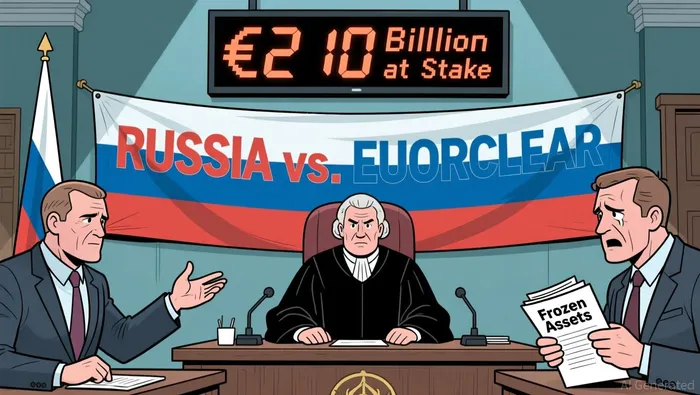
Russia has filed a legal challenge against Euroclear in Moscow over frozen state assets, threatening to retaliate against the European Union if the bloc uses the funds for Ukraine-related reparations according to Bloomberg. The lawsuit at the Moscow Arbitration Court accuses Euroclear of unlawful actions that have rendered the assets unusable according to Bloomberg. The Bank of Russia seeks damages equal to the total value of its frozen assets and potential lost earnings from them according to Bloomberg.
The EU is expected to approve a long-term freeze on some €210 billion of Russia's sovereign assets, which have been held in the bloc since the invasion of Ukraine in 2022 according to Bloomberg. A significant portion of these assets is held by Euroclear, a Belgian-based financial depository according to Bloomberg. The bank's legal action follows a strategy seen with Russian businesses challenging international firms in local courts and seeking enforcement in foreign jurisdictions according to Bloomberg.
Belgium, which hosts Euroclear, remains a key point of contention. The country has not given assurances it won't be held financially liable if Russia succeeds in recovering the assets according to Bloomberg. Euroclear's chief executive expressed concerns that seizing the assets would signal to investors that Europe is not a reliable place to invest according to Fakti. The depository also warned that clients could lose €16 billion in assets if the EU proceeds with the confiscation according to Fakti.
Legal and Financial Ramifications
The Bank of Russia has vowed to challenge any unauthorized use of its assets by the EU through "all available competent authorities, including national courts, judicial bodies of foreign states and international organizations" according to Bloomberg. The central bank is also seeking enforcement of judicial decisions in any country, according to the statement according to Bloomberg. This legal maneuver increases pressure on EU officials, who are already wary of the potential consequences of seizing sovereign assets according to Bloomberg.
Euroclear CEO Valérie Urben has criticized the proposed "reparation loan" as legally ambiguous and warned it could destabilize the EU's financial system according to Fakti. The European Commission's proposed plan involves using the frozen assets to secure a loan for Ukraine, with repayment to occur after sanctions are lifted and Russia agrees to pay reparations according to AP News. However, Urben stated there is no procedure in place for transferring the funds to the EU according to Fakti.
Political and Economic Stakes
The EU aims to eliminate the need for repeated votes to extend the asset freeze and to create a legal pathway for using the funds to support Ukraine according to Investing.com. This effort requires a qualified majority of EU member states to approve the action, potentially bypassing vetoes from smaller or more hesitant nations according to AP News. Germany, as one of the largest economies in the bloc, has pledged to backstop a portion of the loan according to Politico. Still, Belgium has not received sufficient guarantees to ensure it won't bear the brunt of legal or financial fallout according to Bloomberg.
The Belgian government has resisted EU efforts to use the assets, with Prime Minister Bart de Wever warning that seizing Russian assets could result in long-term consequences for Belgium according to AP News. De Wever has reportedly been engaged in discussions with German Chancellor Friedrich Merz and European Commission President Ursula von der Leyen to address his concerns according to Fakti. Despite these talks, no agreement has yet been reached according to Fakti.
Market Reactions and Analyst Views
Financial analysts have highlighted the potential risks to Euroclear and its clients. The depository has raised its security measures and is monitoring the situation daily according to Fakti. There are fears that a confiscation of Russian assets could undermine investor confidence in Europe as a stable financial hub according to Fakti. Euroclear has argued that its regulatory authority lies with the Belgian Ministry of Finance, which would need to approve any release of frozen assets according to Fakti.
The legal battle between Russia and Euroclear is unfolding in a high-stakes geopolitical and financial environment. The EU's plan to use frozen Russian assets could set a precedent with far-reaching implications for international law and financial stability according to AP News. At the same time, Russia's legal challenges may deter European governments from taking decisive action, given the potential for retaliatory measures according to Bloomberg.
The upcoming EU summit on December 18 will be a critical moment in this unfolding situation according to AP News. If the EU moves forward with the reparation loan, it will need to balance the urgency of supporting Ukraine with the risks of legal and financial blowback from Russia and its allies according to AP News. For now, the standoff remains unresolved, with both sides positioning for a protracted legal and political struggle over the assets in question according to Bloomberg.







Comentarios
Aún no hay comentarios