
Russia's Strategic Reindustrialization Under Putin's Initiative C: Long-Term Industrial and Defense Sector Opportunities in a Post-Sanction Era
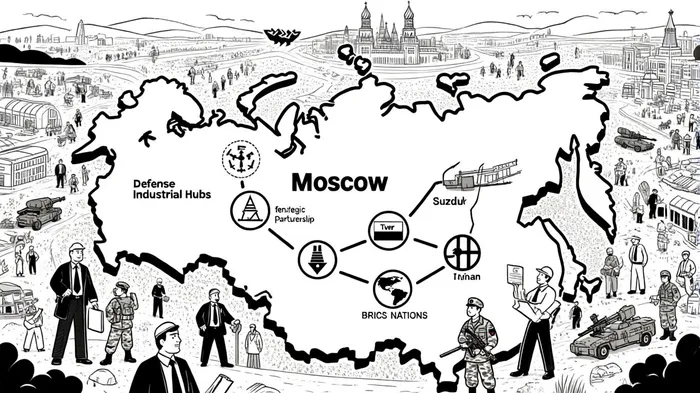
Russia's strategic reindustrialization under President Vladimir Putin's Initiative C has emerged as a defining feature of its post-sanction economic and military strategy. With Western sanctions crippling access to critical technologies and components, Moscow has pivoted toward self-reliance, leveraging state-funded projects, geopolitical alliances, and industrial modernization to sustain its global ambitions. For investors, this reindustrialization presents both risks and opportunities, particularly in the defense and industrial sectors, where Russia's resilience and adaptability are reshaping the global landscape.
Military Modernization: A Pillar of Economic and Geopolitical Power
Putin's 2025–2030 national development plan prioritizes military modernization as a cornerstone of Russia's strategic reindustrialization. The defense budget for 2025 is projected to reach 13.5 trillion rubles ($145 billion), a 30% increase from previous years, reflecting the Kremlin's commitment to sustaining its war in Ukraine and countering Western influence[5]. This funding is directed toward advanced systems such as hypersonic missiles, AI-integrated drones, and next-generation naval platforms. For instance, the Russian Navy is receiving RUB 8.4 trillion ($100.8 billion) over the next decade to construct warships and integrate unmanned systems[3].
The war in Ukraine has accelerated innovation in asymmetric warfare, with Russian forces refining tactics involving drones, precision artillery, and electronic warfare[3]. However, Western sanctions have forced Moscow to replace foreign components (e.g., CNC machine tools, microelectronics) with domestic alternatives, often at the cost of quality[1]. This has created a paradox: while Russia's military-industrial complex is expanding, its reliance on lower-tier substitutes may limit long-term competitiveness.
Economic Diversification and Industrial Resilience
Beyond defense, Putin's Initiative C emphasizes economic diversification to reduce dependence on hydrocarbon exports. Non-oil-and-gas GDP grew by 7.2% in 2023 and 4.9% in 2024, driven by state-led investments in agriculture, manufacturing, and digital infrastructure[1]. The government is also prioritizing technological sovereignty, with projects like the National Projects for 2025–2030 aiming to boost productivity, infrastructure, and public services[2].
However, the industrial sector remains heavily skewed toward defense. In May 2025, Russia's industrial output grew by 1.6%, with defense manufacturing accounting for most of the expansion, while civilian industries contracted[2]. This trend underscores a growing economic dependency on the military-industrial complex, which, while ensuring short-term stability, risks long-term stagnation in non-defense sectors[2].
Sanctions Evasion and Geopolitical Partnerships
Western sanctions have disrupted Russia's access to advanced technologies, but the Kremlin has adapted through illicit supply chains and strategic partnerships. China, Iran, and North Korea have become critical partners, supplying components like CNC tools, drones, and artillery[4]. For example, Chinese firms now provide engine components and microelectronics to Russian defense manufacturers, while Iran supplies attack drones[4]. These alliances enable Russia to circumvent Western export controls but also expose vulnerabilities, as Moscow becomes reliant on non-Western actors for critical inputs[3].
The BRICS bloc and other non-Western alliances are further central to Putin's strategy. By promoting alternative financial systems and trade networks, Russia aims to reduce its exposure to Western-dominated institutions[5]. This shift could create opportunities for investors in sectors like digital finance, energy, and infrastructure, where BRICS-driven projects are gaining traction.
Long-Term Investment Opportunities and Risks
For investors, Russia's reindustrialization offers several avenues:
1. Defense Manufacturing: State-backed projects in AI, hypersonic weapons, and naval platforms present opportunities for firms involved in advanced materials, software, and logistics. However, the sector's reliance on domestic substitutes and geopolitical risks (e.g., sanctions, war fatigue) necessitates cautious engagement[5].
2. Industrial Partnerships: Collaborations with Chinese and Iranian firms in machinery, electronics, and energy could yield returns, though supply chain volatility remains a concern[4].
3. Digital Infrastructure: Putin's push for digital transformation, including big data analytics and governance tools, opens opportunities in cybersecurity, cloud computing, and AI[2].
Yet, challenges persist. Population decline, institutional inefficiencies, and the diversion of resources to defense could stifle broader economic growth[5]. Additionally, the Trump administration's recent pivot toward de-escalating the Ukraine war may alter the geopolitical calculus, affecting demand for Russian arms exports[4].
Conclusion
Russia's strategic reindustrialization under Initiative C is a complex blend of resilience and vulnerability. While the defense sector thrives on state funding and geopolitical partnerships, the broader economy faces structural challenges. For investors, the key lies in balancing short-term gains in defense and industrial projects with long-term risks tied to sanctions, demographic trends, and geopolitical shifts. As Putin's vision unfolds, those who navigate these dynamics with agility and insight may find fertile ground in a reindustrialized Russia.







Comentarios
Aún no hay comentarios