
Russia's Economic Slowdown Looms in 2025: Top Banker's Warning
Generado por agente de IAWesley Park
lunes, 2 de diciembre de 2024, 1:50 pm ET1 min de lectura
FISI--
In an exclusive interview, a top Russian banker has sounded the alarm on the country's economic prospects for 2025, predicting a slowdown due to persistent sanctions and increased military spending. The banker, speaking on condition of anonymity, cited the impact of international sanctions, particularly those targeting financial institutions, as a key factor contributing to the economic downturn.
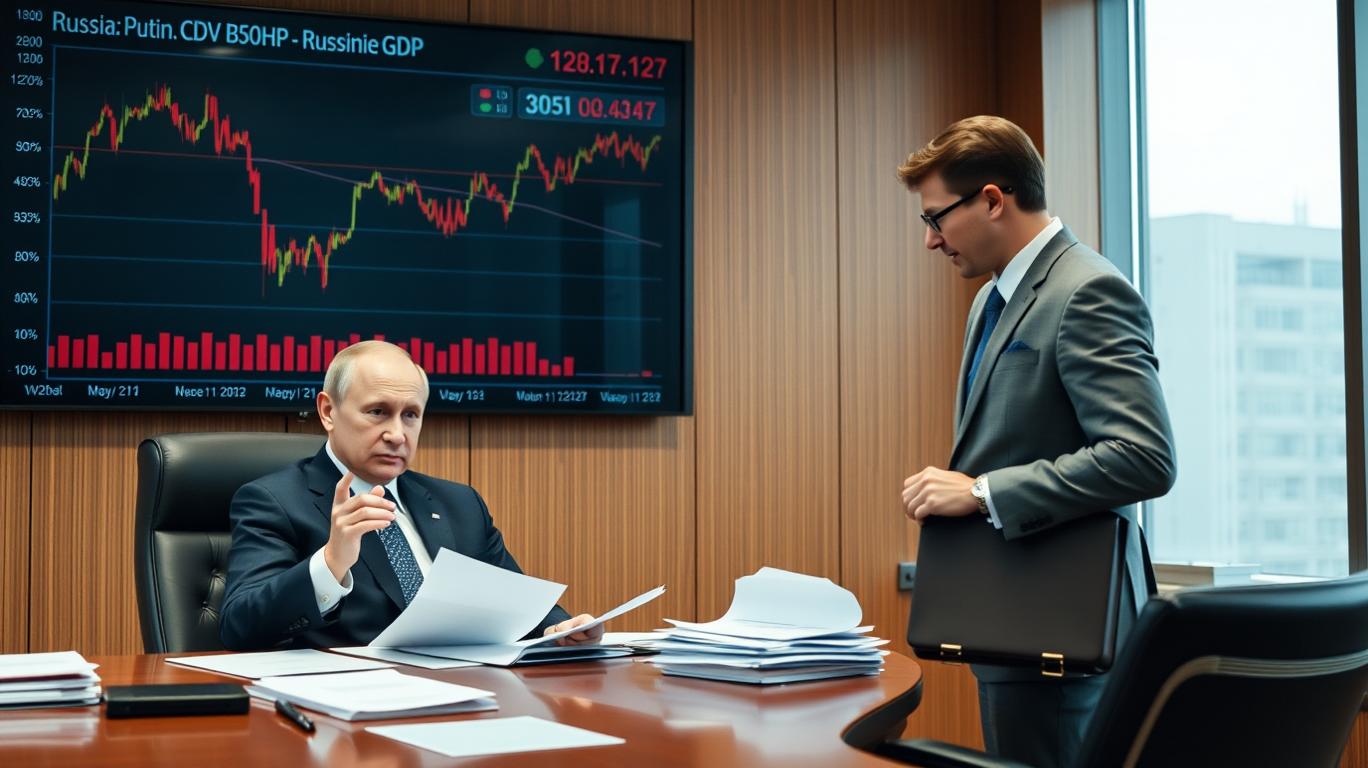
The banker's concerns are supported by recent reports. Despite monetary tightening, Russia's early 2024 economic growth remained robust, driven by a tight labor market and continued credit expansion. However, the fiscal outlook has improved with more positive short- and medium-term projections, despite increased military and social spending. The trade surplus remained almost unchanged, masking declines in both exports and imports. Russian imports surged at the end of 2023 but have recently declined due to payment difficulties with third countries, exacerbated by recent U.S. executive orders.
Increased military spending, set to reach 13.5 trillion rubles (€130 billion) in 2025, will strain Russia's economy. This quarter-on-quarter rise of 25% consumes a significant portion of the GDP, with 7-8% allocated to military spending. While the defense budget may seem modest compared to Western powers, its purchasing power, when adjusted for local prices, amounts to €350 billion. This increased spending, coupled with higher taxes for high-income earners and corporations, will likely slow economic growth in 2025, despite a war boom in sectors related to the military-industrial complex.
The sanctions' effectiveness largely depends on substituting high-quality Western goods with lower-quality alternatives. In 2023, Russia secured between 60% and 170% of sanctioned high-priority items compared to 2021 levels. Despite monetary tightening, Russia's early 2024 economic growth remained strong due to a tight labor market and continued credit expansion. The fiscal outlook has improved with more positive short- and medium-term projections despite increased military and social spending. The trade surplus remained almost unchanged, masking declines in both exports and imports. Russian imports surged at the end of 2023 but have recently declined due to payment difficulties with third countries, exacerbated by recent U.S. executive orders.
In conclusion, the top Russian banker's warning of an economic slowdown in 2025 is well-founded, given the persistent impact of sanctions, particularly those targeting financial institutions. The increased military spending, along with the shift towards lower-quality suppliers, will likely exacerbate the economic slowdown in 2025. Investors should closely monitor these developments and adjust their portfolios accordingly.
In an exclusive interview, a top Russian banker has sounded the alarm on the country's economic prospects for 2025, predicting a slowdown due to persistent sanctions and increased military spending. The banker, speaking on condition of anonymity, cited the impact of international sanctions, particularly those targeting financial institutions, as a key factor contributing to the economic downturn.
The banker's concerns are supported by recent reports. Despite monetary tightening, Russia's early 2024 economic growth remained robust, driven by a tight labor market and continued credit expansion. However, the fiscal outlook has improved with more positive short- and medium-term projections, despite increased military and social spending. The trade surplus remained almost unchanged, masking declines in both exports and imports. Russian imports surged at the end of 2023 but have recently declined due to payment difficulties with third countries, exacerbated by recent U.S. executive orders.
Increased military spending, set to reach 13.5 trillion rubles (€130 billion) in 2025, will strain Russia's economy. This quarter-on-quarter rise of 25% consumes a significant portion of the GDP, with 7-8% allocated to military spending. While the defense budget may seem modest compared to Western powers, its purchasing power, when adjusted for local prices, amounts to €350 billion. This increased spending, coupled with higher taxes for high-income earners and corporations, will likely slow economic growth in 2025, despite a war boom in sectors related to the military-industrial complex.
The sanctions' effectiveness largely depends on substituting high-quality Western goods with lower-quality alternatives. In 2023, Russia secured between 60% and 170% of sanctioned high-priority items compared to 2021 levels. Despite monetary tightening, Russia's early 2024 economic growth remained strong due to a tight labor market and continued credit expansion. The fiscal outlook has improved with more positive short- and medium-term projections despite increased military and social spending. The trade surplus remained almost unchanged, masking declines in both exports and imports. Russian imports surged at the end of 2023 but have recently declined due to payment difficulties with third countries, exacerbated by recent U.S. executive orders.
In conclusion, the top Russian banker's warning of an economic slowdown in 2025 is well-founded, given the persistent impact of sanctions, particularly those targeting financial institutions. The increased military spending, along with the shift towards lower-quality suppliers, will likely exacerbate the economic slowdown in 2025. Investors should closely monitor these developments and adjust their portfolios accordingly.

Divulgación editorial y transparencia de la IA: Ainvest News utiliza tecnología avanzada de Modelos de Lenguaje Largo (LLM) para sintetizar y analizar datos de mercado en tiempo real. Para garantizar los más altos estándares de integridad, cada artículo se somete a un riguroso proceso de verificación con participación humana.
Mientras la IA asiste en el procesamiento de datos y la redacción inicial, un miembro editorial profesional de Ainvest revisa, verifica y aprueba de forma independiente todo el contenido para garantizar su precisión y cumplimiento con los estándares editoriales de Ainvest Fintech Inc. Esta supervisión humana está diseñada para mitigar las alucinaciones de la IA y garantizar el contexto financiero.
Advertencia sobre inversiones: Este contenido se proporciona únicamente con fines informativos y no constituye asesoramiento profesional de inversión, legal o financiero. Los mercados conllevan riesgos inherentes. Se recomienda a los usuarios que realicen una investigación independiente o consulten a un asesor financiero certificado antes de tomar cualquier decisión. Ainvest Fintech Inc. se exime de toda responsabilidad por las acciones tomadas con base en esta información. ¿Encontró un error? Reportar un problema


SOBRE NOSOTROS
Nuestra historiaAutores de noticiasBase de conocimientosPolítica de privacidadTérmino de usoDescargo de responsabilidad de corretaje de tercerosTérminos de uso de AIMEDivulgaciones de riesgos de AInvest AICarrerasCONTÁCTENOS
Email: support@ainvest.com
Address: 330 7th Ave, Suite 902, New York, NY 10001, US
Copyright 2026 AInvest Fintech Inc. All rights reserved.


Comentarios
Aún no hay comentarios