
Russia's Dividend Cap: Energy Investment or Investor Alarm Bell?
Russia's energy sector is undergoing a seismic shift as the government imposes a dividend cap on electricity firms to redirect capital toward infrastructure upgrades. This move, outlined in a draft law from the Energy Ministry limiting dividends, aims to prioritize reinvestment over shareholder returns, a stark departure from the usual 50% adjusted net profit payout policy for state giants like Gazprom, according to the CFR sovereign risk tracker. While the policy claims to bolster energy security and modernization, it raises critical questions for investors: Is this a strategic reallocation of capital, or a red flag signaling deeper systemic risks?
The Dividend Cap: A Double-Edged Sword
The 2025 budget explicitly states no dividend income from Gazprom, , as noted in the 2025 budget report. This decision reflects a broader strategy to fund infrastructure projects, such as grid modernization and renewable energy integration, which align with Russia's 2050 Energy Strategy. However, the absence of dividends exacerbates the government's fiscal challenges, particularly with high military spending and a budget deficit. For investors, , per an econs analysis), the lack of transparency in reinvestment plans and geopolitical volatility could erode long-term value.
Sovereign Risk: Russia vs. Global Peers
Russia's sovereign risk profile remains a minefield. According to the CFR sovereign risk tracker, the country ranks among the highest-risk nations due to corruption, sanctions, and geopolitical tensions. In contrast, , as highlighted in the IMF staff report. The UAE, , exemplifies how diversified energy policies and fiscal prudence can attract capital, as outlined in the . Saudi Arabia, meanwhile, , though its political risk index (70) lags behind Norway's (the CFR sovereign risk tracker provides the comparative context).
Strategic Capital Allocation: Lessons from the Peers
The contrast is stark. Norway's Government Pension Fund Global, , exemplifies sustainable resource management, reinvesting oil revenues into global equities (see the IMF staff report above). The UAE's Energy Strategy 2050 triples renewable capacity by 2030 while maintaining oil-driven dividends (see the UAE Energy Strategy referenced earlier). Russia, however, lacks a clear roadmap for reinvesting its capped dividends. , according to the 2025 budget report- is ambitious but constrained by Western sanctions and a shadow fleet-dependent trade model, as described in a GIS report.
Investor Takeaway: Proceed with Caution
For investors, the calculus is clear. While Russian energy stocks offer tantalizing yields, the risks-geopolitical, regulatory, and economic-are asymmetric. Norway and the UAE present safer havens, with diversified energy strategies and lower sovereign risk. Saudi Arabia, though riskier than Norway, offers a hybrid model of high dividends and long-term renewables. Russia's dividend cap, while potentially funding critical infrastructure, lacks the transparency and institutional credibility to justify its risks. As warns, .
In the end, capital flows to where risk is managed, not ignored. Russia's energy sector may hold promise, but without a credible plan to convert capped dividends into sustainable infrastructure, it's more of an alarm bell than an opportunity.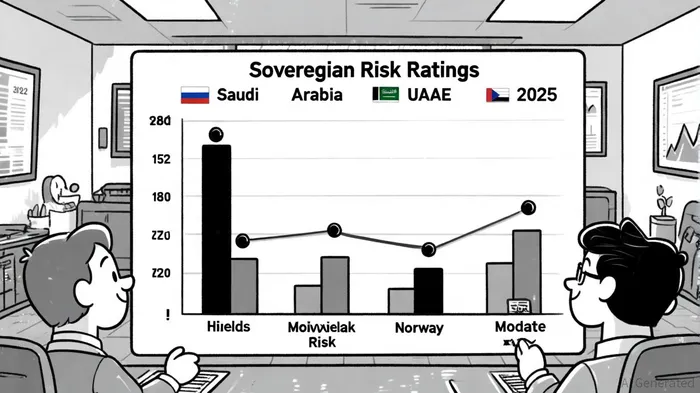







Comentarios
Aún no hay comentarios