
U.S.-Russia Diplomacy and Geopolitical Risk in Global Markets: Navigating the Investment Implications of Trump-Putin Talks on Defense, Energy, and Emerging Market Equities
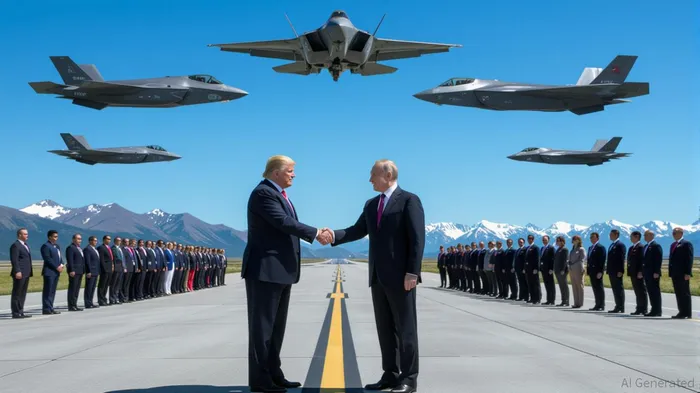
The August 2025 Trump-Putin summit in Alaska, marked by its theatrical staging and high-stakes rhetoric, has underscored the enduring volatility of U.S.-Russia relations and its cascading effects on global markets. While the meeting failed to produce a concrete ceasefire agreement in Ukraine, it reignited debates about the investment implications of geopolitical risk, particularly for defense, energy, and emerging market equities. Investors must now grapple with the dual risks of de-escalation and renewed conflict, each with distinct sectoral consequences.
Defense Sector: A Pendulum of Uncertainty
The defense industry remains a barometer of geopolitical tensions. A successful de-escalation in Ukraine could reduce demand for military equipment, pressuring firms like Lockheed MartinLMT-- (LMT) and Raytheon (RTX), which have thrived on elevated defense budgets. Conversely, a breakdown in talks or a shift toward renewed hostilities would likely boost demand for advanced weaponry, cybersecurity, and logistics services.
Investors should monitor defense contractors with diversified portfolios and long-term government contracts, as these firms are better positioned to weather short-term volatility. However, the lack of a clear resolution in Alaska suggests that the sector will remain in a state of flux, requiring a balanced approach between exposure to near-term geopolitical risks and long-term strategic trends.
Energy Markets: A Delicate Rebalance
The energy sector is poised for significant shifts. A de-escalation in Ukraine could stabilize Russian oil and gas exports, easing global supply constraints and lowering energy prices. Russian state-owned firms like Gazprom and Rosneft may benefit from relaxed sanctions, while U.S. shale producers face downward pressure on crude prices. Conversely, a failure to reach a deal could prolong energy volatility, with oil prices spiking on fears of disrupted supply chains.
Investors should consider hedging energy portfolios with long-term LNG infrastructure plays and renewable energy stocks, which are less sensitive to short-term geopolitical shocks. Gold and uranium remain critical safe-haven assets, with uranium's strategic importance amplified by global nuclear energy ambitions.
Emerging Market Equities: A Tale of Two Scenarios
Emerging markets, particularly India and Turkey, stand to gain from a de-escalation in Ukraine, as they have maintained trade ties with Russia and could benefit from lower energy costs and increased Russian exports. However, these markets remain vulnerable to U.S. trade retaliation or a resurgence of sanctions.
Investors should adopt a selective approach, favoring sectors with strong domestic demand and low exposure to U.S.-Russia tensions. Diversification across regions and sectors, coupled with a focus on currency-hedged equities, can mitigate risks while capturing growth opportunities in a multipolar world.
Strategic Recommendations for Investors
- Diversify Energy Exposure: Balance oil and gas holdings with investments in LNG infrastructure and renewables.
- Hedge Geopolitical Risk: Allocate to gold, uranium, and defensive equities to cushion against volatility.
- Monitor Emerging Markets: Prioritize countries with strong domestic consumption and limited reliance on U.S.-Russia trade.
- Adopt a Sectoral Lens: In defense, favor firms with diversified contracts; in energy, focus on resilience over short-term gains.
The Trump-Putin summit, while lacking concrete outcomes, has highlighted the interconnectedness of diplomacy and markets. Investors must remain agile, leveraging data-driven insights and strategic diversification to navigate the unpredictable landscape of global geopolitics. As the war in Ukraine continues to shape the world order, the ability to anticipate and adapt to shifting risks will define long-term investment success.





Comentarios
Aún no hay comentarios