
Russia's Diesel Export Policy and Energy Market Implications: Assessing Geopolitical Risk and Opportunities in the Global Energy Transition
The global energy landscape is undergoing a seismic shift as Russia's evolving diesel export policies-driven by infrastructure damage from Ukrainian drone strikes and domestic supply shortages-reshape trade dynamics and accelerate the energy transition. According to Reuters, Russia's Energy Ministry has confirmed it is not imposing a diesel export ban on producers but has restricted resellers, a move that accounts for 1.5–2% of total exports. While the immediate impact on global markets is limited, the broader implications for energy security, geopolitical alliances, and renewable energy investments are profound.
Geopolitical Risks: Supply Chain Volatility and Price Pressures
Russia's diesel export restrictions, announced in September 2025, are a direct response to a 7% decline in refinery runs since early August due to drone attacks, according to Invezz. This has forced the EU and other importers to seek alternative suppliers, with countries like Brazil pivoting to U.S. diesel and the EU turning to the Middle East and China, as highlighted in an AIF‑USA analysis. The shift is already tightening global diesel supplies, with European wholesale prices rising 5% immediately after the ban's announcement, according to CNN.
For the EU, which previously sourced 13% of its diesel from Russia, the transition to more expensive alternatives like U.S. and Saudi Arabian supplies is exacerbating inflationary pressures. Data from the European Commission is summarized in a June 2025 analysis that shows Russian fossil fuel revenues dropped 18% year-on-year in Q2 2025, even as export volumes rose 8%, underscoring the economic toll of lost European markets. Meanwhile, Turkey and Brazil-major Russian diesel buyers-face logistical bottlenecks and higher costs as they scramble to secure alternative supplies, a trend noted in an EIA report.
The ripple effects extend beyond pricing. Tanker freight rates are expected to fluctuate as shipping routes shorten (e.g., U.S. to Brazil) and lengthen (e.g., Middle East to Europe), creating a dual dynamic in the maritime sector, a point also raised by the earlier AIF‑USA analysis. This volatility underscores the fragility of fossil fuel-dependent economies in an era of geopolitical uncertainty.
Opportunities in the Energy Transition: Policy-Driven Innovation
Amid these challenges, the crisis is catalyzing a surge in renewable energy investments. The EU's REPowerEU plan, which aims to end Russian energy imports by 2027, has already unlocked €300 billion in funding for clean energy projects. Renewable energy now accounts for 47% of EU electricity production, up from 42.5% in 2023, driven by accelerated solar and wind capacity additions, according to the IEA. Countries like Germany and France are prioritizing grid modernization and energy efficiency measures, including bans on new fossil fuel boilers, to reduce gas demand, as shown in a ScienceDirect study.
Globally, the shift is equally pronounced. The International Energy Agency reports that clean energy investments reached $2.2 trillion in 2025-nearly double fossil fuel spending-per its executive summary. In Asia, China's cautious pivot toward Russian gas has coincided with a 47% share of Russia's crude oil exports in June 2025, highlighting the dual-track strategy of securing energy while investing in renewables (noted in the June 2025 analysis referenced above).
Strategic Realignments and the Road Ahead
The Russian diesel export ban is not merely a supply-side disruption but a geopolitical catalyst. For the EU, the phase-out of Russian energy is accelerating a strategic realignment with the U.S. and Middle Eastern suppliers, albeit at a cost. The REPowerEU roadmap - which pools demand to secure competitive pricing - exemplifies this shift. However, the reliance on LNG imports-particularly from the U.S.-risks creating new dependencies, as U.S. gas is priced up to 40% higher than Russian pipeline gas (as reported by CNN).
For Russia, the crisis underscores the urgency of diversifying its energy portfolio. Despite limited progress in renewable energy development, the country's vast reserves of critical minerals like cobalt and rare earth elements position it to play a role in the green transition-if policy uncertainty is addressed, according to a ScienceDirect article.
Conclusion
Russia's diesel export policies are a microcosm of the broader energy transition: a collision of geopolitical risk and opportunity. While the immediate focus remains on managing supply chain disruptions and price volatility, the long-term trajectory is clear. The crisis has accelerated investments in renewables, exposed the vulnerabilities of fossil fuel dependence, and redefined global energy alliances. For investors, the lesson is unambiguous: resilience in the energy sector now hinges on diversification, innovation, and a willingness to navigate the turbulence of a rapidly evolving geopolitical landscape.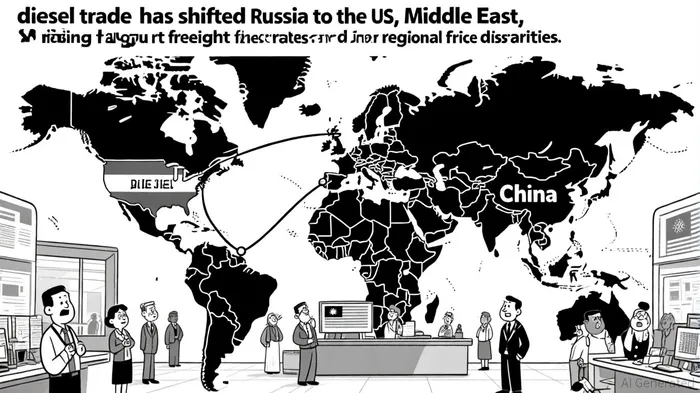







Comentarios
Aún no hay comentarios