
Russia's Crypto Market Liberalization: A Strategic Opportunity for Retail Investors
Russia's cryptocurrency market is undergoing a seismic shift, driven by geopolitical necessity and regulatory innovation. As Western sanctions tighten their grip on traditional financial channels, Moscow has pivoted to digital assets as a lifeline for international trade and economic sovereignty. This strategic recalibration, coupled with evolving regulatory frameworks, is unlocking unprecedented opportunities for retail investors-both within Russia and globally.
Geopolitical Tailwinds: Sanctions as a Catalyst for Crypto Adoption
The Kremlin's reliance on cryptocurrencies is no longer a speculative hypothesis but a hard-earned reality. With Russia excluded from SWIFT and facing asset freezes, digital assets have emerged as a critical tool for circumventing Western financial systems. By July 2024, the Duma had passed a landmark law, enabling crypto-based international settlements, allowing Russian entities to transact in digital assets while adhering to anti-money laundering (AML) and know-your-customer (KYC) protocols under the Central Bank's experimental infrastructure. This move was not merely defensive but strategic: it positioned Russia to reorient trade toward the Middle East, Southeast Asia, and Central Asia, leveraging blockchain networks and gold-backed systems to sustain economic activity.
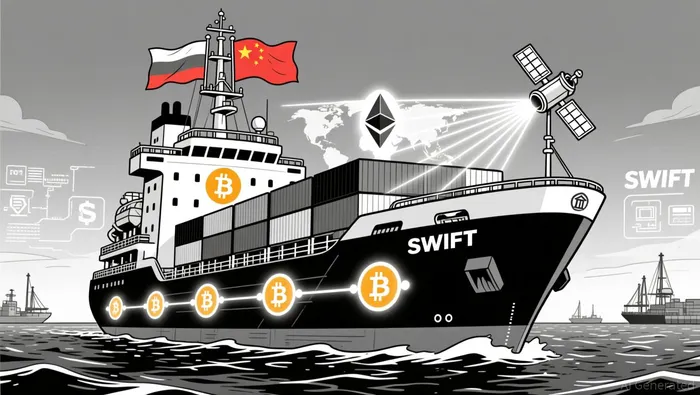
The geopolitical stakes are further amplified by the EU's 19th sanctions package, which explicitly targeted Russian-linked crypto assets, like the A7A5 stablecoin and platforms such as Payeer. These measures, while intended to disrupt Russia's financial resilience, have inadvertently accelerated domestic innovation. The Central Bank of Russia's "transparent blockchain" system, launched in late 2025, exemplifies this response-a tool designed to monitor crypto flows while ensuring compliance with international norms.
Regulatory Reforms: From Exclusion to Inclusion
For years, Russia's crypto landscape was defined by exclusionary rules. The "superqual" investor criteria, requiring individuals to hold assets exceeding 100 million rubles or earn 50 million rubles annually, effectively barred ordinary citizens from participating in crypto markets. However, the economic pressures of sanctions have forced regulators to reconsider. By mid-2025, the Bank of Russia confirmed discussions with the Ministry of Finance to replace wealth-based thresholds with knowledge-based assessments, potentially opening the market to millions of retail investors.
This shift is already bearing fruit. Independent research estimates that 9.2 million Russians actively hold cryptocurrency as of mid-2024, with up to 20 million having engaged with digital assets at some point. The relaxation of eligibility criteria, combined with the proliferation of Russian-language platforms like Binance and Bybit, has democratized access. By October 2025, Russian IP addresses accounted for 28% of Bybit's global traffic, underscoring the surge in retail participation.
Institutional Infrastructure and Retail Synergy
The institutionalization of Russia's crypto ecosystem is another key driver. Sberbank and the Moscow Exchange have launched custody services and ruble-settled BitcoinBTC-- futures, bridging the gap between institutional and retail markets. These developments are not merely technical-they signal a broader acceptance of crypto as a legitimate asset class. For example, MOEX's Bitcoin futures, tied to the U.S. ETF IBIT, provide retail investors with a regulated pathway to hedge against ruble volatility and capital gains.
Meanwhile, the Central Bank's experimental infrastructure-designed to facilitate cross-border transactions via certified digital asset operators-has created a dual-layer system. While domestic crypto payments remain restricted, international settlements are now streamlined, enabling Russian businesses to engage in global trade without relying on traditional banking. This duality has spurred demand for crypto custody solutions and exchange services, further embedding digital assets into the financial mainstream.
Risks and Realities: A Cautionary Lens
Despite the optimism, risks persist. The EU's sanctions on Russian crypto platforms and assets highlight the fragility of this new ecosystem. For instance, the EU's ban on Russian rouble-backed stablecoins and third-party banks supporting Moscow's war economy could disrupt liquidity. Additionally, domestic regulations remain stringent: transactions over 600,000 rubles require reporting, and domestic crypto payments are still prohibited.
However, these challenges also present opportunities. The demand for compliant, sanctioned-resistant platforms is growing, and Russian developers are innovating in response. State-backed initiatives, such as the planned Moscow and St. Petersburg crypto exchanges, aim to create sovereign infrastructure that aligns with international standards while resisting external pressure. For investors, this represents a unique intersection of geopolitical resilience and technological adaptation.
Conclusion: A Strategic Inflection Point
Russia's crypto market is at a strategic inflection point. The interplay of sanctions, regulatory reform, and technological innovation has transformed digital assets from a niche tool into a cornerstone of economic strategy. For retail investors, this means access to a rapidly expanding market with significant growth potential. However, success will depend on navigating the dual forces of geopolitical volatility and regulatory evolution.
As the Central Bank finalizes its plans to liberalize investor eligibility and expand institutional infrastructure, the window for strategic entry is narrowing. For those willing to balance risk with reward, Russia's crypto liberalization offers a compelling case study in how geopolitical tailwinds can reshape financial markets-and create opportunities where few expected them.






Comentarios
Aún no hay comentarios