
Russia's Crypto-Backed Lending Revolution and Its Implications for Global Mining Finance
Russia's energy sector is undergoing a seismic shift as institutional-grade crypto collateral infrastructure gains traction, positioning the country as a pivotal player in the global mining finance landscape. By leveraging its abundant, low-cost energy resources and a cautiously evolving regulatory framework, Russia is pioneering a model that could redefine how energy-rich, underpenetrated markets integrate digital assets into traditional financial systems. This analysis explores the strategic emergence of crypto-backed lending in Russia, its alignment with global trends, and its broader implications for cross-border finance and institutional infrastructure.
Russia's Strategic Pivot: From Prohibition to Institutional Innovation
In 2023, Sberbank issued the country's first crypto-backed loan, secured by cryptocurrency mined by Intelion Data Systems using its Rutoken custody solution. This milestone marked a departure from earlier regulatory hostility, as the Russian government began to recognize the economic potential of crypto mining and its role in stabilizing the ruble. By 2024, large-scale mining operations were brought under a formal regulatory framework, requiring registration and compliance with energy and tax regulations.
The Bank of Russia and the Ministry of Finance are now working toward a unified legal framework by mid-2026, a move that reflects a broader global trend of institutional adoption. Sberbank's Deputy Chairman, Anatoly Popov, has emphasized the need for collaboration with regulators to build the technical infrastructure required for crypto-backed lending. This cautious but deliberate approach mirrors the strategies of energy-rich peers like Kazakhstan, which is developing a $1 billion crypto reserve fund managed by the Astana International Financial Centre.
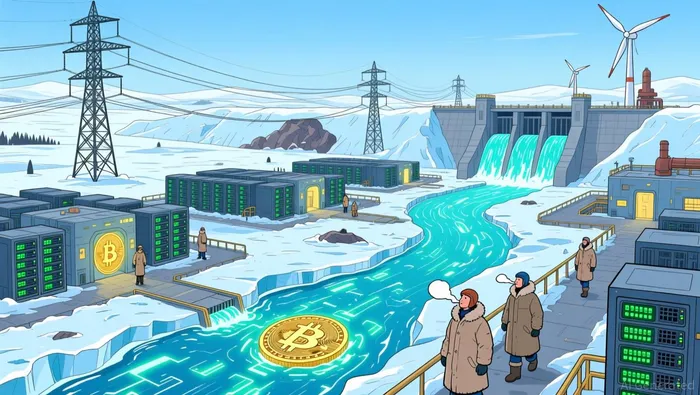
Energy as a Catalyst: Russia's Competitive Edge
Russia's energy infrastructure is central to its crypto ambitions. With 15.5% of global Bitcoin mining power as of Q4 2025, the country's access to cheap electricity-particularly in Siberia and the Far East-has made it a magnet for miners. This dynamic is not unique to Russia; Kazakhstan is integrating crypto mining into thermal power plant upgrades to diversify its energy-dependent economy. However, Russia's scale and regulatory momentum give it a distinct advantage.
Central Bank Governor Elvira Nabiullina has noted that crypto mining contributes to the ruble's strength by circulating profits back into the local economy. This symbiosis between energy and finance is further amplified by Sberbank's exploration of tokenization and DeFi integration, which could bridge traditional and decentralized finance. Such innovations align with global trends, where institutional investors are shifting from direct Bitcoin holdings to infrastructure-backed assets like hash power, seeking yield-generating opportunities uncorrelated with traditional markets.
Global Context: Comparative Lessons from Energy-Rich Markets
Russia's approach contrasts sharply with Ukraine's more open regulatory stance. While Ukraine passed the Virtual Assets Law in 2022, legalizing cryptocurrencies for civil transactions, Russia has maintained a fragmented framework, prioritizing state control and financial stability. This divergence highlights the spectrum of strategies among energy-rich nations: Kazakhstan's crypto reserve fund and Canada's exploration of blockchain-based energy trading illustrate how underpenetrated markets are adapting to the dual challenges of energy transition and financial innovation.
The key differentiator for Russia lies in its institutional-grade infrastructure. Sberbank's crypto-backed loan model, for example, offers borrowers ruble liquidity without selling their crypto holdings, a feature that could attract cross-border investors seeking hedging tools. This mirrors the U.S.-based Fleet Asset Management's AI-driven cloud mining platforms, which optimize on-chain efficiency for institutional investors. Such innovations suggest that energy-rich markets are not merely passive participants in the crypto ecosystem but active architects of its next phase.
Implications for Global Mining Finance
The rise of institutional-grade crypto collateral infrastructure in Russia and similar markets has three major implications:
1. Asset Diversification: By tokenizing energy assets and mining operations, countries like Russia can create new asset classes that appeal to global investors. This aligns with the growing interest in structured financial tools that combine blockchain with traditional finance as noted in recent analyses.
2. Cross-Border Liquidity: Crypto-backed lending could facilitate cross-border trade settlements, reducing reliance on traditional payment systems. Russia's digital ruble project and China's digital yuan initiative underscore this trend.
3. Regulatory Convergence: As energy-rich nations refine their frameworks, global standards for crypto collateral infrastructure may emerge. Russia's proposed 2026 regulatory framework could serve as a blueprint for others navigating the balance between innovation and risk mitigation.
Conclusion
Russia's crypto-backed lending revolution is more than a domestic financial innovation-it is a harbinger of how energy-rich, underpenetrated markets can leverage digital assets to reshape global mining finance. By integrating cheap energy, institutional infrastructure, and cautious regulatory evolution, Russia is positioning itself as a leader in a sector poised for exponential growth. For investors, the implications are clear: the next frontier of crypto finance lies not in speculative trading but in the infrastructure that powers it.






Comentarios
Aún no hay comentarios