
Russell Metals' Strategic Rationalization in Western Canada: Operational Efficiency and Shareholder Value Creation
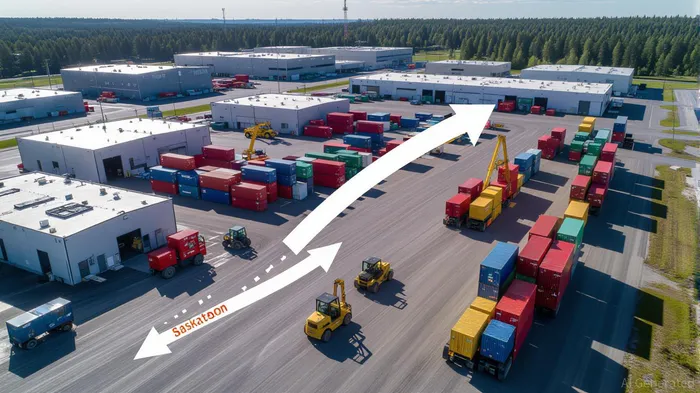
Russell Metals Inc. (RUSMF) has embarked on a transformative strategic initiative in Western Canada, prioritizing operational efficiency and long-term shareholder value creation. By rationalizing its physical footprint, optimizing resource allocation, and streamlining operations, the company is positioning itself to navigate a competitive industrial metals market while delivering measurable returns to investors. Recent actions, including the permanent closure of underperforming facilities and the relocation of critical assets, underscore a disciplined approach to capital efficiency and cost reduction.
Operational Efficiency: A Blueprint for Rationalization
In 2025, Russell Metals announced the permanent closure of its Delta, British Columbia, location and the sale of real estate in Delta and Saskatoon, Saskatchewan[1]. These moves are part of a broader strategy to eliminate operational redundancies and reduce excess capacity. The company has also relocated and refurbished processing equipment and cranes from three Western Canadian sites to more strategic locations, ensuring optimal utilization of resources[1]. Such initiatives reflect a commitment to aligning the company's physical infrastructure with current demand patterns and cost structures.
The financial implications of these actions are already materializing. In Q3 2025, Russell Metals will record a $4 million restructuring provision related to the Delta closure[1]. While this represents a short-term expense, the company views it as an investment in long-term profitability. By reducing fixed costs and consolidating operations, Russell Metals aims to enhance flexibility and responsiveness in a market characterized by fluctuating commodity prices and supply chain disruptions.
Financial Performance: A Testimony to Strategic Execution
The operational overhauls have directly translated into improved financial metrics. In Q2 2025, the company reported revenues of $1.2 billion, surpassing both Q1 2025 ($1.17 billion) and Q2 2024 ($1.07 billion)[2]. EBITDA surged by 26% year-over-quarter to $108 million, with the EBITDA margin expanding to 9.0% from 7.3% in the prior quarter[2]. This margin improvement highlights the effectiveness of cost-control measures and operational streamlining.
Moreover, Russell Metals achieved an annualized return on capital of 20% in Q2 2025, up from 15% in Q1 2025[2]. This metric underscores the company's ability to generate value from its invested capital, a critical factor for long-term shareholder trust. The results were further validated by strong shareholder engagement at the 2025 annual meeting, where 60.91% of shares were represented, and all director nominees received over 88.47% approval[2]. The advisory “say on pay” resolution and auditor appointment were also approved with robust support, reflecting confidence in management's strategic direction.
Shareholder Value Creation: Returns and Reinvestment
Russell Metals has demonstrated a balanced approach to value creation, combining capital returns with reinvestment in core operations. In Q2 2025, the company returned $47 million to shareholders through dividends and share repurchases[2]. This aligns with its commitment to distributing excess capital while maintaining financial flexibility for strategic opportunities.
The company's focus on operational efficiency has also enhanced its capacity for reinvestment. By reducing non-core expenditures and optimizing working capital, Russell Metals has freed up resources to fund high-return projects and expand its competitive edge in key markets. For instance, the relocation of processing equipment to more efficient sites is expected to lower maintenance costs and improve throughput, further amplifying profitability.
Conclusion: A Model for Sustainable Growth
Russell Metals' strategic rationalization in Western Canada exemplifies how disciplined operational execution can drive both efficiency and shareholder value. By closing underperforming locations, optimizing resource allocation, and maintaining a strong capital return policy, the company has set a benchmark for industrial resilience. As it continues to refine its footprint and adapt to market dynamics, Russell Metals is well-positioned to sustain its momentum and deliver long-term value to stakeholders.







Comentarios
Aún no hay comentarios