
The Russell 2000's Resurgence: Small-Cap Value Rotation and Rate-Cut Optimism Drive Momentum
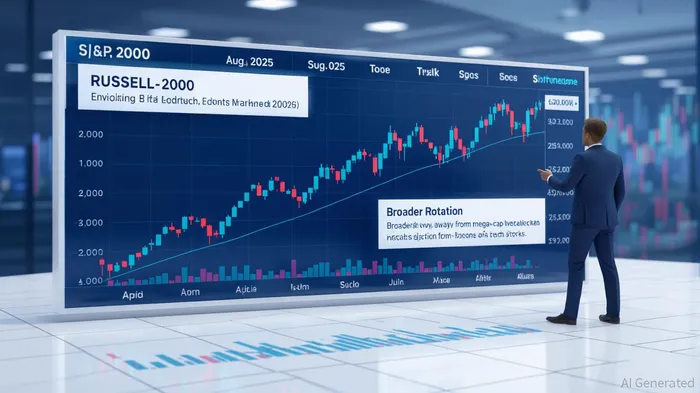
The Russell 2000, a benchmark for U.S. small-cap equities, has staged a remarkable comeback in 2025, driven by a confluence of factors including optimism over Federal Reserve rate cuts and a broad rotation away from overvalued mega-cap technology stocks. In August 2025 alone, the index surged 7.3%, marking its best monthly performance of the year and extending a four-month winning streak—a trend not seen since 2021 [1]. This momentum has positioned small-cap stocks as a focal point for investors seeking diversification and value in an increasingly fragmented market.
Rate-Cut Optimism Fuels Small-Cap Rally
The resurgence of the Russell 2000 is closely tied to expectations of lower interest rates. After a prolonged period of tightening, markets are pricing in a 25-basis-point rate cut by the Fed in September 2025, with further reductions anticipated in 2026 [1]. Small-cap companies, which often rely heavily on floating-rate debt, stand to benefit disproportionately from reduced borrowing costs. According to a report by BCA Research, small-cap stocks are "undervalued, unloved, and primed for a rebound," with analysts like Irene Tunkel emphasizing their sensitivity to monetary easing [1].
Historical data reinforces this dynamic. As noted by BarclaysBCS--, small-cap indices have historically outperformed large-cap benchmarks by an average of 12 percentage points in the 12 months following the Fed's first rate cut in an easing cycle [3]. For instance, the Russell 2000 has averaged 35% returns in such scenarios, compared to 23% for the S&P 500 [2]. This pattern reflects small-cap firms' higher leverage and reliance on bank financing, making them more responsive to rate-driven liquidity shifts.
Rotation to Value and Diversification of Market Leadership
The Russell 2000's outperformance also underscores a broader rotation toward value stocks and away from the "Magnificent Seven" tech giants. As of August 2025, small-cap stocks were trading at a 15% discount to fair value, according to MorningstarMORN-- data, making them an attractive target for capital reallocation [1]. The Morningstar US Value Index rose 5.05% in August, while the S&P 500 Growth Index lagged, signaling a shift in investor sentiment toward fundamentals over speculative growth narratives [1].
This reallocation has been amplified by macroeconomic factors. Tax incentives, improved earnings forecasts, and reduced trade policy uncertainty have bolstered confidence in small-cap equities [1]. Meanwhile, the S&P 500's 1.1% gain in August paled in comparison to the Russell 2000's 7.3% surge, highlighting the divergent trajectories of market segments [1].
Caution Amid Optimism
Despite the bullish momentum, skepticism persists. Barclays' historical analysis warns that small-cap indices often underperform around the time of the first rate cut, as investors may overextend expectations [3]. Additionally, some analysts caution against complacency. Ed Yardeni of Pantheon Macroeconomics has noted that premature rate cuts could reignite inflationary pressures, while BlackRockBLK-- has highlighted the risk of a "muted" economic response if the Fed avoids deeper cuts than historical cycles suggest [3].
Implications for Investors
For investors, the Russell 2000's resurgence presents both opportunities and risks. Small-cap ETFs and value-oriented strategies have gained traction, with products like the iShares Russell 2000 ValueIWN-- ETF (IWN) and the Vanguard Small-Cap Value Index Fund (VBR) seeing inflows [2]. However, the path forward depends on the Fed's execution of its easing cycle and the resilience of small-cap earnings.
In conclusion, the Russell 2000's rally reflects a market recalibration toward value and rate-sensitive sectors. While historical patterns suggest small-caps could continue to outperform, investors must remain vigilant to macroeconomic headwinds and the Fed's evolving policy stance.







Comentarios
Aún no hay comentarios