
Russel Metals' Strategic Divestiture: A Catalyst for Long-Term Shareholder Value?
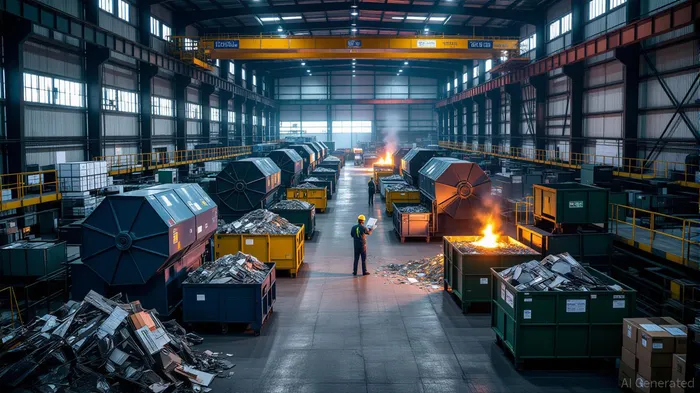
The metals recycling sector, long characterized by its fragmented nature and cyclical volatility, is undergoing a quiet but profound transformation. At the heart of this shift lies a growing emphasis on cost rationalization and operational focus—strategies that companies like Russel Metals Inc. are now aggressively pursuing. The Canadian-based recycler's recent announcement to shutter its Delta, British Columbia, facility and repurpose equipment across three Western Canadian locations[2] has sparked debate about whether such moves are merely short-term cost-cutting exercises or a blueprint for sustainable value creation in an industry grappling with margin pressures and regulatory headwinds.
The Rationale Behind Russel's Moves
Russel's decision to permanently close its Delta location and sell the associated real estate for over $40 million[2] is emblematic of a broader industry trend: the rationalization of underperforming assets to free up capital for high-growth opportunities. By eliminating excess capacity and redirecting resources to “high-potential markets,” the company is aligning itself with the economic realities of a sector where operational efficiency is no longer optional but existential.
This strategy mirrors the playbook of industry peers leveraging advanced technologies to reduce costs. For instance, AI-driven sorting systems and automated optical separators have become critical tools for minimizing contamination and maximizing the value of recycled metals[1]. Russel's repurposing of processing equipment across three Western Canadian sites[2] suggests a parallel commitment to modernizing its operations, a move that could enhance margins by reducing reliance on manual labor and improving material recovery rates.
Industry Tailwinds and Strategic Alignment
The metals recycling sector is being reshaped by a confluence of regulatory and technological forces. The U.S. Inflation Reduction Act (IRA), for example, has created a financial incentive to treat recycled battery components as “American-made,” effectively subsidizing domestic recycling efforts through tax credits[1]. Similarly, the European Union's Carbon Border Adjustment Mechanism (CBAM) has elevated the economic and environmental appeal of recycled metals, which carry significantly lower carbon footprints than primary production[1]. These policies are not just theoretical—they are reshaping supply chains and creating a premium for companies that can demonstrate sustainability credentials.
Russel's divestiture aligns with these dynamics. By streamlining its footprint, the company is positioning itself to capitalize on the growing demand for recycled materials in industries like electric vehicles and green steel production. The projected $40–50 million capital reduction from the Delta closure[2] could be reinvested in technologies that further reduce processing costs or expand into markets where recycled metals command a premium.
Shareholder Value: A Mixed Landscape
The question remains: Can such divestitures translate into long-term shareholder value? The evidence is mixed. A PwC study found that companies with proactive divestiture strategies have a 99.5% probability of achieving positive total shareholder returns[3], a statistic that underscores the potential of strategic exits. However, the metals recycling sector's recent history is littered with cautionary tales. Radius Recycling Inc., for example, reported a $16 million net loss in its fiscal 2025 third quarter despite improved market conditions[4], highlighting the sector's vulnerability to commodity price swings and operational inefficiencies.
Russel's approach, however, appears more disciplined. By focusing on cost rationalization—rather than haphazard asset sales—the company is addressing the root causes of margin compression. The sale of the Delta property, for instance, is not just a liquidity play but a step toward optimizing its geographic footprint in a region where Western Canadian operations face unique logistical and regulatory challenges[2]. This contrasts with the hasty divestitures of companies like Waste ManagementWM--, which sold Stericycle's U.S. Environmental business for $86.4 million to address antitrust concerns[2], a move that, while necessary, lacked the strategic clarity of Russel's approach.
The Path Forward: Risks and Opportunities
The metals recycling sector's projected 4.0% CAGR through 2030[1] offers a compelling backdrop for Russel's strategy. However, the company must navigate near-term headwinds, including the risk of trade wars and manufacturing slowdowns, which could dampen demand for recycled materials[2]. Additionally, the upfront costs of adopting AI and automation—while promising long-term savings—require careful capital allocation.
For Russel, the key will be to balance short-term cost discipline with long-term innovation. The company's ability to reinvest the $40–50 million from the Delta sale into technologies that enhance sorting efficiency or expand into high-margin markets like battery recycling will be critical. As one industry analyst noted, “The winners in this sector will be those that treat divestitures not as an end but as a means to fund the next phase of growth”[3].
Conclusion
Russel Metals' strategic divestiture is more than a reaction to margin pressures—it is a calculated step toward aligning with the sector's evolving priorities. By prioritizing cost rationalization, operational focus, and technological modernization, the company is positioning itself to thrive in a landscape where sustainability and profitability are increasingly intertwined. While the path to long-term shareholder value is not without risks, the alignment of Russel's strategy with industry tailwinds—from AI adoption to regulatory incentives—suggests that this is a move worth watching closely.







Comentarios
Aún no hay comentarios