
Runway Incursion: Southwest Jet and Small Plane Collide
Generado por agente de IAWesley Park
martes, 10 de diciembre de 2024, 4:32 pm ET2 min de lectura
BA--
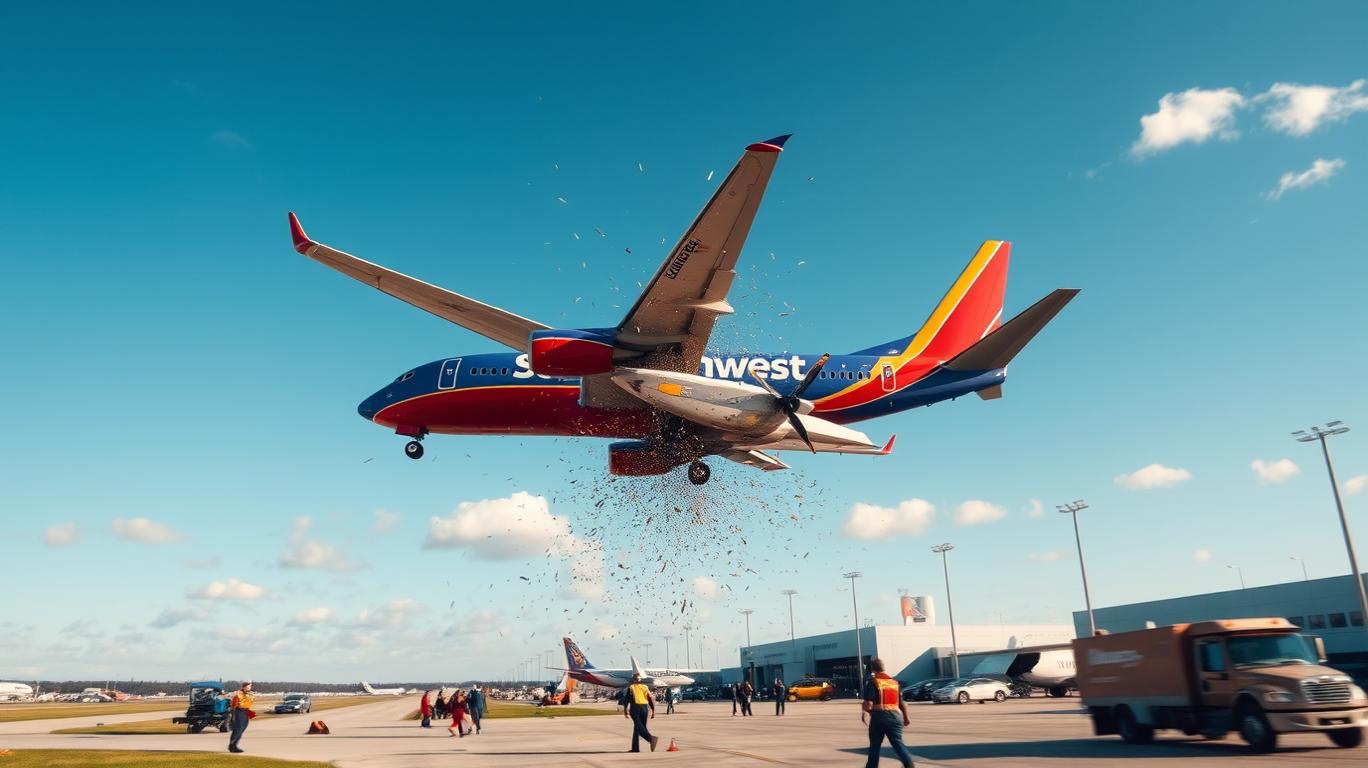
On a foggy morning in February 2023, a Southwest Airlines jet and a small plane found themselves on the same runway at Austin-Bergstrom International Airport, narrowly avoiding a catastrophic collision. The incident, which could have resulted in the deaths of 133 people, highlights the critical role of air traffic control, communication, and technology in preventing runway incursions.
The near-miss occurred when a Southwest Boeing 737-700, carrying 128 passengers, was cleared for takeoff on runway 18L. Simultaneously, a Federal Express Boeing 767-300, with three crew members on board, was instructed to continue its approach to the same runway. Due to dense fog, the air traffic controller was unable to see the Southwest airplane on the taxiway and runway, as the Austin air traffic control tower did not have surface detection equipment to aid in monitoring ground traffic.
The Federal Aviation Administration (FAA) procedures required a 2-mile separation between the two airplanes. However, when the Southwest airplane lined up with the runway 18L centerline and came to a complete stop for an engine run-up, the FedEx airplane was only 1.5 miles away. The separation between the airplanes continued to decrease until the FedEx flight crew saw the outline of the Southwest airplane through the fog and began a missed approach, narrowly avoiding a collision.
The National Transportation Safety Board (NTSB) investigation revealed several factors contributing to the incident. The local controller's incorrect assumption that the Southwest airplane would depart from the runway before the FedEx airplane arrived, combined with his lack of situational awareness and expectation bias, led to the loss of separation between the two aircraft. Additionally, the Southwest flight crew's failure to account for the traffic on short final approach and notify the controller that they would need additional time on the runway before the takeoff roll also contributed to the incident.
The FAA's failure to require surface detection equipment at Austin-Bergstrom International Airport and direct alerting for flight crews also played a role in the incident. The NTSB issued seven new safety recommendations to the FAA and reiterated five previously issued recommendations to address these issues.
To prevent such incidents in the future, the NTSB recommends enhancing air traffic controller training on low-visibility operations and ensuring adequate staffing levels to manage workload effectively. Implementing surface detection equipment and direct alerting for flight crews can provide an extra layer of protection, as emphasized by NTSB Chair Jennifer Homendy.
In conclusion, the near-collision between the Southwest jet and the small plane at Austin-Bergstrom International Airport serves as a stark reminder of the importance of air traffic control, communication, and technology in preventing runway incursions. By addressing the contributing factors and implementing the NTSB's safety recommendations, the aviation industry can work towards enhancing safety and preventing future incidents.
LUV--
RWAY--
On a foggy morning in February 2023, a Southwest Airlines jet and a small plane found themselves on the same runway at Austin-Bergstrom International Airport, narrowly avoiding a catastrophic collision. The incident, which could have resulted in the deaths of 133 people, highlights the critical role of air traffic control, communication, and technology in preventing runway incursions.
The near-miss occurred when a Southwest Boeing 737-700, carrying 128 passengers, was cleared for takeoff on runway 18L. Simultaneously, a Federal Express Boeing 767-300, with three crew members on board, was instructed to continue its approach to the same runway. Due to dense fog, the air traffic controller was unable to see the Southwest airplane on the taxiway and runway, as the Austin air traffic control tower did not have surface detection equipment to aid in monitoring ground traffic.
The Federal Aviation Administration (FAA) procedures required a 2-mile separation between the two airplanes. However, when the Southwest airplane lined up with the runway 18L centerline and came to a complete stop for an engine run-up, the FedEx airplane was only 1.5 miles away. The separation between the airplanes continued to decrease until the FedEx flight crew saw the outline of the Southwest airplane through the fog and began a missed approach, narrowly avoiding a collision.
The National Transportation Safety Board (NTSB) investigation revealed several factors contributing to the incident. The local controller's incorrect assumption that the Southwest airplane would depart from the runway before the FedEx airplane arrived, combined with his lack of situational awareness and expectation bias, led to the loss of separation between the two aircraft. Additionally, the Southwest flight crew's failure to account for the traffic on short final approach and notify the controller that they would need additional time on the runway before the takeoff roll also contributed to the incident.
The FAA's failure to require surface detection equipment at Austin-Bergstrom International Airport and direct alerting for flight crews also played a role in the incident. The NTSB issued seven new safety recommendations to the FAA and reiterated five previously issued recommendations to address these issues.
To prevent such incidents in the future, the NTSB recommends enhancing air traffic controller training on low-visibility operations and ensuring adequate staffing levels to manage workload effectively. Implementing surface detection equipment and direct alerting for flight crews can provide an extra layer of protection, as emphasized by NTSB Chair Jennifer Homendy.
In conclusion, the near-collision between the Southwest jet and the small plane at Austin-Bergstrom International Airport serves as a stark reminder of the importance of air traffic control, communication, and technology in preventing runway incursions. By addressing the contributing factors and implementing the NTSB's safety recommendations, the aviation industry can work towards enhancing safety and preventing future incidents.

Divulgación editorial y transparencia de la IA: Ainvest News utiliza tecnología avanzada de Modelos de Lenguaje Largo (LLM) para sintetizar y analizar datos de mercado en tiempo real. Para garantizar los más altos estándares de integridad, cada artículo se somete a un riguroso proceso de verificación con participación humana.
Mientras la IA asiste en el procesamiento de datos y la redacción inicial, un miembro editorial profesional de Ainvest revisa, verifica y aprueba de forma independiente todo el contenido para garantizar su precisión y cumplimiento con los estándares editoriales de Ainvest Fintech Inc. Esta supervisión humana está diseñada para mitigar las alucinaciones de la IA y garantizar el contexto financiero.
Advertencia sobre inversiones: Este contenido se proporciona únicamente con fines informativos y no constituye asesoramiento profesional de inversión, legal o financiero. Los mercados conllevan riesgos inherentes. Se recomienda a los usuarios que realicen una investigación independiente o consulten a un asesor financiero certificado antes de tomar cualquier decisión. Ainvest Fintech Inc. se exime de toda responsabilidad por las acciones tomadas con base en esta información. ¿Encontró un error? Reportar un problema




Comentarios
Aún no hay comentarios