
RTX's Pratt & Whitney and Singapore Airlines' APU Maintenance Deal: A Strategic Win for Industrial Aerospace Recovery
The recent 15-year maintenance agreement between RTX's Pratt & Whitney and Singapore Airlines for 34 APS5000 auxiliary power units (APUs) marks a pivotal moment in the industrial aerospace sector. This deal not only cements RTX's leadership in the high-margin APU aftermarket but also underscores its strategic alignment with the post-pandemic aviation recovery. For investors, the contract signals a compounding tailwind for long-term profitability, driven by technological differentiation, operational efficiency, and a favorable market tailwind.
A Technological and Strategic Edge
The APS5000 APU, the first all-electric unit in the industry, is a cornerstone of Singapore Airlines' BoeingBA-- 787 Dreamliner fleet. Designed for quiet operation, low emissions, and enhanced maintainability, the APU has already accumulated 16 million flight hours across 1,400 units[1]. By securing a long-term maintenance partnership, RTXRTX-- ensures recurring revenue streams while reinforcing its reputation for cutting-edge solutions. The contract's emphasis on “predictable costs” and “long-term reliability”[2] aligns with airline operators' priorities in an era of volatile fuel prices and regulatory pressures to reduce carbon footprints.
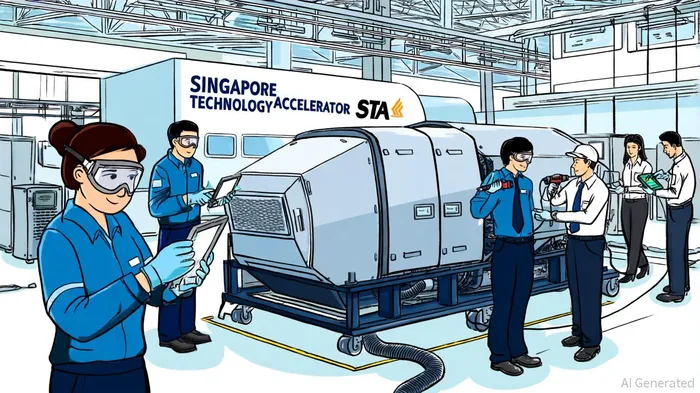
This deal also leverages RTX's Singapore Technology Accelerator (STA), a facility that has implemented over 30 innovations to streamline maintenance, repair, and overhaul (MRO) processes[3]. These advancements—ranging from digital twins to predictive analytics—reduce turnaround times and elevate service quality, creating a moat against competitors. The STA's proximity to Singapore Airlines' operations further reduces logistical costs, enhancing margins.
Market Dynamics and Financial Implications
The APU aftermarket is a $3.08 billion market in 2025, projected to grow to $3.69 billion by 2030[4]. RTX's dominance in this segment is evident from its Q2 2025 results, where Pratt & Whitney's commercial aftermarket sales surged 19% year-over-year[5]. While the financial terms of the Singapore Airlines contract remain undisclosed, historical precedents—such as a prior $200 million, 15-year agreement for Airbus A380 services[6]—suggest this deal could contribute meaningfully to revenue.
Moreover, RTX's broader market share in the aerospace and defense sector stands at 67.64% as of Q2 2025[7], reflecting its ability to capitalize on structural trends. The APS5000's exclusivity to the BoeingBA-- 787 fleet creates a captive customer base, ensuring demand as airlines expand long-haul operations. With the global APU market driven by retrofitting older aircraft and adopting electric systems[8], RTX's technological edge positions it to outpace rivals.
Why This Deal Matters for Investors
The 15-year horizon of the Singapore Airlines contract provides RTX with long-term revenue visibility, a critical factor in a cyclical industry. Coupled with the STA's productivity gains, the deal amplifies RTX's ability to deliver consistent margins. For context, the company's Q2 2025 sales growth of 9% was fueled largely by its commercial aftermarket segment[9], demonstrating the scalability of its MRO offerings.
Investors should also note the strategic synergy between this contract and global sustainability mandates. The APS5000's low-emission profile aligns with ICAO's Carbon Offsetting and Reduction Scheme for Aviation (CORSIA), making it a future-proof asset for airlines. As regulators tighten APU-off operation requirements, retrofit demand will accelerate, further boosting RTX's market share.
Conclusion: A Near-Term Buy
RTX's partnership with Singapore Airlines is more than a transaction—it's a masterstroke in positioning for the next phase of aerospace recovery. By locking in a high-profile client for a cutting-edge product and leveraging its Singapore-based innovation hub, RTX is not only securing near-term cash flows but also building a durable competitive advantage. With the APU aftermarket expanding at a compound annual growth rate of ~4.5% and RTX's operational leverage improving, the stock offers compelling upside for investors seeking exposure to industrial aerospace's renaissance.





Comentarios
Aún no hay comentarios