
RTX's NGAP Engine: A Catalyst for Long-Term Aerospace Growth and Competitive Edge
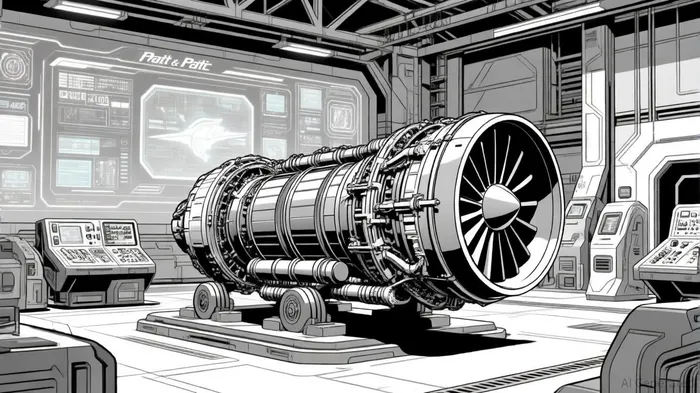
The aerospace industry stands at the precipice of a technological renaissance, driven by the urgent need for next-generation propulsion systems capable of sustaining air dominance in an era of escalating geopolitical and environmental challenges. At the forefront of this transformation is RTXRTX-- Corporation's Pratt & Whitney division, whose Next Generation Adaptive Propulsion (NGAP) program—centered on the XA103 engine—has emerged as a linchpin for both military innovation and industrial aerospace growth. With the U.S. Air Force's NGAD fighter program poised to redefine sixth-generation combat capabilities, RTX's strategic acceleration of adaptive propulsion technology positions it as a key player in a market projected to expand from $74.43 billion in 2025 to $99.78 billion by 2030[1].
Technological Differentiation: Digital Design and Adaptive Architecture
RTX's XA103 engine represents a paradigm shift in propulsion engineering. Unlike traditional engines, the XA103 employs a three-stream adaptive cycle architecture, enabling dynamic adjustments to bypass ratios and fan pressure. This allows the engine to optimize fuel efficiency, survivability, and thermal management in real time—capabilities critical for future combat scenarios involving directed energy weapons and high-speed maneuverability[2]. According to a report by The Aviationist, the XA103's digital design process, which includes a fully virtual Detailed Design Review (DDR), has slashed development timelines and costs while enhancing collaboration with suppliers[3]. This digital-first approach contrasts with General Electric's XA102, which relies on model-based systems engineering (MBSE) but lacks the XA103's real-time adaptability[4].
The XA103's use of advanced materials, such as ceramic matrix composites (CMCs), further underscores its technological edge. These materials enable higher turbine operating temperatures, translating to improved performance and durability. As stated by RTX in its 2025 Q1 earnings report, the company has invested over $30 million to refine its digital modeling environment, a move that has already increased design accuracy by 20%[5].
Competitive Landscape: RTX vs. GE and Beyond
While GE's XA102 engine is a formidable competitor, RTX's digital-centric strategy has given it a distinct advantage in the NGAP race. The XA103's fully digital DDR, completed in early 2025, allowed Pratt & Whitney to procure hardware for its prototype ground demonstrator ahead of schedule[6]. In contrast, GE's MBSE approach, though innovative, has yet to demonstrate the same level of operational flexibility. The Pentagon's $7 billion investment in both engines—$3.5 billion each—reflects a deliberate effort to foster competition, but RTX's early milestones suggest it is better positioned to meet the Air Force's stringent requirements[7].
Beyond GE, RTX faces competition from global players like Rolls-Royce and Safran, which are also advancing hybrid-electric and hydrogen propulsion systems. However, RTX's focus on adaptive cycle technology aligns more closely with the U.S. military's near-term priorities, particularly in maintaining air superiority against adversaries like China and Russia[8].
Strategic Roadmap: From Military to Commercial Applications
RTX's vision for the XA103 extends beyond the NGAD program. The adaptive architecture of the engine could be repurposed for commercial aviation, where fuel efficiency and emissions reduction are paramount. The global advanced air mobility (AAM) market, valued at $11.5 billion in 2024, is expected to grow at a 20.6% CAGR through 2034, driven by demand for eVTOL aircraft and sustainable propulsion systems[9]. RTX's digital design expertise, honed through the NGAP program, positions it to pivot quickly into these emerging markets.
Financial Strength and Investor Implications
RTX's financials reinforce its investment appeal. The company reported Q1 2025 adjusted earnings per share (EPS) of $1.47, exceeding expectations by 8.9%, and maintained a $217 billion backlog across its defense and commercial segments[10]. While its stock dipped 8.86% in pre-market trading following the Q1 report, this volatility appears to stem from broader market jitters rather than fundamental weaknesses. Analysts project Pratt & Whitney's segment to grow at a high single-digit rate in 2025, fueled by ECU upgrades for the F135 engine and NGAP-related contracts[11].
However, risks persist. The NGAD program's future remains uncertain under the Trump administration, and delays could erode RTX's competitive edge. Additionally, the shift toward autonomous systems may reduce demand for manned fighter engines. Yet, RTX's diversified portfolio—spanning Collins Aerospace and Raytheon Technologies—mitigates these risks, ensuring steady cash flow even if NGAD faces setbacks.
Conclusion: A Tailwind for Long-Term Growth
RTX's NGAP program is more than a military project; it is a strategic investment in the future of propulsion technology. By leveraging digital design, adaptive architecture, and a robust backlog, RTX is not only securing its position in the defense sector but also laying the groundwork for commercial expansion. For investors, the XA103 represents a high-conviction opportunity in an industry poised for decades of growth. As the aerospace sector grapples with decarbonization and digital transformation, RTX's ability to innovate at scale will likely determine its dominance in the next era of flight.





Comentarios
Aún no hay comentarios