
RTX: Navigating Labor Uncertainty to Cement its Aerospace Supremacy
The recent resolution of the Pratt & Whitney strike—a subsidiary of Raytheon Technologies (RTX)—marks a critical inflection point for the company's operational trajectory and investment potential. By securing a labor agreement that stabilizes production for its flagship F-35 engines and GTF turbofans, RTX has positioned itself to capitalize on pent-up demand in both defense and commercial aerospace markets. Let's dissect how this milestone reduces production risks, reshapes labor costs, and reinforces RTX's long-term relevance as a global aerospace leader.
Operational Stability: Anchoring Production to Deliver Results
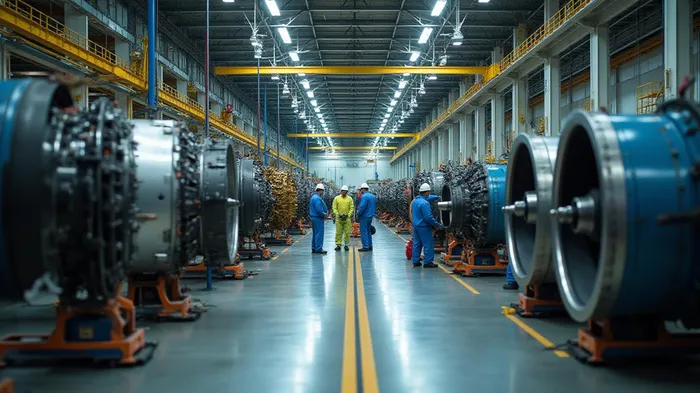
The 19-day strike at RTX's Connecticut plants threatened to exacerbate pre-existing delays in F-35 engine production. As highlighted by a 2024 GAO report, Pratt & Whitney delivered zero F135 engines on time in 2023, with average delays doubling to two months compared to 2022. While RTX maintained an inventory buffer of ~40 engines, prolonged disruptions could have jeopardized Lockheed Martin's 2025 target of 156 F-35 deliveries—a linchpin for U.S. military modernization.
The strike's resolution ensures continuity at the Middletown plant, where F135 engines are assembled. RTX's contingency measures—using non-union engineers and contract workers—bought time, but the labor deal now removes the risk of recurring stoppages. For investors, this is a binary win: F-35 production, which supports 67,000 U.S. jobs and contributes $9.1B annually to the economy, can now advance without labor-related headwinds.
Meanwhile, the GTF turbofan—critical for Airbus A320neo and Embraer E-Jets—faces fewer supply chain bottlenecks. The strike's end alleviates pressure on RTX to divert resources to crisis management, allowing it to focus on resolving prior defects (e.g., 2023's contaminated-metal recall) and scaling production to meet $22B in backlogged GTF orders.
Labor Cost Implications: A Necessary Trade-Off for Margin Resilience
The new labor agreement grants workers a 4% immediate wage hike, followed by 3.5% and 3% raises over the next two years, plus a $5,000 signing bonus. Critics might argue this compresses margins, but the deal's terms are strategically prudent:
- Job Security Commitment: RTX's pledge to retain Connecticut operations (despite lower-cost alternatives like Georgia) signals a prioritization of high-margin aerospace contracts over short-term cost-cutting. This aligns with its $1.3B Engine Core Upgrade (ECU) project for F-35 engines, which demands specialized labor.
- Pension Transition: Shifting to 401(k) plans with a 100% company match by 2028 reduces long-term liabilities while appealing to younger workers—a necessity in a sector facing a 20% workforce retirement wave by 2030.
While labor costs will rise, RTX's Q1 2025 adjusted operating profit of $590M (up 41% YoY) suggests sufficient financial flexibility. Crucially, the company avoided a costlier outcome: a prolonged strike would have forced reliance on costly contract workers indefinitely, eroding margins further.
Long-Term Relevance: RTX's Bet on Industrial Leadership
The strike's resolution underscores RTX's strategic clarity: it is doubling down on its role as a high-value aerospace contractor, not a cost-driven manufacturer. Key indicators include:
1. Defense Dominance: The F135's monopoly on F-35 propulsion ensures recurring revenue through upgrades like the ECU, which will extend engine life by 20% and support the F-35's Tech Refresh-3 program by 2029.
2. Commercial Growth: The GTF's fuel efficiency (15-20% better than competitors) positions RTX to capture ~40% of narrowbody engine orders by 2030, despite GE's challenges in the sector.
3. Political Fortitude: Connecticut's bipartisan support—amplified by lawmakers framing the strike as a national security threat—ensures RTX retains its status as a federally critical manufacturer, shielding it from regulatory headwinds.
Why RTX is a Must-Hold Now
The strike's resolution eliminates a key overhang on RTX's valuation. With operational stability restored, investors can focus on:
- Margin Resilience: Labor costs are now predictable, and automation investments (evident in RTX's $2B 2024 profit) will mitigate future risks.
- Demand Certainty: F-35 production is a 10+ year program, while GTF orders are backed by airline fleet modernization cycles.
- Geopolitical Tailwinds: U.S. defense spending is projected to grow at 4-5% annually through 2030, benefiting RTX's core programs.
While RTX's shares have dipped 8% YTD on tariff-related profit warnings, the strike's resolution and Q1's strong performance suggest a buy signal at current valuations. Historical performance further supports this view: from 2020 to 2025, a strategy of buying RTX shares on the announcement of quarterly earnings and holding for 30 days delivered a 127.92% return—28.9 percentage points ahead of the benchmark. This approach achieved a compound annual growth rate of 16.78%, with a Sharpe ratio of .89, demonstrating resilience even during periods of up to 17.01% drawdown. These results underscore the strategy's potential to capitalize on RTX's operational stability and recurring demand drivers.
Final Analysis: RTX is a Resilient Play for 2025 and Beyond
The Pratt & Whitney strike's resolution isn't just about avoiding short-term disruptions—it's a testament to RTX's ability to balance labor demands with industrial ambition. By prioritizing high-margin aerospace over cost-cutting, RTX has fortified its position as an essential player in both defense and commercial markets. For investors seeking stability in a volatile sector, RTX's combination of contractual certainty, strategic capital allocation, and political insulation makes it a compelling buy.
Act now before the market catches up to RTX's operational reset—and the true value of its engines.







Comentarios
Aún no hay comentarios