
Why RTX Corporation is a Compelling Buy Amid Aerospace Recovery and Defense Growth
RTX Corporation, the aerospace and defense giant, stands at an intriguing intersection of undervaluation relative to peers and strategic growth catalysts. With a robust defense backlog, a rebounding commercial aerospace division, and institutional support, RTXRTX-- presents a compelling investment opportunity, particularly as its valuation metrics suggest upside potential of 14–33% over the next 12 months.
Defense Backlog: A Foundation of Stability
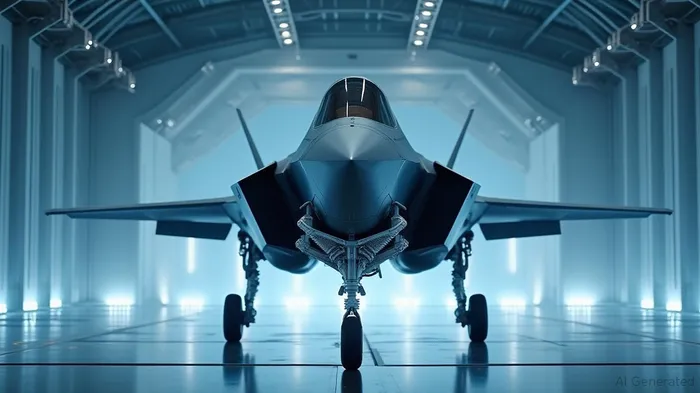
RTX's defense segment is underpinned by a staggering $92 billion backlog, fueled by demand for advanced systems like the Patriot missile defense and the F-35 Joint Strike Fighter. This backlog represents multiyear visibility into earnings, shielding RTX from near-term geopolitical volatility. For instance, Collins Aerospace's defense sales surged 10% in Q1 2025, driven by programs such as the Survivable Airborne Operations Center and command-and-control systems. Meanwhile, Raytheon's Land and Air Defense Systems division saw strong growth from international contracts like Romania's Patriot missile procurement.
Commercial Aerospace Recovery: The Aftermarket Surge
RTX's commercial divisions—Collins Aerospace and Pratt & Whitney—are benefiting from a post-pandemic rebound in air travel. The commercial aftermarket, which accounts for over 20% of sales, grew 21% in Q1 2025 due to rising aircraft utilization. This trend is expected to persist as global passenger traffic recovers to pre-2020 levels. Pratt & Whitney's Large Commercial Engines division, powering aircraft like the BoeingBA-- 787, saw aftermarket revenue jump 28%, while Collins' commercial OE (original equipment) sales rose 2%, signaling sustained demand for new aircraft components.
Valuation: A Discounted Multiple in an Overvalued Sector?
RTX's valuation metrics present a paradox. While its forward P/E of 41x exceeds peers like Lockheed MartinLMT-- (19.5x) and Northrop GrummanNOC-- (18.9x), its EV/EBITDA of 19.7x aligns with sector averages. This discrepancy arises because RTX's defense backlog and commercial growth are not yet fully reflected in earnings. A deeper look reveals:
- DCF Analysis: RTX's intrinsic value is estimated at $123.29, implying a 14.7% overvaluation at current prices. However, this calculation assumes flat growth—a scenario unlikely given its backlog and aftermarket tailwinds.
- Analyst Targets: The 12-month consensus price target of $143.98 (a 14% upside from $125.43) rises to $161.38 when factoring in margin expansion. The highest analyst target reaches $493, suggesting potential upside if RTX delivers on its $7.5 billion free cash flow guidance.
Risks: Navigating Tariffs and Supply Chain Headwinds
RTX is not without risks. The U.S. government's potential tariffs on Chinese imports could add $400 million in annual costs, squeezing margins. Additionally, labor strikes at key suppliers or delays in defense program approvals could disrupt execution. However, RTX's diversified revenue streams—43% defense, 35% commercial aerospace, and 22% other—mitigate sector-specific risks.
Institutional Support and Catalysts Ahead
Institutional investors are taking notice. Raytheon's $7.5 billion free cash flow target for 2025, coupled with a $1.3 billion operating cash flow in Q1, supports its shareholder-friendly buybacks and dividends. Key catalysts include:
1. F-35 Production Ramp-Up: RTX's role in the F-35 engine and avionics systems will benefit from Pentagon orders.
2. Commercial OE Deliveries: Pratt & Whitney's engine backlog for Airbus and BoeingBA-- aircraft ensures steady revenue.
3. Patriot Missile Sales: International demand for the system in Eastern Europe and the Middle East is accelerating.
Investment Thesis: A Buy with Strategic Conviction
RTX's $217 billion total backlog and operational leverage position it to outperform peers in a consolidating aerospace sector. While its P/E multiple appears high, the combination of defense resilience and commercial recovery justifies the premium. For investors, the $114.27 support level (seen in Q1 2025) offers a risk-reward entry point. A bullish cash-secured put strategy at this level could yield 8% annualized returns if the stock holds, while allowing participation in the upside.
Final Call: Buy RTX with a 12–18 month horizon. The stock's potential to reach $161–$178 by 2026, coupled with a 2.01% dividend yield, makes it a standout play in aerospace and defense.





Comentarios
Aún no hay comentarios