
Ørsted's Sharp Share Price Decline: Is This a Mispricing or a Warning Sign?
The recent 41% monthly plunge in Ørsted's share price-marking a 77.2% decline since 2020-has sparked fierce debate among investors. Is this a temporary mispricing driven by external shocks, or a structural warning sign of the company's long-term viability? To answer this, we must dissect the interplay of regulatory headwinds, operational challenges, and strategic recalibrations shaping the Danish energy giant's trajectory.
The Catalysts Behind the Selloff
Ørsted's crisis began in August 2025, when the Trump administration abruptly halted the Revolution Wind project off Rhode Island and suspended offshore wind lease permits, citing national security and environmental concerns, according to SimplyWall St.. This regulatory reversal compounded existing pressures, including the cancellation of the Sunrise Wind project and a DKK 60 billion rights issue to stabilize its balance sheet, as reported by Brussels Signal. The latter triggered a 30% single-day stock drop, eroding investor confidence in the company's financing model, which had relied heavily on co-investment partnerships.
Compounding these blows, poor wind conditions in July and August 2025 reduced offshore wind output, slashing EBITDA by DKK 1.2 billion. Project delays, such as the Greater Changhua 2b wind farm in Taiwan, further dented earnings, forcing Ørsted to revise its 2025 EBITDA guidance downward to DKK 24–27 billion, per an Ørsted announcement. Analysts at SimplyWall St. argue that these developments exposed vulnerabilities in Ørsted's execution risk profile, particularly in volatile regulatory environments like the U.S.
Strategic Adjustments: Retrenchment or Resilience?
In response, Ørsted has adopted a defensive posture. The company suspended its dividend, cut 1,500 jobs, and exited non-core offshore projects to preserve liquidity, as the company itself has acknowledged. It also reduced its 2025 investment program by 25%, prioritizing value-accretive projects like the Gode Wind 3 farm in Germany, which boosted its installed capacity to 10 GW, according to an Ørsted operational update. While these measures aim to strengthen its credit rating and capital structure, critics question whether they signal a retreat from ambitious growth.
By contrast, competitors like Iberdrola are diversifying into grid development and conventional energy, while securing long-term offtake agreements with corporations like Amazon to stabilize cash flows, as noted in an Enkiai report. Iberdrola's €5.2 billion co-investment with Masdar in the East Anglia THREE project, backed by a 15-year inflation-linked contract, exemplifies a risk-mitigated approach to offshore wind, the Enkiai report notes. Ørsted's continued reliance on high-risk, high-reward offshore projects-without similar hedging mechanisms-raises concerns about its ability to compete in a maturing market.
Valuation Metrics: Undervalued or Overly Optimistic?
Despite the selloff, valuation models suggest Ørsted may be undervalued. A Discounted Cash Flow analysis indicates the stock is trading 55.2% below intrinsic value, while its Price-to-Earnings ratio lags industry averages, according to SimplyWall St. These metrics imply that the market is discounting long-term growth potential, assuming Ørsted can navigate near-term challenges. However, such optimism hinges on two critical assumptions:
- Regulatory Stability: The Trump administration's offshore wind moratorium has created uncertainty, particularly in the U.S., where Ørsted had planned to leverage its European expertise. A reversal of this policy-or a shift in 2026 elections-could unlock value.
- Operational Recovery: Improved wind conditions and the completion of delayed projects like Greater Changhua 2b could restore EBITDA margins. Yet, with interest rates and supply chain costs remaining elevated, margin compression remains a risk, as noted in Ørsted's operational update.
The Long-Term Outlook: A Calculated Bet
Ørsted's strategic focus on offshore wind-unlike Iberdrola's diversified approach-positions it as a pure-play bet on the sector's growth. While this concentration amplifies downside risk, it also offers asymmetric upside if global offshore wind adoption accelerates. The company's 8.4 GW construction pipeline, if executed successfully, could nearly double its installed capacity and reinforce its leadership, as the Ørsted operational update indicated.
However, the recent selloff underscores a broader industry reckoning. As governments prioritize short-term energy security over long-term renewables, companies must adapt. For Ørsted, the path forward depends on its ability to secure stable financing, navigate regulatory turbulence, and demonstrate operational resilience.
Conclusion
Ørsted's share price decline reflects both external shocks and internal vulnerabilities. While valuation metrics suggest a potential mispricing, the company's strategic adjustments-though necessary-highlight execution risks that could undermine long-term value. For investors, the key question is whether the market's pessimism is justified or if this represents an opportunity to buy into a resilient, albeit battered, leader in offshore wind. The answer may lie in how swiftly Ørsted can adapt to a world where regulatory and economic headwinds demand not just innovation, but reinvention.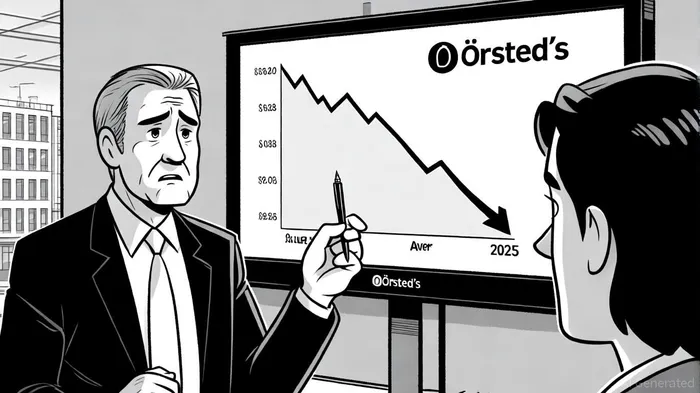







Comentarios
Aún no hay comentarios