
Royal Caribbean's Strategic Edge: Outperforming the Market Amid Cruise Sector Volatility
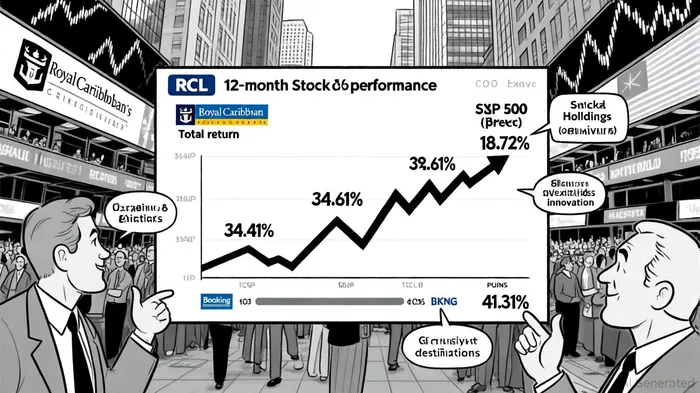
In the wake of the 2024-2025 market downturn, Royal Caribbean CruisesRCL-- (RCL) has emerged as a standout performer in the cruise sector, defying broader economic headwinds with a 12-month total return of 91.61%-nearly five times the S&P 500's 18.72% gain [1]. This outperformance, despite recent volatility (an 8.85% monthly decline as of October 2025), underscores the company's strategic differentiation and operational resilience. By leveraging exclusive destinations, digital innovation, and a focus on younger demographics, RCLRCL-- has carved a unique niche in a competitive industry dominated by peers like Carnival (CCL).
Strategic Differentiation: Destination-Driven Innovation
Royal Caribbean's success hinges on its ability to create "must-experience" destinations that transcend traditional cruising. The company's private islands-CocoCay in the Bahamas, Labadee in Haiti, and newly acquired Costa Maya in Mexico-serve as high-margin, high-traffic anchors for its itineraries. These destinations are enhanced with premium offerings like Royal Beach Club Lelepa in the South Pacific and Hideaway Beach in the Caribbean, which drive ancillary spending and justify premium pricing [5]. According to a report by Cruise Industry News, these exclusive locations contribute to record load factors and sustained demand, even as competitors focus on fleet expansion [5].
In contrast, Carnival's strategy emphasizes scale through LNG-powered megaships and new builds, such as its fourth Excel-class vessel slated for 2027 [4]. While this approach has delivered record revenue ($7.9 billion in Q3 2024), it lacks the same level of differentiation in destination offerings. Royal Caribbean's focus on "destination-led experiences" has allowed it to maintain higher pricing power, with Q3 2024 EPS of $5.20-17 cents above estimates-highlighting its operational agility [1]. However, historical data from 2022 to 2025 reveals a nuanced picture: only two instances of earnings beats were identified, and the median cumulative return after such events was –8.5%, underperforming the benchmark by ~15 ppts [6].
Digital Transformation and Demographic Targeting
RCL's digital innovation has further solidified its competitive edge. The company introduced over 300 new digital capabilities in 2024, including AI-powered booking tools for excursions and restaurants, streamlining the customer journey and boosting onboard spending [2]. This tech-driven approach aligns with its marketing strategy targeting millennials and Gen Z through platforms like TikTok and Instagram. By leveraging influencer partnerships and user-generated content, Royal Caribbean has tapped into a demographic that prioritizes unique, shareable experiences-a stark contrast to Carnival's more traditional advertising focus [2].
Financially, these initiatives are paying off. Royal Caribbean's Q4 2024 revenue of $3.76 billion and 86% 2025 booking rate reflect strong demand, even as macroeconomic pressures persist [3]. Meanwhile, Carnival's forward P/E of 12.92X versus RCL's 17.92X suggests the market values Carnival's growth potential more highly, but RCL's premium branding and margin resilience remain compelling [4].
Resilience Through Cost Management and Sustainability
Royal Caribbean's ability to navigate economic volatility is also rooted in disciplined cost management. Analysts note that the company's Net Cruise Costs (NCC) are projected to grow at a slower rate than historical averages, supported by reduced dry dock expenses and efficient fleet utilization [3]. Additionally, its sustainability initiatives-ranging from waste reduction programs to community-driven tourism-enhance brand loyalty and align with investor priorities, further insulating it from market downturns [5].
However, risks remain. RCL's stock, up over 115% in the past year, faces valuation concerns, with some analysts cautioning it may be "priced for perfection" [5]. Recent dips, including a 2.18% single-session decline in October 2025, signal investor caution amid broader market uncertainty.
Conclusion: A Balanced Outlook for Investors
Royal Caribbean's strategic focus on destination innovation, digital transformation, and demographic targeting has positioned it as a leader in the post-pandemic cruise recovery. While Carnival's fleet expansion and lower valuation offer alternative appeal, RCL's premium brand and margin resilience justify its outperformance. For investors, the key will be monitoring whether RCL can sustain its momentum amid rising costs and macroeconomic headwinds. As CEO Jason Liberty emphasized, the company's "Royal Amplified" modernization program-upgrading ships like Ovation of the Seas with new dining and suite offerings-will be critical to maintaining its edge [1].
In a sector where differentiation is paramount, Royal Caribbean's ability to blend adventure, technology, and sustainability offers a compelling case for long-term resilience-even as the tides of the broader market shift.







Comentarios
Aún no hay comentarios