
Rouble-Backed Tokens and Geopolitical Risk in Crypto Markets
The rise of rouble-backed stablecoins in 2025 has introduced a new layer of complexity to global financial markets, intertwining digital finance with geopolitical strategy. These tokens, designed to circumvent Western sanctions, are reshaping the landscape of cross-border trade and challenging the dominance of the U.S. dollar. For investors, the strategic and regulatory risks associated with these assets demand rigorous scrutiny.
Sanctions Evasion and the A7A5 Ecosystem
The A7A5 stablecoin, issued by Kyrgyzstan-based Old Vector and backed by Russia's Promsvyazbank, has emerged as a cornerstone of Russia's shadow financial system. According to a Chainalysis report, A7A5 processed over $51 billion in transactions through July 2025, with daily volumes exceeding $1 billion. This surge reflects its role in facilitating trade between Russian entities and partners in Asia, Africa, and Latin America, bypassing traditional banking channels, as documented by Smart Liquidity.
The token's ecosystem has evolved in response to regulatory pressure. After the U.S. Treasury's Office of Foreign Assets Control (OFAC) and the UK's Office of Financial Sanctions Implementation (OFSI) sanctioned A7A5's exchanges, including Garantex (shut down in March 2025), the network rebranded as Grinex to allow users to recover frozen funds . This adaptability underscores the resilience of rouble-backed tokens in evading sanctions, even as regulators target key infrastructure.
Regulatory Challenges and Compliance Risks
The U.S. and U.K. have taken aggressive steps to disrupt the A7A5 network, sanctioning individuals, entities, and wallet addresses involved in its operations, an approach assessed in an Elliptic analysis. However, enforcement remains constrained by jurisdictional gaps. For instance, Singapore and Hong Kong have notNOT-- imposed sanctions on A7A5, enabling its continued use at high-profile crypto events like TOKEN2049. This fragmentation highlights the difficulty of coordinating global regulatory responses to decentralized financial tools.
Investors must also consider indirect compliance risks. As noted by Elliptic, the use of rouble-backed stablecoins to swap for TetherUSDT-- (USDT) on centralized and decentralized exchanges creates exposure for international financial institutions and exchanges. The U.S. dollar's dominance in global trade means that even indirect participation in these networks could trigger sanctions violations, particularly for firms operating in jurisdictions with strict enforcement regimes.
Geopolitical Implications and Strategic Risks
Rouble-backed tokens are not merely a tool for sanctions evasion; they represent a broader geopolitical strategy. By enabling trade with non-Western allies such as China, India, and Iran, Russia is reducing its reliance on the U.S.-centric financial system, a dynamic explored in analysis by Smart Liquidity. This shift aligns with the rise of sovereign stablecoins as instruments of economic sovereignty, a trend mirrored by BRICS nations exploring similar models to diversify away from the dollar.
The strategic risks for investors are twofold. First, the long-term viability of rouble-backed tokens depends on Russia's ability to maintain economic partnerships in a multipolar world. Second, the token's value is inherently tied to the rouble's stability, which could be volatile amid ongoing geopolitical tensions. For example, if Russia's trade relationships with non-Western partners weaken, demand for A7A5 could collapse, eroding its market capitalization (which tripled to $521 million by July 2025), according to reporting by Smart Liquidity.
Regulatory Evolution and Future Outlook
The global regulatory landscape for rouble-backed tokens remains fragmented. While the Financial Action Task Force (FATF) has emphasized the need for virtual asset regulation, only 29% of jurisdictions were rated as largely compliant with its standards by 2025, a point highlighted in the Elliptic analysis. This uneven compliance creates opportunities for bad actors to exploit regulatory arbitrage but also complicates efforts to establish a unified framework.
Investors should monitor two key trends:
1. Risk-Based Regulation: The U.S. and other nations are adopting risk-based frameworks for stablecoins to balance innovation with compliance, a shift discussed in an IMF blog. This could lead to more nuanced sanctions targeting specific actors rather than entire ecosystems.
2. BRICS Integration: As BRICS nations develop their own sovereign digital currencies, the demand for rouble-backed tokens may stabilize or decline, depending on the success of these initiatives reported by Smart Liquidity.
Conclusion
Rouble-backed tokens exemplify the intersection of digital finance and geopolitical strategy. For investors, the strategic risks of holding or facilitating these assets include regulatory crackdowns, compliance liabilities, and exposure to volatile geopolitical dynamics. While the tokens have demonstrated resilience in evading sanctions, their long-term success hinges on Russia's ability to sustain non-Western trade networks and the global community's response to decentralized financial innovation. As the 2025 landscape evolves, a cautious and informed approach will be critical for navigating the uncertainties of this emerging asset class.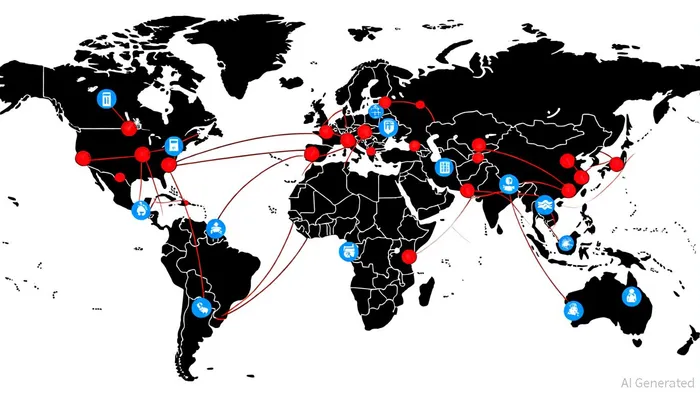






Comentarios
Aún no hay comentarios