
Ronin's $4.6M Buyback: A Strategic Move to Reshape Tokenomics and Investor Confidence?
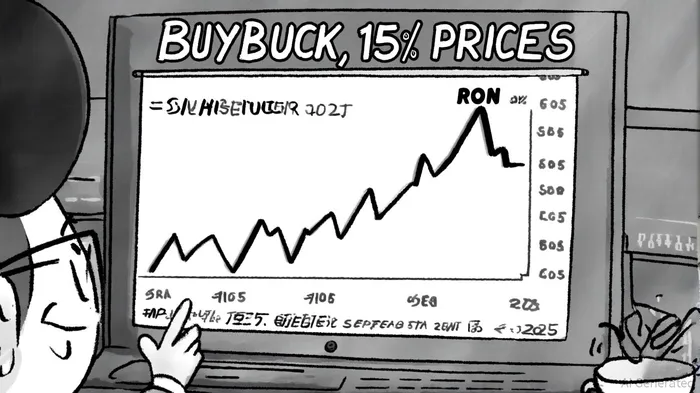
The RoninRON-- Network's recent $4.6 million buyback program has ignited significant debate among investors and analysts, positioning itself as a pivotal moment in the token's evolution. By repurchasing RONRON-- tokens from the open market, the network aims to reduce supply, stabilize price volatility, and signal long-term confidence in its ecosystem. This analysis evaluates the strategic implications of the buyback, contextualizing its impact on tokenomics and investor sentiment while drawing on recent market data and expert projections.
Tokenomics: Supply Reduction and Market Cap Dynamics
The buyback program, valued at $4.6 million, represents approximately 1.4% of RON's total market capitalization of $328.8 million as of September 19, 2025 [1]. With a circulating supply of 693 million tokens, this buyback would retire roughly 9.4 million RON, assuming an average repurchase price of $0.489. Such a move aligns with broader trends in crypto asset management, where supply contraction is increasingly used to counteract inflationary pressures and create scarcity.
According to a report by CoinMarketCap, the buyback has already triggered a 15% price spike to $0.56 in the immediate aftermath of its announcement [2]. While the token subsequently retreated to $0.489 due to broader market weakness, the initial surge underscores the psychological impact of supply-side interventions. Analysts at The Currency Analytics note that reducing circulating supply by even 1-2% can disproportionately influence price action in low-liquidity assets like RON [2].
Investor Sentiment: Short-Term Volatility vs. Long-Term Optimism
The buyback's announcement has polarized investor sentiment. On one hand, the 15% price spike reflects renewed confidence in the network's governance and financial discipline. On the other, skeptics argue that the move is a temporary salve for deeper structural issues, such as the token's reliance on gaming and NFT sectors, which remain vulnerable to macroeconomic headwinds.
Data from Coinedition suggests that RON's price could break above $2.00 in 2026 if the buyback is paired with successful EthereumETH-- Layer 2 migration and DeFi integration [2]. Such a scenario would require not only sustained buybacks but also increased adoption in gaming platforms like Axie InfinityAXS--, which currently accounts for over 70% of RON's use cases [2].
However, short-term volatility persists. As of September 23, 2025, RON's price is projected to hover around $0.4895, indicating a lack of immediate follow-through from bullish momentum [2]. This suggests that while the buyback has injected optimism, broader market conditions—including crypto winter concerns and regulatory uncertainty—remain critical variables.
Strategic Context: Ecosystem Growth and Competitive Positioning
The buyback must be viewed through the lens of Ronin's broader strategic goals. The network's plans to migrate to Ethereum Layer 2 and expand DeFi integrations aim to diversify RON's utility beyond gaming. According to a report by BeInCrypto, these initiatives could unlock new demand drivers, such as yield-generating staking mechanisms and cross-chain interoperability [2].
Moreover, the buyback aligns with a growing trend among blockchain projects to emulate traditional corporate finance strategies. By allocating capital to repurchase shares (or tokens), Ronin is signaling to investors that it prioritizes value retention over speculative expansion—a stance that could attract institutional capital in the long term.
Conclusion: A Calculated Bet with Mixed Signals
Ronin's $4.6 million buyback program is a calculated attempt to stabilize tokenomics and bolster investor confidence. While the immediate 15% price spike demonstrates the move's psychological impact, the subsequent pullback to $0.489 highlights the fragility of the broader market. For the buyback to deliver lasting value, it must be accompanied by tangible progress in ecosystem development, particularly in expanding RON's utility beyond gaming.
Investors should monitor key metrics, including the pace of supply reduction, adoption of Layer 2 solutions, and macroeconomic trends. If the network succeeds in these areas, RON's long-term price targets—such as the $15 projection by 2030—could become more plausible [2]. However, in the near term, the token remains a high-risk, high-reward proposition.






Comentarios
Aún no hay comentarios