
Rolls-Royce's New mtu Gas Engines and Their Implications for Clean Energy Transition
Rolls-Royce's New mtu Gas Engines and Their Implications for Clean Energy Transition
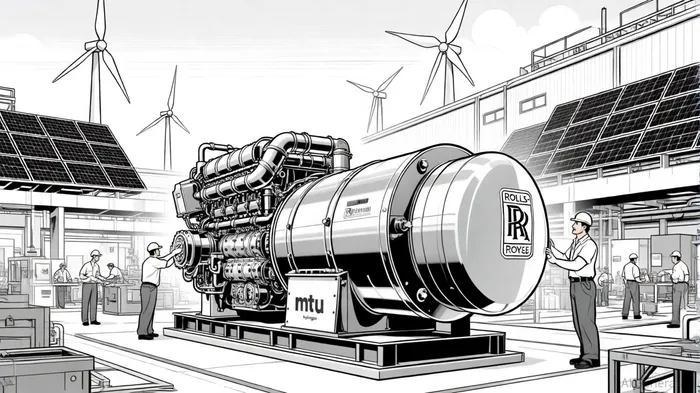
In the race to decarbonize industrial power markets, Rolls-Royce's mtu division has emerged as a pivotal player, leveraging cutting-edge gas engine technology and strategic partnerships to align with global sustainability goals. As governments and industries accelerate their transition to net-zero economies, the demand for flexible, low-emission power solutions is surging. Rolls-Royce's recent advancements in mtu gas engines-ranging from hydrogen readiness to carbon capture collaborations-position the company to capitalize on this transformative market.
Strategic Product Innovations: Powering the Energy Transition
Rolls-Royce's mtu gas engines are redefining performance and sustainability in industrial power. The newly launched mtu Series 500 gas engines, with outputs between 250 and 550 kW, offer peak efficiencies of up to 42.6%, making them ideal for industrial and utility applications, according to a Rolls‑Royce press release. Available in 6R, 8V, and 12V configurations, these engines support operation on natural gas, biogas, and future hydrogen blends. This flexibility is critical as industries seek to reduce reliance on fossil fuels without compromising reliability.
Complementing this, the mtu Series 4000 L64 gas engines, delivering 2.8 MW for the 60 Hz market, are tailored for rapid deployment in high-demand sectors like data centers, according to TheManufacture. These fast-start variants are designed to stabilize grids and provide backup power using biogas or biomethane, with compatibility for hydrogen in the future. Such innovations underscore mtu's ability to address both immediate energy needs and long-term decarbonization targets.
A standout feature of mtu's gas engines is their hydrogen readiness. For instance, the mtu Series 4000 FNER/FV engines have received H2-readiness certification from TÜV Süd, enabling operation with hydrogen blends up to 25% by volume and potentially 100% green hydrogen, according to Turbomachinery Magazine. This adaptability positions Rolls-Royce to benefit from the projected $1.5 trillion hydrogen economy by 2050, as noted on Rolls‑Royce's sustainability page.
Strategic Partnerships: Scaling Decarbonization Solutions
Rolls-Royce's strategic alliances further amplify its market positioning. A notable collaboration with ASCO Carbon Dioxide Ltd and Landmark Power Holdings aims to develop scalable carbon capture solutions for mtu gas engines. By capturing CO₂ emissions from reciprocating engines, the partnership enables the reuse of carbon in industries like food production, e-fuel, and cement manufacturing, as the Rolls‑Royce press release explains. This closed-loop approach not only reduces emissions but also creates revenue streams from carbon byproducts, enhancing the economic viability of clean energy projects.
Additionally, Rolls-Royce has partnered with Neste to promote renewable diesel, which can cut greenhouse gas emissions by up to 95% compared to fossil diesel, according to an InceptiveMind article. This partnership eliminates the need for engine modifications, offering a seamless transition for existing customers. Such collaborations highlight mtu's focus on pragmatic, scalable solutions that align with diverse industry needs.
Real-World Applications: Proving the Technology
The German customs vessel "Rügen" exemplifies mtu's maritime success. Powered by 16-cylinder mtu Series 4000 gas engines, the vessel demonstrates low emissions and high performance, setting a benchmark for sustainable shipping, according to an mtu Solutions press release. Similarly, the Port of Duisburg is being transformed into a climate-neutral hub through mtu's hydrogen fuel cells, cogeneration plants, and solar arrays, per the same press release. These projects validate mtu's ability to deliver integrated decarbonization solutions across sectors.
Emission Reduction Goals and Market Positioning
Rolls-Royce Power Systems has committed to reducing greenhouse gas emissions by 35% by 2030 compared to 2019 levels, as reported by TheManufacture. This aligns with the broader "Net Zero at Power Systems" initiative, which emphasizes hydrogen, hybrid systems, and microgrids. By embedding these technologies into its product portfolio, mtu is not only meeting regulatory demands but also addressing the growing demand for resilient, low-carbon infrastructure.
Investment Implications
For investors, Rolls-Royce's mtu gas engines represent a strategic bet on the energy transition. The company's dual focus on product innovation and strategic partnerships creates a robust value proposition in markets projected to grow at a CAGR of 6.5% through 2030, according to Rolls‑Royce's sustainability page. Key risks include hydrogen infrastructure delays and regulatory shifts, but mtu's hydrogen readiness and carbon capture initiatives mitigate these uncertainties.
Moreover, the integration of mtu engines into critical sectors like data centers and maritime logistics ensures demand resilience. As the world pivots toward decentralized energy systems, mtu's microgrid-compatible engines and battery storage solutions further solidify its competitive edge.
Conclusion
Rolls-Royce's mtu division is not merely adapting to the clean energy transition-it is actively shaping it. By combining high-performance gas engines with hydrogen readiness, carbon capture, and cross-industry partnerships, the company is addressing the dual imperatives of decarbonization and operational efficiency. For investors, this positions mtu as a cornerstone in the global shift toward sustainable industrial power, offering both environmental impact and long-term financial returns.







Comentarios
Aún no hay comentarios