
Rolls-Royce's Minnesota Gamble Signals a U.S. Industrial Renaissance—Here's Why Investors Should Take Note
The era of Wall Street's dominance over American economic narrative is fading. In its place, a new chapter is being written in the heartlands—where factories, not fintech, are the engines of growth. Rolls-Royce's $24 million expansion in Mankato, Minnesota, is no mere factory upgrade. It's a bold bet on the future of U.S. industrial might, powered by the insatiable demand for hyperscale data centers and federal infrastructure dollars. For investors, this is a signal to re-examine the overlooked value of manufacturing giants in an era of AI-driven growth.
The Data Center Gold Rush
The surge in hyperscale data centers—vital to AI, cloud computing, and 5G—has created a $1 trillion opportunity for power generation systems. Rolls-Royce's mtu Series 4000 generator sets, manufactured exclusively in Minnesota, are now the backbone of these facilities. With U.S. data centers accounting for over half the world's hyperscale infrastructure, Rolls-Royce's 50% sales growth in 2024 isn't just a blip—it's a trend.
The company's focus isn't just on hardware. It's on resilience. Its new hydrogen-ready engines and gas generator sets align with federal goals to decarbonize energy grids. This isn't just about selling generators; it's about securing a monopoly on critical infrastructure for the next decade.
Scaling Manufacturing to Meet Demand
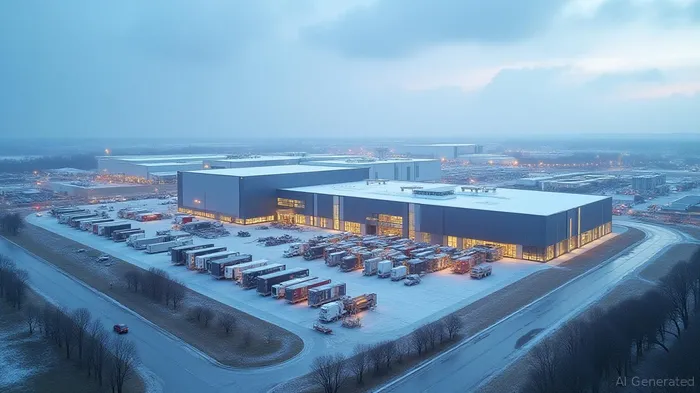
The $35 million expansion in Mankato isn't incremental—it's transformative. By consolidating operations into a centralized 280,000-square-foot facility, Rolls-Royce is eliminating inefficiencies and boosting production capacity by 120% by 2026. This isn't just about making more generators; it's about vertical integration. The Aiken, South Carolina, plant now ramps up engine production, ensuring a seamless supply chain.
The scalability here is staggering. With data center demand projected to double by 2030, Rolls-Royce's Minnesota hub is positioned to capture a larger slice of this market. The company's decision to centralize logistics and assembly under one roof isn't just smart manufacturing—it's a strategic hedge against supply chain volatility in a post-pandemic world.
The Multiplier Effect of High-Wage Jobs
Every dollar invested in this facility isn't just about machinery—it's about people. Over 128 new jobs, with salaries exceeding Minnesota's livable wage standards, will ripple through the local economy. These aren't just assembly-line roles; they're advanced engineering, compliance, and project management positions. For every engineer hired, local businesses—restaurants, housing, and retail—see uplift.
This isn't a temporary boom. The IIJA's $1.2 trillion infrastructure push ensures this is a sustained investment. Minnesota's grants ($30.5M for Power Drive, $4.5M for Lundin Boulevard) aren't charity—they're bets on Rolls-Royce's ability to create the high-skilled workforce the U.S. needs to compete globally.
The Federal Infrastructure Play
The IIJA's focus on clean energy and modernization is Rolls-Royce's tailwind. Its hydrogen-ready CHP plants and grid-stabilizing tech directly align with federal goals to decarbonize by 2035. The Mankato expansion isn't just a factory—it's a climate solution.
Investors should note: this isn't a fly-by-night investment. Rolls-Royce has already poured over $1 billion into the U.S. over the past decade. This isn't a pivot—it's a doubling down.
Why This Matters for Investors
Rolls-Royce's Minnesota bet is a microcosm of the U.S. industrial comeback. In an era of geopolitical tension and energy transition, infrastructure isn't just about roads—it's about the systems that power AI, secure grids, and employ workers.
The data is clear: hyperscale data centers will require $1 trillion in infrastructure spending by 2030. Rolls-Royce, with its 15-year track record in U.S. power systems and this aggressive expansion, is the prime beneficiary.
The question for investors is simple: Can you afford to ignore a company that's at the nexus of federal policy, energy resilience, and AI-driven growth? The answer, in this new industrial age, is no.
Act Now—Before the Boom Outpaces the Market
The writing is on the wall. As data centers expand and federal dollars flow, Rolls-Royce's Minnesota hub is the first stop on a new industrial tour de force. This isn't just about generators—it's about the future of American manufacturing.
Investors who overlook the renaissance in U.S. industry do so at their peril. The time to act is now—before the next wave of growth leaves you behind.







Comentarios
Aún no hay comentarios