
Roku's Streaming Sticks Lack Bluetooth Audio Support, Amazon Fire TV Stick 4K Max Offers a Solution
PorAinvest
lunes, 25 de agosto de 2025, 2:18 pm ET2 min de lectura
AMZN--
Amazon's Fire TV Sticks, including the Fire TV Stick 4K Max, support Bluetooth audio natively, allowing users to pair their headphones directly with the device. This feature is particularly useful for users who want to watch TV late at night without disturbing others or those who prefer a more immersive audio experience. The process is straightforward: users simply enable Bluetooth pairing on their headphones, and they appear under "Controllers & Bluetooth devices" on the Fire TV Stick, ready to connect [2].
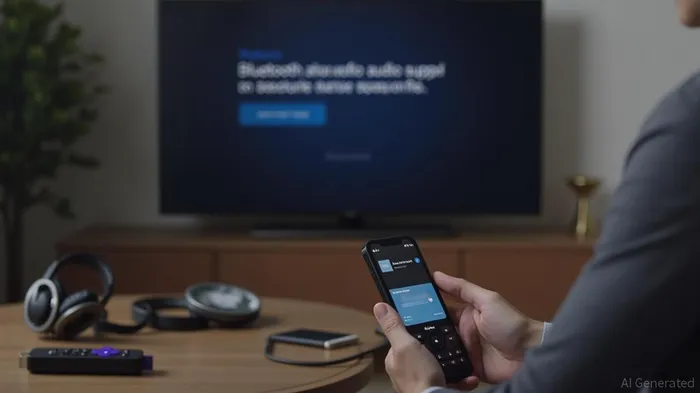
Roku, on the other hand, has not yet incorporated native Bluetooth audio support into its streaming sticks. However, the company offers a workaround called Private Listening Mode, which allows users to route audio from their Roku stick to their smartphone. This feature is accessible through the Roku app and enables users to listen to audio through their headphones or earbuds connected to their phone. While this solution is functional, it requires the use of multiple devices and is not as seamless as the native Bluetooth support offered by Amazon [2].
The lack of native Bluetooth audio support in Roku's streaming sticks is a notable omission, especially considering that the feature has been widely adopted in other consumer electronics. Amazon's implementation of Bluetooth audio support is consistent across its entire Fire TV Stick lineup, from the budget-friendly Fire TV Stick HD to the premium Fire TV Stick 4K Max. In contrast, Roku's Bluetooth audio support is only available on its pricier devices, such as the Roku Ultra, Roku Select Series TV, Roku Streambar SE, Roku Streambar, and Roku Smart Soundbar [2].
The disparity in Bluetooth audio support between Amazon's Fire TV Sticks and Roku's streaming sticks has led to growing criticism from users and industry analysts alike. Some argue that Roku's reliance on an app to facilitate Bluetooth audio is a step backward in user experience, while others point out that the lack of native support in Roku's streaming sticks is a missed opportunity for the company to differentiate itself in the competitive streaming market.
As of July 2025, Roku has not announced any plans to add native Bluetooth audio support to its streaming sticks. However, the company has been making strides in other areas, such as improving its voice assistant and expanding its content library. Whether Roku will eventually catch up to Amazon in the Bluetooth audio department remains to be seen.
In conclusion, while Roku has been a leader in the streaming market, its lack of native Bluetooth audio support in its streaming sticks is a notable shortcoming. Amazon's Fire TV Sticks, with their native Bluetooth audio support, have an edge in this regard, making them a more attractive option for users who prioritize audio quality and convenience. As the streaming market continues to evolve, it will be interesting to see how Roku responds to the growing demand for Bluetooth audio support.
References:
[1] https://community.roku.com/category/top/discussions/audio
[2] https://www.pocket-lint.com/one-way-fire-tv-stick-beats-roku-streaming-stick/
ROKU--
Roku's streaming sticks lack Bluetooth audio support, unlike Amazon's Fire TV Sticks. However, Roku offers a workaround called Private Listening Mode, which only works through its app. Users can pair Bluetooth headphones to their Fire TV Stick by enabling pairing on them and connecting to "Controllers & Bluetooth devices." This feature is not available on Roku streaming sticks.
In the realm of streaming devices, Amazon's Fire TV Sticks have recently gained an edge over Roku's streaming sticks, particularly in terms of Bluetooth audio support. While Roku has been a stalwart in the streaming market, its latest offerings have lagged behind in this crucial feature, leading to a growing disparity between the two platforms.Amazon's Fire TV Sticks, including the Fire TV Stick 4K Max, support Bluetooth audio natively, allowing users to pair their headphones directly with the device. This feature is particularly useful for users who want to watch TV late at night without disturbing others or those who prefer a more immersive audio experience. The process is straightforward: users simply enable Bluetooth pairing on their headphones, and they appear under "Controllers & Bluetooth devices" on the Fire TV Stick, ready to connect [2].
Roku, on the other hand, has not yet incorporated native Bluetooth audio support into its streaming sticks. However, the company offers a workaround called Private Listening Mode, which allows users to route audio from their Roku stick to their smartphone. This feature is accessible through the Roku app and enables users to listen to audio through their headphones or earbuds connected to their phone. While this solution is functional, it requires the use of multiple devices and is not as seamless as the native Bluetooth support offered by Amazon [2].
The lack of native Bluetooth audio support in Roku's streaming sticks is a notable omission, especially considering that the feature has been widely adopted in other consumer electronics. Amazon's implementation of Bluetooth audio support is consistent across its entire Fire TV Stick lineup, from the budget-friendly Fire TV Stick HD to the premium Fire TV Stick 4K Max. In contrast, Roku's Bluetooth audio support is only available on its pricier devices, such as the Roku Ultra, Roku Select Series TV, Roku Streambar SE, Roku Streambar, and Roku Smart Soundbar [2].
The disparity in Bluetooth audio support between Amazon's Fire TV Sticks and Roku's streaming sticks has led to growing criticism from users and industry analysts alike. Some argue that Roku's reliance on an app to facilitate Bluetooth audio is a step backward in user experience, while others point out that the lack of native support in Roku's streaming sticks is a missed opportunity for the company to differentiate itself in the competitive streaming market.
As of July 2025, Roku has not announced any plans to add native Bluetooth audio support to its streaming sticks. However, the company has been making strides in other areas, such as improving its voice assistant and expanding its content library. Whether Roku will eventually catch up to Amazon in the Bluetooth audio department remains to be seen.
In conclusion, while Roku has been a leader in the streaming market, its lack of native Bluetooth audio support in its streaming sticks is a notable shortcoming. Amazon's Fire TV Sticks, with their native Bluetooth audio support, have an edge in this regard, making them a more attractive option for users who prioritize audio quality and convenience. As the streaming market continues to evolve, it will be interesting to see how Roku responds to the growing demand for Bluetooth audio support.
References:
[1] https://community.roku.com/category/top/discussions/audio
[2] https://www.pocket-lint.com/one-way-fire-tv-stick-beats-roku-streaming-stick/
Divulgación editorial y transparencia de la IA: Ainvest News utiliza tecnología avanzada de Modelos de Lenguaje Largo (LLM) para sintetizar y analizar datos de mercado en tiempo real. Para garantizar los más altos estándares de integridad, cada artículo se somete a un riguroso proceso de verificación con participación humana.
Mientras la IA asiste en el procesamiento de datos y la redacción inicial, un miembro editorial profesional de Ainvest revisa, verifica y aprueba de forma independiente todo el contenido para garantizar su precisión y cumplimiento con los estándares editoriales de Ainvest Fintech Inc. Esta supervisión humana está diseñada para mitigar las alucinaciones de la IA y garantizar el contexto financiero.
Advertencia sobre inversiones: Este contenido se proporciona únicamente con fines informativos y no constituye asesoramiento profesional de inversión, legal o financiero. Los mercados conllevan riesgos inherentes. Se recomienda a los usuarios que realicen una investigación independiente o consulten a un asesor financiero certificado antes de tomar cualquier decisión. Ainvest Fintech Inc. se exime de toda responsabilidad por las acciones tomadas con base en esta información. ¿Encontró un error? Reportar un problema




Comentarios
Aún no hay comentarios