
A Rocky Road to Unlocking Value: Romios Gold's Strategic Crossroads After Termination of Star Gold Deal
The abrupt termination of Romios Gold Resources Inc.’s (TSX.V: RG) non-binding Letter of Intent (LOI) with Star Gold ResourcesGORO-- Corp. marks a pivotal moment for the Canadian mineral exploration company. While the collapse of the potential acquisition of its Nevada-based assets—the Scossa Mine and Kinkaid Property—may have raised immediate questions, the move underscores a broader strategic realignment for Romios. With its focus now sharpened on alternative paths to unlock value from its resource-rich portfolio, investors are left to weigh the risks and opportunities ahead.
A Parting of the Ways
The decision to terminate the LOI, first announced in February 2025, came after months of due diligence and negotiations. Both companies cited a failure to align on terms, though neither elaborated on specifics. For Romios, the termination avoids a transaction that might have constrained its flexibility. Star Gold, likely seeking a streamlined deal, may have balked at the complexity of the Nevada assets’ regulatory and financial hurdles.
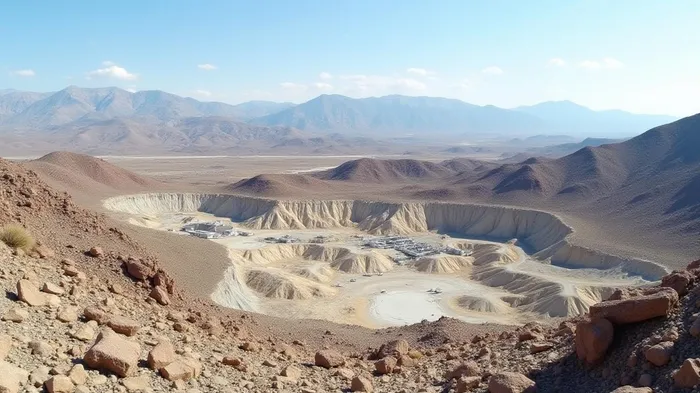
The Scossa Mine, a former high-grade gold producer, and the polymetallic Kinkaid Property—boasting gold, silver, and copper workings—remain central to Romios’ holdings. CEO Stephen Burega framed the breakup as an opportunity: “The properties’ potential remains unchanged. We’re now free to pursue alternatives.” This pivot highlights Romios’ confidence in its assets but also its reliance on finding buyers, joint ventures, or financing to advance exploration.
The Balance Sheet and Market Dynamics
Romios’ capital structure is a critical consideration. With 264 million common shares outstanding and 284 million fully diluted, the company’s equity is heavily weighted, leaving little room for dilution without shareholder pushback. This constraint may explain why the terminated deal’s success hinged on Star Gold’s ability to secure a capital raise—a condition that proved insurmountable.
Investors should monitor how the stock reacts to future announcements. Historically, junior miners like Romios face volatility tied to commodity prices and exploration outcomes. Gold’s recent resilience—driven by geopolitical tensions and inflation—could buoy sentiment, but execution remains key.
Diversification as a Safety Net
Romios’ portfolio extends far beyond Nevada. Its 100% ownership of the Lundmark-Akow Lake Au-Cu property in Ontario, porphyry copper-gold prospects in British Columbia’s Golden Triangle, and a 2% net smelter return (NSR) on McEwen Mining’s Hislop gold property offer diversification. The company’s agreement with Copperhead Resources, which could see it cede 75% of its Red Line Property in BC, further signals a willingness to partner for capital and expertise.
Yet, these assets are largely exploration-stage, requiring significant funding to advance. Romios’ press release emphasized “alternative strategic options,” but without specifics, investors must assess whether the company can secure partnerships or financing in a market where junior miners often struggle to attract capital.
Risks and Rewards
The termination removes the uncertainty of a potential deal but reintroduces others. Regulatory approvals, fluctuating metal prices, and the cost of exploration loom large. The company’s forward-looking statements, which it disclaims responsibility for updating, highlight the speculative nature of its projects.
Still, Romios’ asset base is formidable. The Scossa Mine’s historical production and Kinkaid’s multi-metal potential could attract buyers in a rising precious metals market. Meanwhile, its BC porphyry projects, if successful, could position the company as a copper play—a commodity increasingly in demand for green energy infrastructure.
Conclusion: A Calculated Gamble
Romios Gold’s decision to walk away from the Star Gold deal reflects a calculated bet on its own future. While the termination removes a potential path to liquidity, it preserves flexibility to explore higher-value opportunities. The company’s assets—particularly in Nevada and BC—provide a foundation for growth, but execution will hinge on securing partnerships or financing in a challenging market.
Key data points reinforce this outlook:
- Share Structure: With 284 million shares fully diluted, Romios must avoid over-dilution while advancing projects.
- Commodity Trends: Gold’s price (currently ~$2,000/oz) and copper’s industrial demand (projected to grow 4% annually through 2030) favor a bullish scenario.
- Project Pipeline: The Scossa Mine’s feasibility studies and BC’s porphyry potential could deliver near-term catalysts.
Investors should remain cautious but watchful. Romios’ pivot demands patience—the company is betting that its assets, if properly leveraged, can outperform in a sector where exploration success is rare. For now, the path forward is clear: no more waiting on Star Gold. The question is whether Romios can now light its own way.





Comentarios
Aún no hay comentarios